Starting the Year in Sunny Spain and Africa

Our new year began with a trip to a few new places-the south of Spain and Morocco.

Day 1: Malaga

On the evening of New Year’s Day, we flew into Malaga and began exploring the next morning.  We began our day in the Plaza de la Merced where Picasso’s birthplace sits on the corner of the square.  The square itself is home to a Picasso statue, several restaurants and is lined by orange trees.

20200102_091610.jpg

We grabbed some pastries, which we stopped to enjoy in the square, before heading into the city center.

20200102_091024

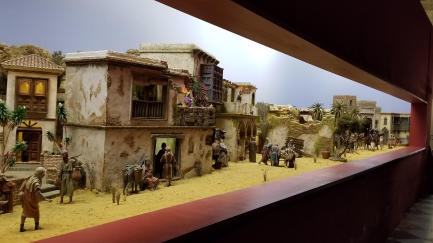
We stopped in a small church where they had a small nativity scene set up which was very lovely.

Next, we walked through the center with all of the shops and restaurants to the Market Atarazanas which was a very cool building with elaborate ironwork and beautiful painted glass.  There was a lot of really great produce to be found at the market.

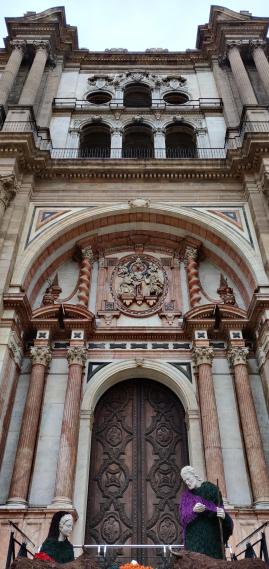
After this, we walked to Episcopal Palace and the Malaga Cathedral.  The cathedral only had a small portion that was free to enter but they had an amazing, large nativity scene set up in that area as well as a manger scene made of plant materials on some stone statues set up outside the door.

20200102_102310

IMG_20200102_095117.jpg

We wrapped up our morning with a trip to the Roman Theater and Alcazaba, a Moorish fortress.  If you don’t know, the Moors were the Muslim people that inhabited and ruled the Iberian Penisula, which Spain is part of, during the Middle Ages.  Inside the fortress walls, there were very lovely tropical plants and floors with beautiful designs made from small stones.

After this, it was on to the beach area.  We walked through a lush park between the shops and the beach and then down to the water.  It was not exactly a beautiful beach area and as the day was a little overcast, the water was not too pretty so we didn’t stay long before going to lunch.

20200102_121351

At the restaurant, we began the meal with some aceitunas (olives) and Malaga sweet wine-similar to a port.  For the meal itself, we had some local beer, Ensalada Malaguena which was a cold salad with cod and orange segments atop a potato salad type mixture, Pipirrana (a tomato, pepper and onion salad with shrimp and octopus), Rabo de Torro (bull tail) and albondigas (meatballs) in almond sauce.  It was all very good!

After lunch, we walked to the bull arena and stopped in a bakery for some molletes (white baked bread) and torta de Aceite (a dry cookie).
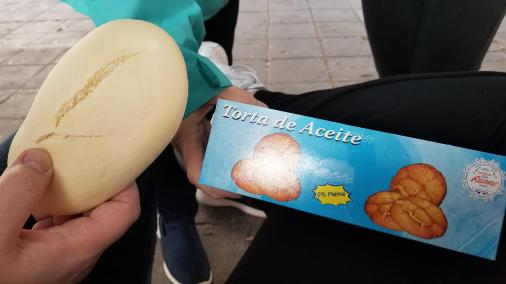
20200102_135443

Now, it was time for an uphill climb to Castilo Gibrafaltro-former Moorish castle.  There wasn’t much left to the structure itself other than the outer wall and some garden areas but the views were nice from the top.  And we got to see a really crazy looking Spanish squirrel!

IMG_20200102_152305

After all that climbing, we decided we deserved a snack so we stopped at one of the restaurants at Plaza de la Merced for some gazpacheulo (a cream-based fish stew) which was delicious, anchovies on Ceasar salad wraps and melon with ham and bruschetta.

20200102_164726

After resting for a while, we went out in the evening for dinner at Restaurant Picasso where we had calamari, pork knuckle, roasted beef in a red wine sauce, a pineapple stuffed with greens, walnuts and cheese, albondigas, chicken croquetas, and a Spanish omelet.  We also tried two other Malaga wines and some Sangria Malaguena.

IMG_20200102_222957

Day 2: Gibraltar

On the next day, we drove two and a half hours to Gibraltar.  Interestingly, Gibraltar is actually its own territory which governs itself, rather than a part of Spain.  However, Gibraltar, having once been a colony of the UK and still under their protection and defense, has a large British influence.  In fact, in Gibraltar, the primary language is English although they also know and speak Spanish since they border Spain.  But aside from knowing these two languages, Gibraltarians have created their own dialect which is a blend of English and Spanish and is very interesting to hear.

20200103_101942

After crossing the border into Gibraltar, we made our way to the water casements market place for lunch.  Here we tried Rolitos which was ham, seasonings and chopped olives rolled inside a thin piece of beef and served with a special sauce.  We also had Huevos de la Flamenca which was a mixture of peppers and potatoes cooked in a sauce with sausage, serrano ham and a fried egg on top.

20200103_121406

After lunch, we took the cable car to the top of the Rock of Gibraltar, which is said to be one of the pillars of Hercules that was left when he broke the mountain between Africa and Europe, to spend the afternoon on the Rock.

IMG_20200103_172140

After stepping off the cable car, my mother was promptly attacked by one of the large Barbary Macaques that roam freely on the Rock.  My kids declared this to be the highlight of the trip, though I’m not sure my mother would agree.  The Macaque seemed to be going for her purse, but she managed to wrestle it free, and she and the monkey parted ways.  These monkeys are everywhere, though, and it was a while before my mother felt that she was not going to be attacked by another one!

20200103_153002.jpg

After this initial excitement, we headed to the skywalk to take a look at the views and then to St. Micheal’s Cave which is, according to legend, where the Macaques crossed from Africa to Europe.
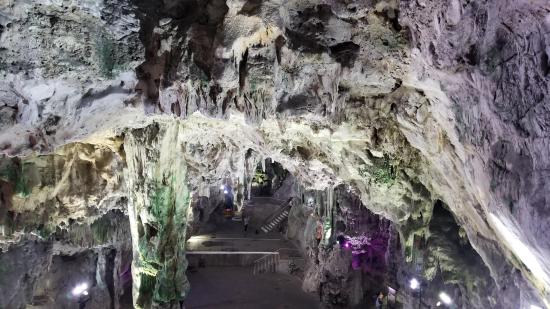
20200103_145727

After the cave, we tested our ability to conquer our fears when we went across the suspension bridge on the side of the Rock.  I wasn’t too scared, but my height fearing children were pretty nervous.
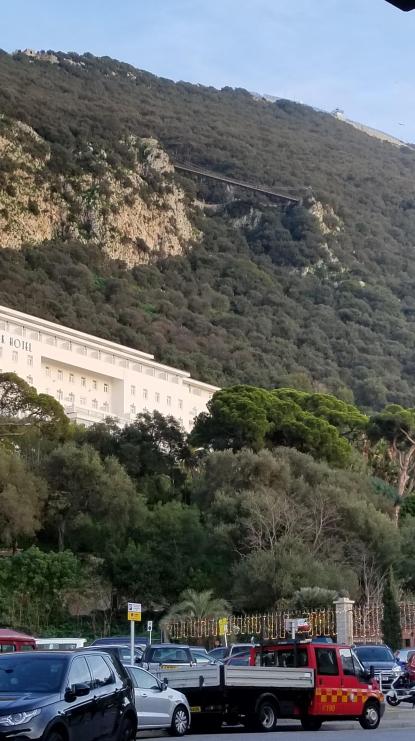
20200103_175213

Finally, we took the long walk to the Great Siege Tunnels.  We didn’t have time to go very deep into the tunnels, but it was interesting to learn some of the history of Britain’s defense of Gibraltar when the Spanish attempted to regain control in the late 1700s.
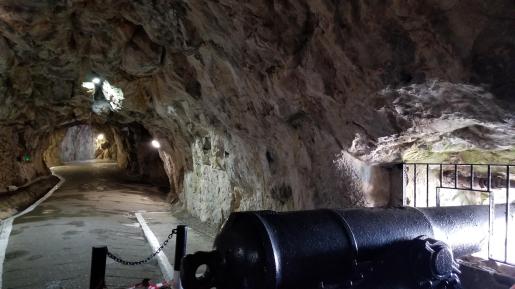
20200103_164536

Day 3: Tangiers

The third day of our trip brought our long-awaited day trip to Africa (cue the song from Toto if you are anything like our family).  It was the first time for all of us to go to the African continent.  Our day began very early when the tour company picked us up for a one hour ride to Tarifa, Spain where we embarked on our one and a half hour ferry trip across the Strait of Gibraltar.  Upon arriving in Tangiers, we boarded a bus for a driving tour of the new city which is comprised of quarters belonging to different nationalities such as French, Spanish, American, British and Italian.  The city is comprised of all of the different nationalities because of the many countries that have controlled Tangiers at various times.  On our drive, we drove by some very expensive homes including the home of the mayor of Tangiers and the summer homes of the Moroccan king and the king of Saudi Arabia.  Somewhat surprisingly, Tangiers is very green and tropical.  Our guide informed us that while two-thirds of Morocco is Sahara, the northern parts are very lush.

Our first stop was at Cap Spartel, where the Mediterranean Sea and the Atlantic Ocean meet.
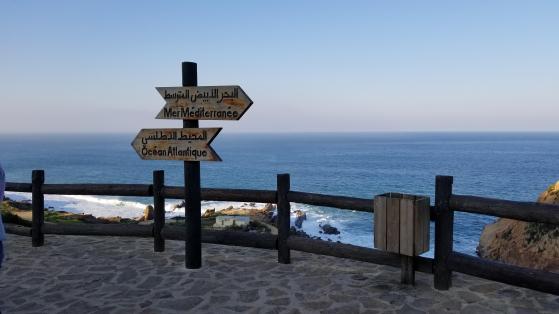
20200104_100049

In this coastal area, we were able to ride camels on the beach.  Our son was so excited that the tour guide allowed him to go on three rides instead of just one.  It was definitely a bit tricky to feel comfortable on the camel as they are pretty wide and quite jostly, not to mention the awkwardness of the moment that they stand up and lay down with you on their back, but it was quite the experience!  While other people in the group (and our son) took their turns, we were able to pet the smaller camels on the beach.

After our camel time was over, we went to the Cave of Hercules which was mainly cut out by man for the purpose of getting rock for use as grinding stones but did have a natural cutout from the water where it is said that you can make out the profile of Hercules.

After the cave, we were taken to the old city or Medina.

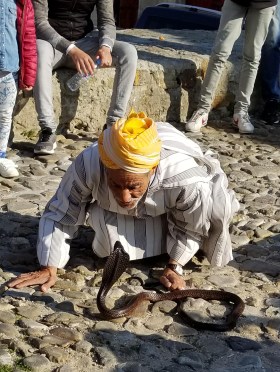
Here we walked to our lunch stop where we met a snake charmer along the way, and he did a little display for us.
20200104_115142.jpg

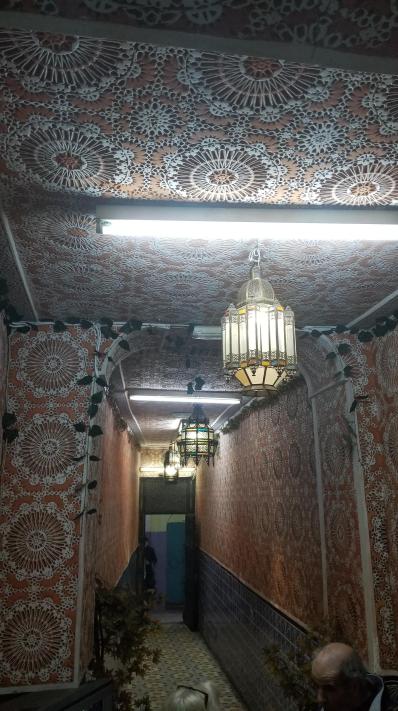
Our lunch was overlooking the city and the sea in a lovely space with beautiful light fixtures.

During lunch, some local musicians played traditional music for us.

20200104_121538.jpg

Our lunch consisted of Harira (a soup with chickpeas), bread, chicken kabobs, couscous and tajines (a fruit and vegetable mix).  It was all very good and was finished with a delicious mint tea and pastry with honey.

After lunch, we walked through more of the old city including the produce, olive, meat and fish markets.  In all honesty, the meat and particularly fish markets were pretty hard to take.  The conditions seemed pretty unsanitary but the sheer carnage was a bit much even for those in the group who are not normally squeamish.

After the markets, we walked to a large artisan store selling jewelry, pottery, leather and rugs among other things and then to a pharmacy where we were given a demonstration of the many argon oils and other Moroccan products that they offered (we even received nearly ten samples of products).  The pharmacy building itself was quite lovely inside with beautifully carved walls.

20200104_15020520200104_150243

After this, we walked through the streets of the Medina where, unlike the new part of the city, Morocco was everything you imagined with street vendors accosting you in an attempt to sell their wares.  It was quite overwhelming and a little nervewracking at times, and we were there in low season!

20200104_135345

Finally, we were given free time in the streets of the Medina (this was actually a little frightening), but we looked around a little and haggled with a few vendors to make some purchases before getting an outdoor table at Cafe Tanger for some mint tea.  The tea was really delicious and watching the street was interesting.


One interesting thing was hearing the call to prayer for the Muslims a couple of times during the day including while we were having our tea.  It didn’t seem that anyone stopped what they were doing to pray, but we did see some people coming out of the Mosque shortly after the call to prayer so perhaps some did.

20200104_134450

Before our free time was up, my husband and son went with our tour guide to find a store selling pastilla (chicken and spices inside of a flaky pastry).  Surprisingly they came back with a box filled with Moroccan pastries as well.  All of it was very good!

20200104_163415

Finally, our bus driver drove us around the modern area of the city and the new train station and seaport.  It was very different than the conditions and life inside the Medina.

After the ferry ride back to Spain and the bus ride back to Gibraltar, we were very tired.  It had been a long but exciting day, and we felt very fortunate that we were able to take the opportunity to visit Morocco.

Day 4: Seville

Upon waking up this morning, we looked out our apartment window to find that there was an immense cemetery right behind the apartment.  It was really large with lots of stone monuments.  This was quite the surprise as we had only been in the apartment before sunrise and after sunset the other days meaning we could never have seen what was there.  It was an interesting end to our time in Gibraltar!

After crossing the border back into Spain, we drove to Seville.  The drive took us into a very arid region with lots of cacti.  Our first act in Seville was an attempt to get lunch.  Most places didn’t open until 1:00-1:30 for lunch but we did convince a small restaurant in a small neighborhood outside the city to serve us at noon.  We were the only people eating, but we tried several traditional dishes including Espinacas con garbanzos (spinach with garbanzo beans), croquetas, Solomillo al Whiskey (pork with whiskey sauce), Secreto Iberico (pork) and Presa Iberico (beef) along with some Boquerones Fritos (fried anchovies).  And since Seville is known for Manzanilla (sherry), we tried a glass, though we did not like it.

After lunch we headed into the city where we first walked along the river to the Plaza do Torros (bull arena).  We didn’t go into the actual arena, but we did walk the area between the outer wall and the arena.

20200105_144924

Next, we walked to the Cathedral of Seville, a massive cathedral, and the surrounding square before making our way, past many beautiful buildings and fountains, to Plaza de Espana which was a beautiful area that was quite large with gorgeous buildings, a fountain and a circular canal that people were boating on.  It really was breathtaking and a great place to sit and enjoy the sunshine and some of the musicians performing around the area.

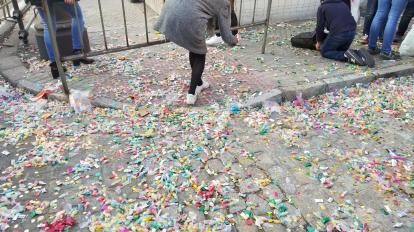
As we left the area, we ran smack into the Epiphany parade.  Having never seen a parade to celebrate Epiphany and having been told that the one in Seville is quite nice, we decided to stay and watch.  There were several bands and close to two dozen floats, but the unusual part, aside from figuring out what some of the floats had to do with Epiphany, was the amount of candy being thrown from each and every float.  There were at least 10 people or more on each float and each one of those people was hurling the contents of bags upon bags of candy into the crowd.

By the time the parade had passed us, we saw multitudes of children (and some adults) with large sacks stuffed full of candy.  In addition, the ground was littered with crushed and whole pieces of hard, wrapped candies.  Our shoes quickly became very sticky trying to leave the area.
20200105_170607

But lest you were worried about this mess creating a long term problem for the city of Seville, the parade was immediately followed by what can only be described as a brigade of street sweeper vehicles.  They were lined up three per row and there were probably four to five rows coming just minutes behind the final float.  It was like an army of street sweepers descending on the sticky carnage of a candy battle.  Quite a sight to behold!  And the parade must have wound around several areas of the city because we saw people coming from other parade routes over an hour later.  That’s a lot of candy (and to our environmentally conscious brains, a lot of waste)!

After escaping the candy war zone, we went back to the Cathedral where we found a side entrance that allowed us to see a small section of the cathedral as the rest was closed for Epiphany (which seemed counterintuitive considering Ephiphany is a religious holiday).

From here, we went to see las Sestas, an immense wooden art piece.

20200105_174544.jpg

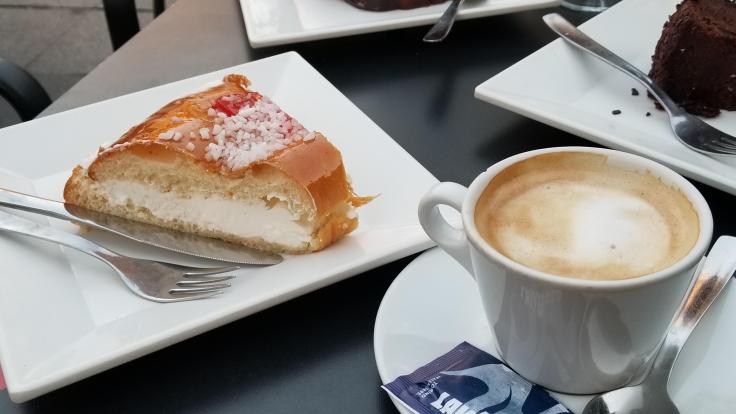
We decided to sit and have a coffee outside.  We also tried Roscon de Reyes, a Christmas cake, with a whipped cream type filling and candied fruit-tasty!
20200105_175517

After our coffee, we walked down to the Flamenco Cultural Center to watch a Flamenco show.  We were able to get seats right in the front so we had a very up-close view of the show.  You could definitely feel the passion of the performers.  It was a very interesting and enjoyable show.

20200105_182748

We ended our night with a dinner of mushroom and shrimp risotto, black rice with seafood and an egg, ham and vegetable dish and some local red wine.

20200105_204544

Day 5: Granada

As we drove the three hours from Seville to Granada, we moved from the very arid to the mountains-the Sierra Nevada Mountains to be more specific.

20200107_150131

Upon arriving in Granada, we went to the Cathedral of Granada and the Royal Chapel (though not inside here) where King Ferdinand and Queen Isabella (as in Christopher Colombus’s backers) are buried.

The sun was shining, so we had lunch outside in a plaza near the cathedral.  We tried a complimentary starter that was like a small tuna sandwich on some amazing bread, albondigas, grilled artichokes with ham, shrimp and tuna croquetas and Flamenquina (ham and cheese rolled inside a breading and fried).

After lunch, we walked through the old bazaar and silk market, Alcaceiria, to Corral del Carbon, an old Arab inn and warehouse from the 1300s.

Then we took a sunny stroll along the river Darro past many historic sites and buildings including El Banuelo, an old 11th-century Arab bathhouse.  We walked through the Albaizin district under the shadow of the Alhambra (palace and fortress) to the gardens of a former palace home.  Then we walked uphill to the Sacramonte district.

After our long walk, we headed down to dinner where we enjoyed Carne en salsa (meat in a really delicious sauce), champignon al Horno (stuffed mushrooms) and Habas con Jamon (beans and ham with a fried egg) and Sangria.

20200106_171006

The highlight of dinner though had to be the completely naked man walking down the street (naked except for his shoulder bag) as we sat freezing next to a heater!

naked spanish guy

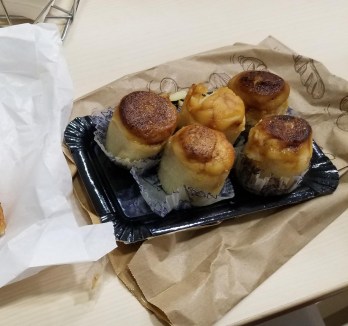
After dinner, we drove to our apartment in another section of the city and tried a little traditional dessert of Piononos before bed. It was an interesting dessert of a bread that was sticky and a little soggy with a cinnamon flavoring.  It was pretty good!
20200106_190209.jpg

Day 6: Granada

Our second day in Granada, we spent at a higher elevation at the Alhambra which includes the Nazarin Palaces (a palace built in stages with various sultans adding new areas), General Life (the summer palace) and Alcazaba (the fortress to protect the area).  The palace was by far my favorite area with all the beautiful, decorative buildings and garden areas.  There is such a Moorish influence in Spain, that at times it was hard to tell if you were in Spain or back in Morocco.

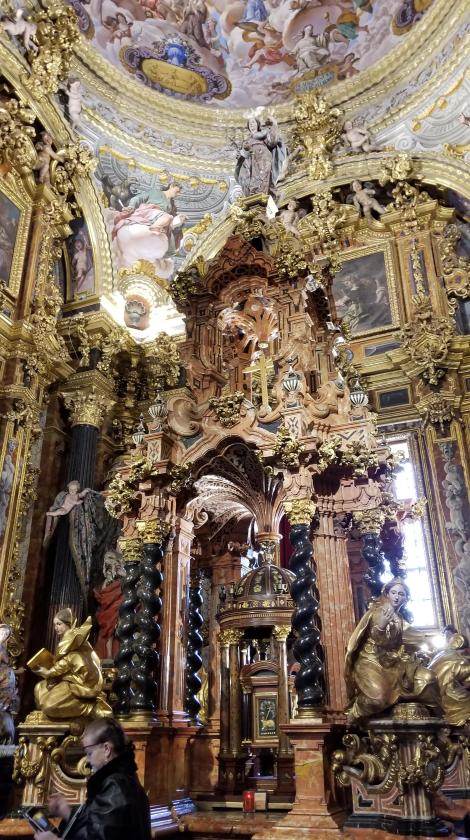
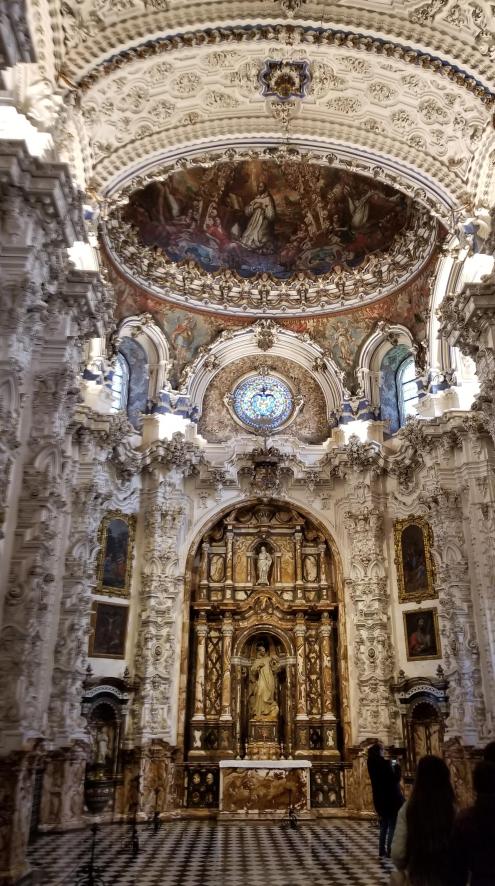
After a couple of hours at Alhambra, we stopped at the Ascension of Our Lady which was a former monastery for Carthusian monks.  There wasn’t much to the area as a large portion of it, including the monks sleeping quarters, did not survive the years, but the church was very interesting, especially the sacristy (for my non-Catholic friends, this is where they keep the sacraments) which is toted as the most beautiful sacristy in the world.
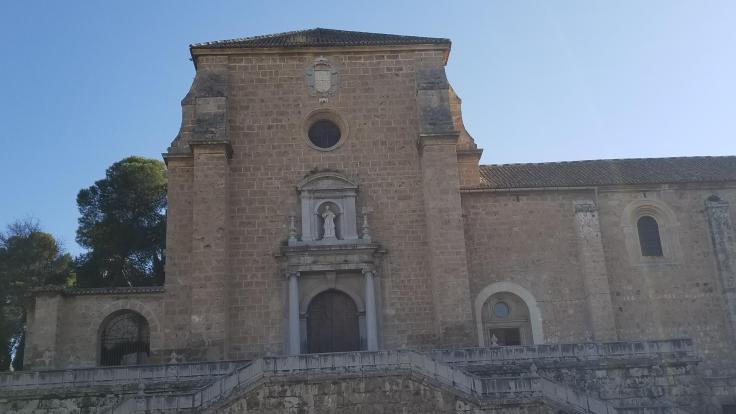
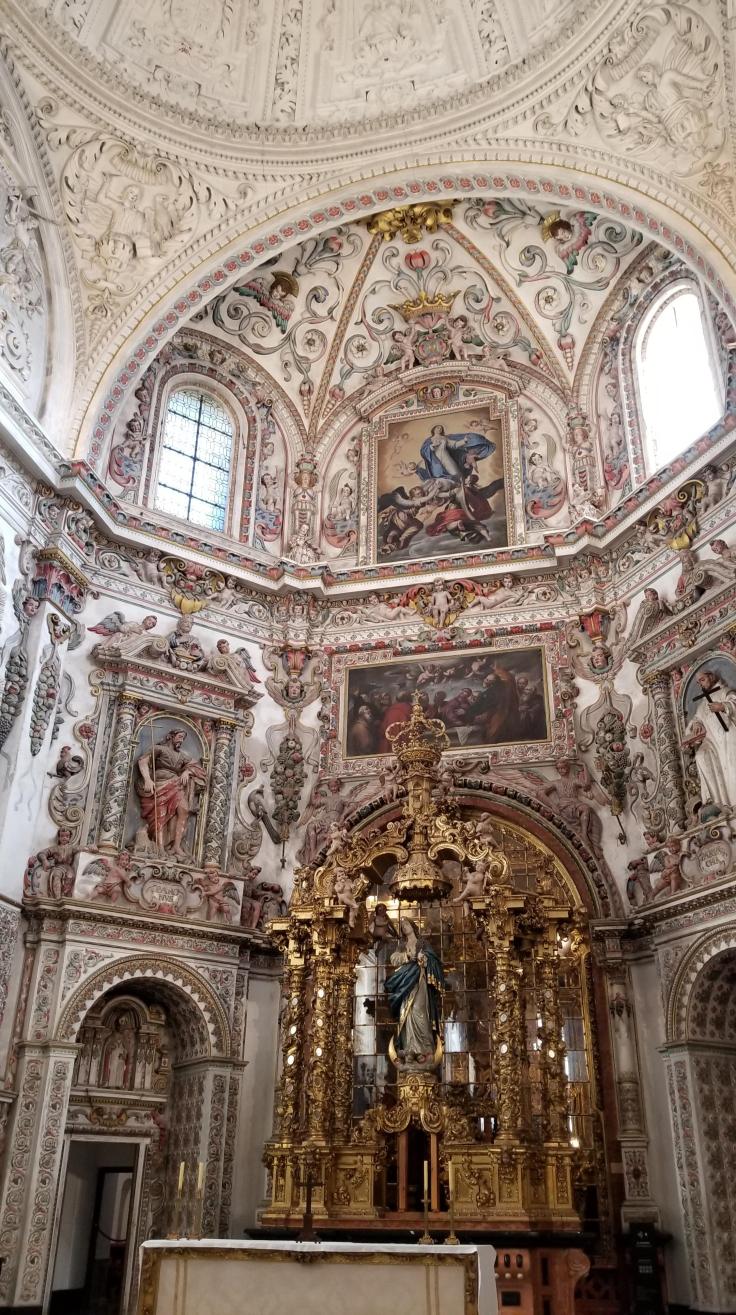
20200107_11485620200107_12072320200107_12092720200107_12112120200107_121428

Next, we headed to another portion of the city to have a lunch of Plato Alpujarrero (various sausages, potato and egg), Migas (breadcrumb mixture with sausage and bacon), Huevos Rojo (fried egg with potato) and Perenjinas con Miel de Cana (slices of fried eggplant covered in sugar cane syrup).  We also tried a Sacromonte beer.

After our lunch, we walked around the area near our apartment and had some drinks in a cafe in the park.  The view of the river and the snow-covered mountains offset with the palm trees was really nice.

Finally, we had dinner at the same restaurant in the park where we tried a Granda red wine, Manchego cheese, Jamon de Trevelez, stuffed mushrooms, grilled vegetables, and an assorted fried fish plate.

Day 7: Malaga

Our final day was spent driving back to Malaga to get to the airport.  While it was mostly a travel day, we did make time to stop in Malaga for some Tejeringos (churros with various dipping sauces-chocolate and caramel).  It was a great ending to a fun trip!

20200108_105554

Our new year is definitely off to a great start with a trip in 2 continents, 2 countries, 4 cities and 1 territory, 1 monkey attack, 1 naked man, historical, natural and cultural sites, new foods, new experiences, animal encounters, educational discussions, family time and lots of laughs and memories.

Here’s to more travel adventures in 2020!


Day Tripping Over the Holidays

This past weekend we ventured to two cities in The Netherlands for a quick day trip- Haarlem which is north of Amsterdam and Zwolle which is an hour northeast of us.

First up, in Haarlem, we walked around the old city center which was quite extensive with many cute storefronts and restaurants as well as a large church.

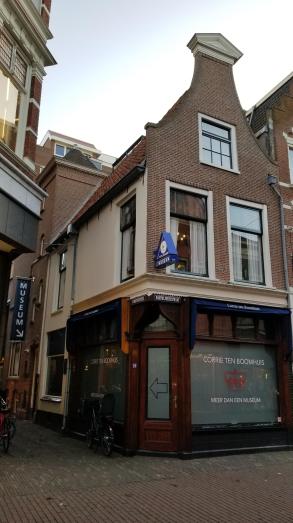
Our main purpose in visiting Haarlem was to tour the Corrie ten Boom Museum.  The museum is the house that the ten Boom family lived in when they assisted with the resistance during WWII.  If you have never read The Hiding Place, which was written by Corrie ten Boom, then I highly recommend it.  I read the book last year, so getting to tour the house and walk around the city where the events took place, was very enjoyable.  One interesting fact from the tour-124,000 Jews lived in The Netherlands during the war and 104,000 were killed.  Unbelievable!

20191227_103836

Our second day trip was to Zwolle.  Here, again, was a very lovely historic city center.

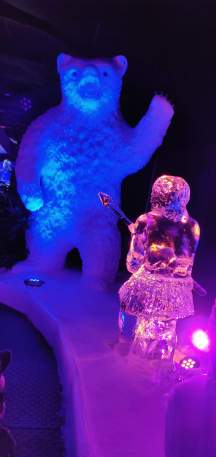
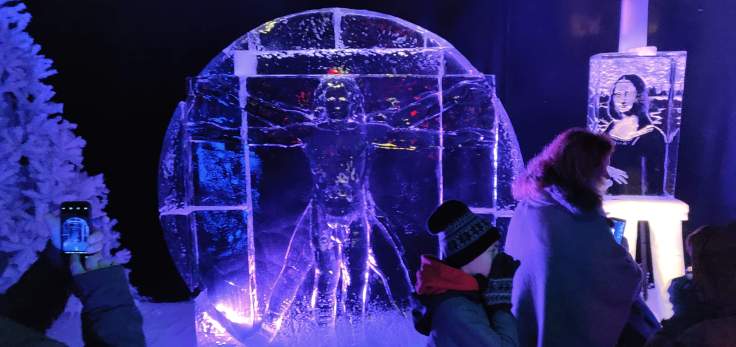
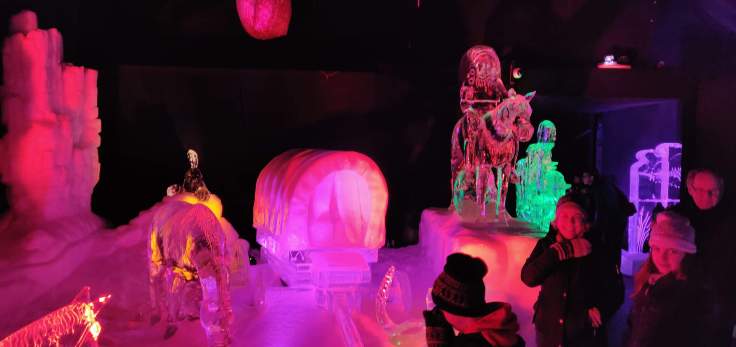
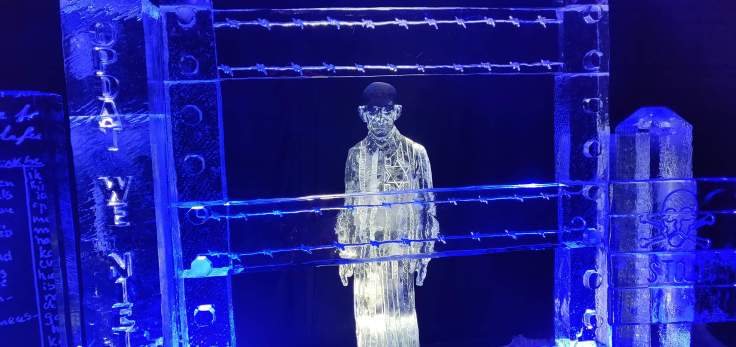
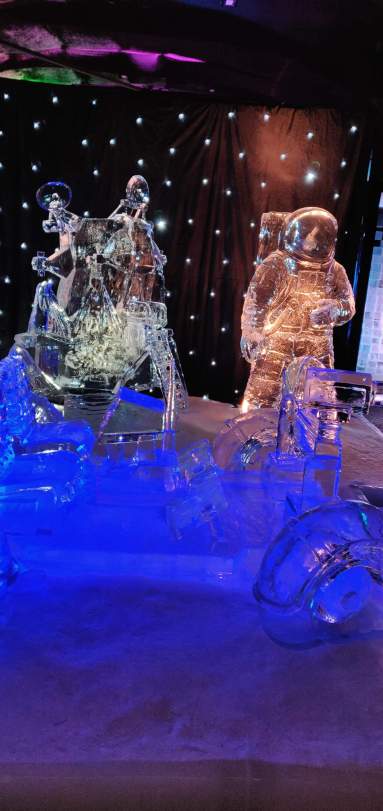
We wandered around the town, but our main purpose on this trip was to see the ice sculptures at the Ijsbeelden festival.  The festival theme this year was “Traveling Through Time.”  The sculptures were amazing and the theme was presented very nicely-and yes, everything is made completely of ice.   It was pretty cold in the exhibit, though, so we had to get some hot chocolate and sweet treats after the ice hall.  All in all, a very nice way to spend a day.

received_2675672005884925received_3317470418327536received_526517438073919received_742588642904470received_471001766951953received_2393787940935107received_979209299107312received_2498594633747037received_1440519636113123received_2476039495852679received_445485692785777received_610885823048423

Both of our day trips were a lot of fun, but we weren’t able to see everything that we wanted to see in Haarlem, so watch for another post on that in the future.


Winter Weekend in Berlin

This Thanksgiving, we headed off to Berlin for a quick weekend trip.

Day 1

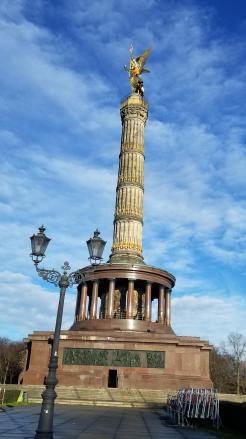
We drove into the city past Tiergarten park and the famous Victory Column.

20191128_095622

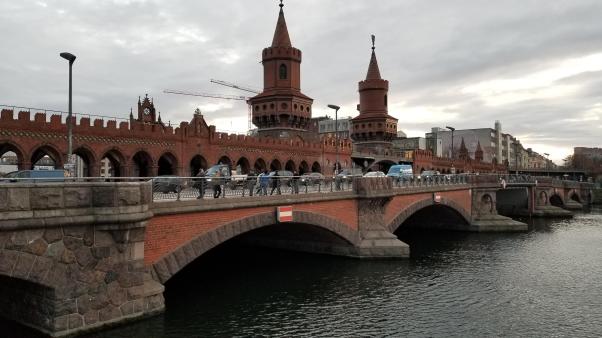
Our first real stop was Berlin Cathedral.  On our walk there, we could see the  TV Tower which was built in East Germany as a symbol of Communist power and today is the tallest structure in Germany.   The Cathedral was located amidst the many museums and historic buildings located on Museum Island.

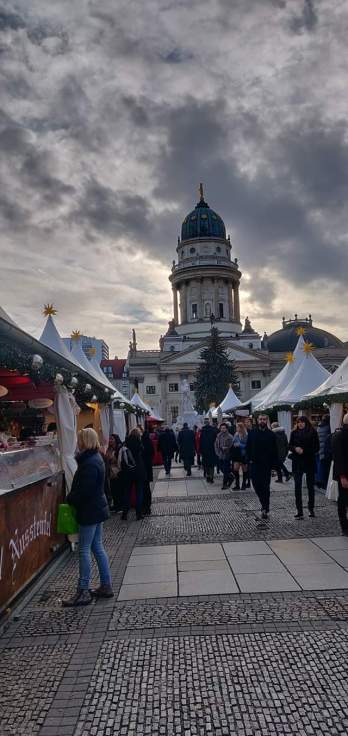
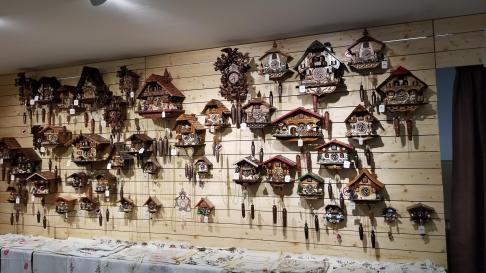
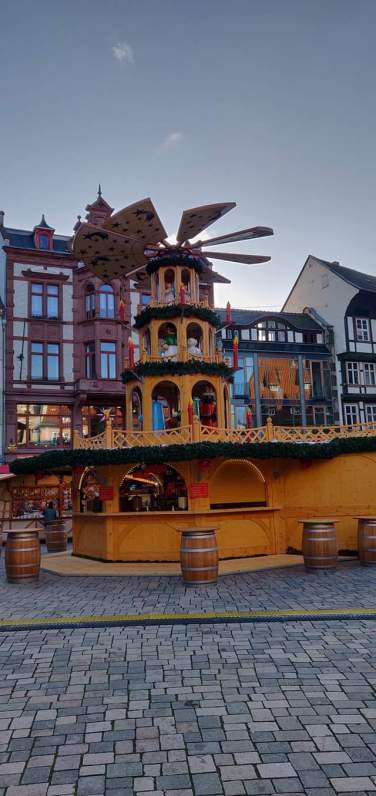
Upon leaving the cathedral, we wandered past several interesting buildings until we came to Gendarmenmarkt, a square containing the Berlin Concert Hall, which was heavily damaged during World War II, but on this day looked very inviting with a Christmas market.  We ducked into a store on the way into the market that featured handmade woodwork including German Christmas Pyramids and Cuckoo Clocks-very beautiful and very expensive!!

FB_IMG_157527595044520191128_113231

20191128_113744

The Christmas market itself was a real gem with lots of artisan booths, good food and plenty of holiday cheer.  We made the most of it by trying candied cashews (seriously delicious), roasted chestnuts, spaetzle with cheese and truffle, a giant pretzel, bacon cheese balls, and some currywurst.

After the Christmas market, we walked to Checkpoint Charlie, the well-known border crossing point and the scene of the Soviet-US tank standoff.

Next, we walked to the Topography of Terror.  This location houses an exhibit in photographs of the Nazi regime and the operations of the SS and Gestapo.  Outside, the remains of the building that became the SS and Gestapo headquarters during WWII sits almost directly under the remains of the Berlin Wall.  It was quite a sobering place.

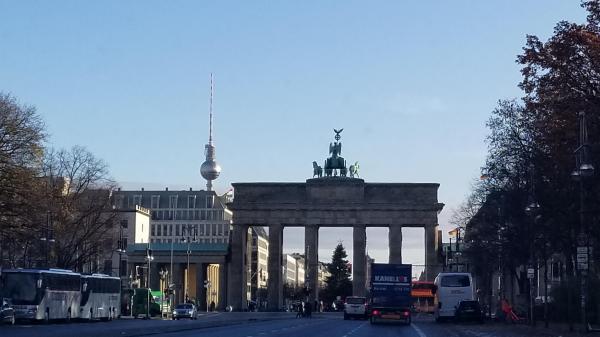
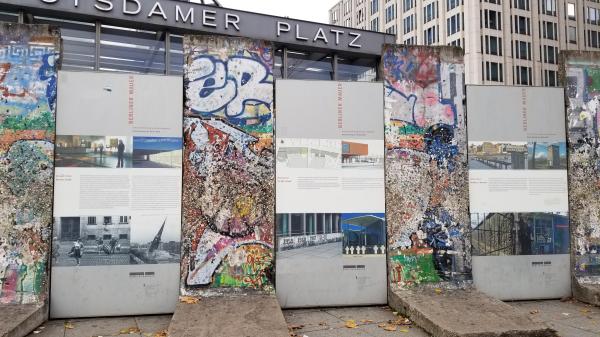
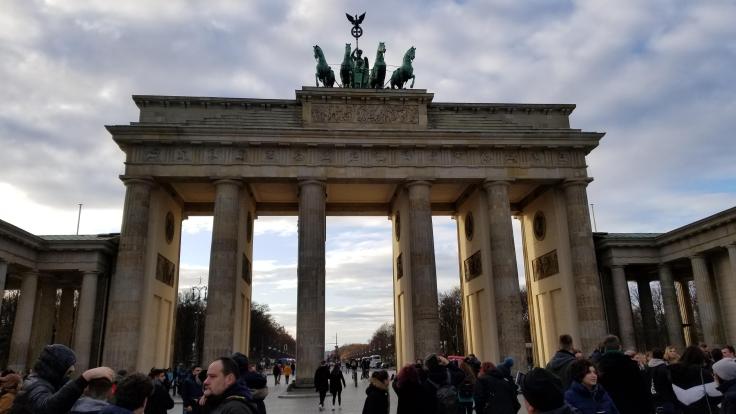
After that, we headed toward the Brandenburg Gate, stopping along the way at the Memorial to the Murdered Jews of Europe and Potsdamer Platz, which housed more sections of the Berlin Wall.

20191128_13583420191128_141904

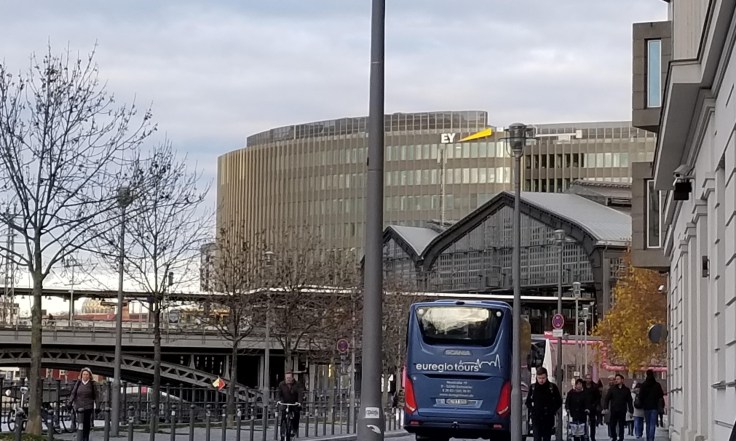
We decided to finish our day by going to Friedrichstrabe Station, a former crossing point/border control point that was heavily guarded and featured various walled-off sections for transport within East Germany, transport between East and West and transport to outside areas/countries.

20191128_144513.jpg

We took the train to Warschauer station and walked to the water gate and East Side Gallery-another long section of the wall that has been turned into an art gallery.

20191128_154052

After a day of thinking about what we could be thankful for in the face of what others have had to endure, we ended our Thanksgiving with a typical German meal.  We had some pilsner, dark and Weizen beers, traditional potato soup, meatballs over fried potatoes, fried eggs over fried potatoes and Eisbein (a seriously huge ham hock!).  To finish off our traditional meal in a traditional way, we ordered a piece of apple strudel and potato pancakes.  It was all very good and a nice way to end a day of sightseeing.


Day 2

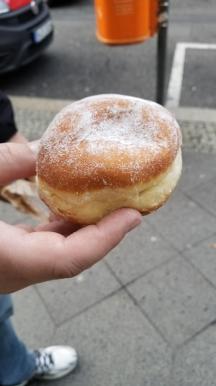
Today we planned to visit several museums, but first, we had to grab something to eat, so we stopped in a store for a Berliner-basically a jelly donut.  Later we also came across one that was filled with egg nog cream-and it was alcoholic egg nog!

20191129_091850

Our first museum was the Natural History Museum.  It was really nice.  They have the tallest mounted dinosaur in the world, many stuffed species, fossils, and a massive rock and mineral collection-we could have spent hours in just that section.

After perusing the museum, we had some lunch where we tried a beer flight that featured 5 really good beers, but after careful consideration, we settled on a black beer and the house brew-both were really good.  For the food, we tried Konigsberg Klopse (meatballs in a white sauce), Shnitzel, another meatball with crispy potatoes and a local sausage in a dark beer gravy sauce.  If I’m being honest, no one liked the Konigsberg Klopse, but everything else was very good.

After lunch, we had some time to kill before our reservation at the next museum, so we stopped at another Christmas market for some Pink Lady Gluhwein (warm drink made from rosé) and a warm kidpunch as well as a bag of candied almonds.

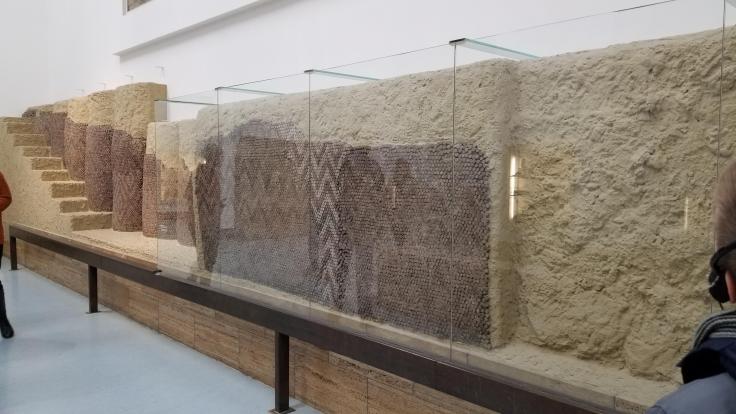
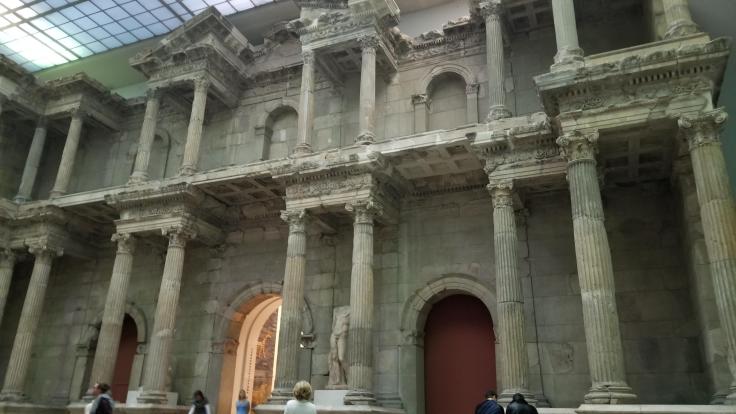
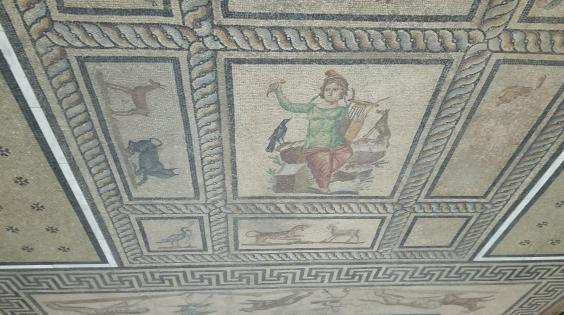
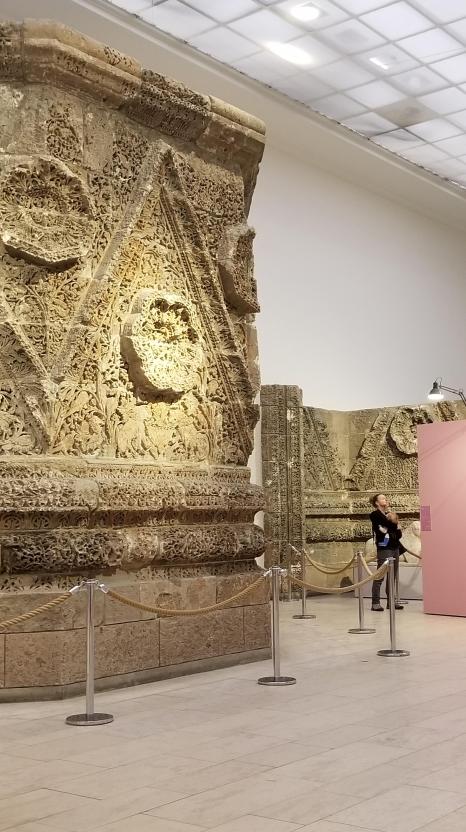
Our next museum was the Pergamon.  This museum featured some very old pieces which were in very good shape.  Many of the pieces were from several hundred to thousands of years B.C. including this wall that was from 3000 B.C.

20191129_143722

20191129_142121

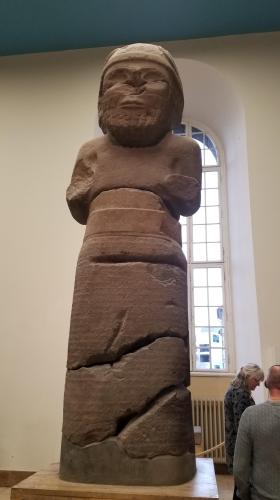
Several of the more interesting pieces were the Ishtar Gate, which was the gate to Babylon, a brick with an inscription from Nebuchadnezzar, a law book from the 12th century B.C., a reconstructed Roman market gate, and some really nice Islamic pieces.

20191129_15255320191129_153649

20191129_155919

After the Pergamon, we visited their annex museum called the Panorama.  This museum was all about the ancient city of Pergamon and featured statues from the city as well as a huge panorama which provided a visual of what life would have been like in the city.

After a seriously freezing walk to dinner, we enjoyed some schnitzel, black pudding, potato soup, and maultaschen-a very thick layered ravioli type dish- along with a really nice Reisling.  On the way back to the apartment, we happened to walk by the first Christmas market we had visited on Thursday, so we decided that was a sign that we needed a few more roasted chestnuts and candied cashews.  Very, very cold, but very good!

FB_IMG_1575275851951


Day 3

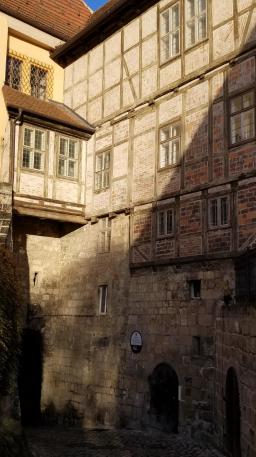
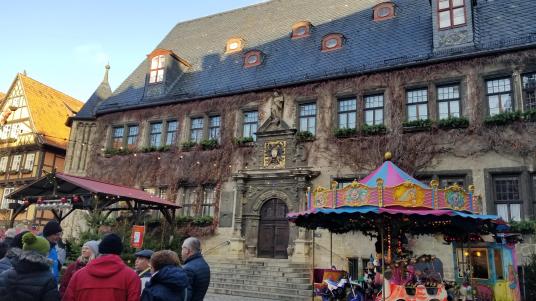
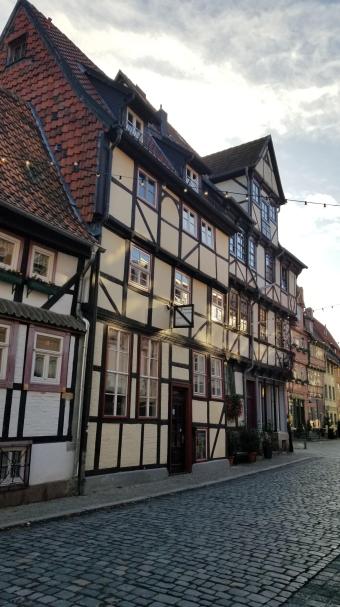
We left Berlin very early in order to stop in Quedlinburg, a very charming little town with half-timber houses and historic buildings.  It was a perfect town for a little shopping and, of course, a Christmas market!  The market was charming and the town itself was all decorated for Christmas-aside from snow, it was a perfect Christmas scene!  We were only able to walk around for a short while due to our timing and the cold, but we did manage to try a paper cone filled with a fried dough covered in powdered sugar and a couple of pastries.

20191130_09131720191130_09292120191130_09333120191130_09415820191130_09592720191130_100713

FB_IMG_1575275718813

On our way home, we had to make an unexpected stop to charge the car in Goslar, but it turned out to be a treat.  They had a really nice Christmas market and the town was very lovely with interesting old buildings.  There was a lot of Christmas decor and even a forest made from pine trees that you could go in to drink gluhwein and hot chocolate.  We did have to try some hot chocolate.  One interesting thing to note at these German Christmas markets- they charge you an added fee for your cup or plate and then when you return it, they give you the deposit back, so you can’t just order and leave the area.

After that stop, it was off to the final charging stop which included a lunch of massive schnitzels and a black beer and Octoberfest beer.

20191130_131720-2.jpg

While it was a very short trip, it was a perfect quick getaway, and we were very happy and thankful to get the opportunity to experience Berlin and the surrounding area.


It’s All About the House

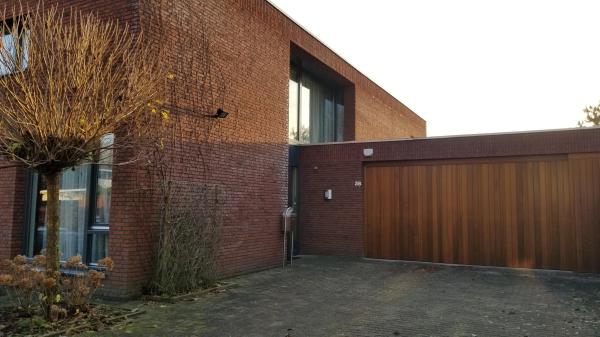
For those of you that don’t know, we recently bought our house in The Netherlands and have been doing a few upgrades-both items involving a process unlike what we experience in the US.

Buying a house in The Netherlands is quite an easy process actually.  As we didn’t have to look at homes, we just went to an agent (he charged a flat rate fee since he was mostly handling paperwork which we billed us for about a month after we finalized the purchase of the house) and he assisted us with the paperwork to make an offer and directed us to someone who could help with financing.  Unlike in the US, there isn’t a need to look over all documents with a fine-tooth comb.  In The Netherlands, the government has actually designed these contracts to protect the buyer.  Our poor US-centric minds couldn’t quite accept that, so we did still review the documents as best we could (being that they were in Dutch), but in the end, I don’t think it was wholly necessary.  After that, we had an estimator come out to establish the value of the home and then established our financing which was also very straight forward and designed to protect rather than snare you unsuspectingly.  There were no inspections necessary; you could pay if you wanted to, but we were assured that since our home is newer construction, there was no need.  In fact, it seems inspections here might have more to do with structural issues due to sinking ground and water levels.  In fact, there does not appear to be any building code standards that are used as some very shady electrical and plumbing work had previously been done in the house (don’t worry, we knew there was a problem and had the previous owner pay to fix it before the sale went through).  Then at the closing, we went over the papers and signed (this took less than 1 hour) and we were Holland homeowners!

After the papers were signed, we decided to have our tile floors changed to laminate.  After searching for well-reviewed companies, we went to the store to inquire about options and pricing.  As it turns out, everything happens in the store.  Unlike in the US, no one comes out to measure the rooms and determine what extra items are needed to finish the edges or to evaluate your current flooring to determine what to lay down as an underlayer.  You give them the measurements (good thing we had floorplans with all of that), and you tell them what you want (luckily they will make some suggestions based on the information you give them or pictures you have).  Since they weren’t sure what we would like to finish the edges, they charged us for two options and told us that after we decided onsite, they would take the unused product back and refund the money.  They held true to their word, and the job was finished without complaint from us.  Our next project along those lines is to have our stairs redone, but for the life of us, we have yet to find someone who will do this work.

We also had painters come and redo the outside trim.  This was quite a lengthy process as they had to scrape all of the existing trim, prime and then hand paint everything including our front and garage doors.  During the painting process, we had to have all of the windows and doors open for hours so that the inside trim could dry.   This was a very cold process since it was well into fall here (we had tried to get the painting done months before that, but the painters were busy and couldn’t come for a month, and then it kept raining daily making painting impossible).  And the craziest part- before they knew I would be home most of the time, the painters asked for a key to the house so that they could open doors and windows as needed, which felt very weird to me.

Now, perhaps the strangest thing about all of this installation and repair work is that Dutch workers take a lot of breaks.  And often, the expectation is that you should provide hospitality during these breaks.  Being very American, I really never offer anything.  In fact, it never really occurs to me that I should, but our electrician did ask if I could make him coffee one of the days that he was here, and the painters asked if they could come in and use my kitchen table to eat their morning snack during their break (I decided to leave the room).  All of the workers used our bathroom freely or asked to come in and use it (they even made a point of coming in and using it at the end of the workday before they left-maybe normal for them, but I thought they should just hold it until they got home!).

So, you see, even things like home buying and repair can be quite strange and foreign in another land.  It’s a nice reminder that while you need to function and belong, you don’t quite belong.  But, surviving the process is also a nice reminder that, even when things feel strange and you don’t quite understand the process, you can still survive and get things done.  Here’s to another day of making it in this so-called Dutch life!


Heading Down South (South of France and Spain That Is)

We spent our fall break this year in the south of France and Barcelona.  While the weather was a little rainy some of the time, the temperatures were warmer than in The Netherlands, making this an ideal trip before winter sets in.

Day 1

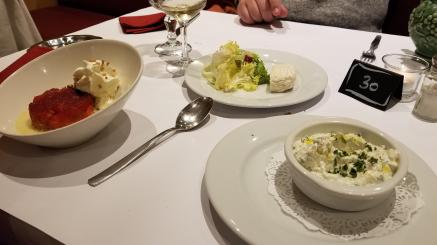
We began by driving to Dijon, France.  We decided to stop for a quick lunch of Oeufs de Meurette (a poached egg in red wine), escargot, boeuf bourguignon and a prawn and chorizo risotto.  We also tried a regional aperitif called kir, a sort of fruity liquor.  And of course, no meal would be complete without some dessert.  We chose chocolate mousse, a lemon meringue tart and chocolate fondant which is like a lava cake.  The meal was good, but our favorite dish, aside from dessert, of course, was the poached egg.


After our lunch, we ventured out into the city where we saw Dijon Cathedral which featured a very beautiful tile roof, Palace Ducal (the former seat for the Dukes of Burgundy), and St. Michel de Dijon (where I saw this statue featuring the women in Jesus’s life which I really enjoyed as they are not often depicted all together).


We then stopped to look at a giant sculpture outside a local museum and walked to Notre Dame of Dijon.  The cathedral had a very interesting front facade with an abundance of gargoyle type figures.  Inside, I found a tapestry that was very lovely.  On the side of the cathedral, you can find the remnants of an owl sculpture that you are supposed to touch for good luck; so we did!


IMG-20191020-WA0001

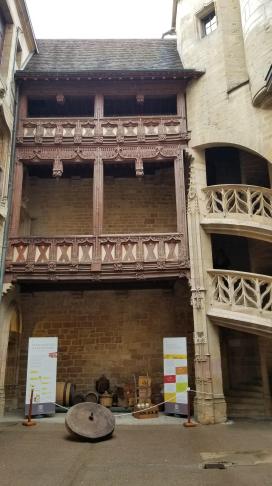
Finally, we walked down Rue de Forges looking for number 34.  At that location, behind the front wall of the building, there is a small courtyard at the end of a passageway where you will find the old walls of the building and a very nice spiral staircase.  You might never know it was there behind the modern building front.

20191019_155627

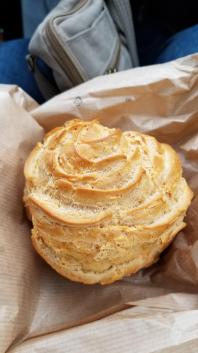
On our way out of town, we stopped at Regazzoni Andre, a bakery, for some gougeres, a cheese puff pastry.  It was alright but had a strong cheese flavor that not everyone was sure they liked.

20191019_163137

Our overall impression of Dijon was that it was a city with areas in which you could really almost feel the people walking the streets 200 or more years ago juxtaposed with very modern shops and other buildings.

After leaving Dijon, we drove to Lyon where we took a nighttime stroll around the Presquile District enjoying many cathedrals, buildings and bridges lit up.


We had dinner at Aux Trois Marie where we tried Kir Royal, a bubbly version of Kir as well as potato salad with sausage, Lyon sausage over polenta, and quenelle, a sort of souffle with a cream-based fish sauce.  All of it was very good so we decided to top it off with two kinds of cheese that are common to the area, Cervelle de Canut (which was a strange dessert as it was an almost cottage cheese-like dish with scallions in it) and Saint Marcellin.  We also tried Tarte Lyonaisse with features Lyon’s famous pink pralines.

20191019_20222520191019_20453520191019_212453

On our way back to our apartment, we got a special treat when we walked by a gentlemen’s club with an employee out front -a man wearing a dress with his genitalia hanging out of the bottom!

Day 2

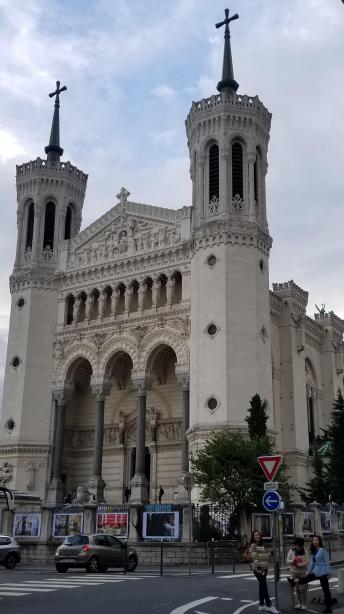
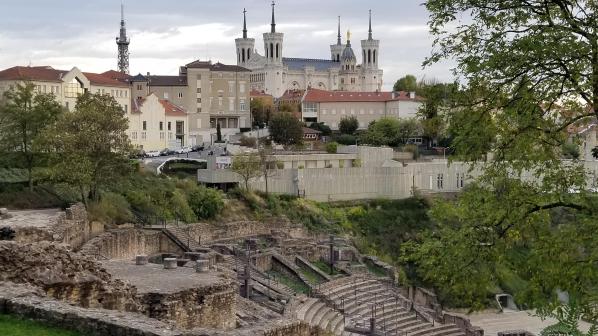
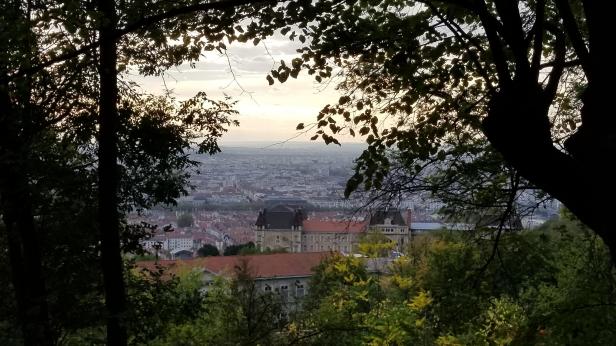
Our second day began in Lyon.  On our way to the funicular station, we walked down some quiet streets one of which contained a large puppet show house.  The funicular took us up the side of the hill to the Fouviere Basilica and the Roman Theater ruins.  The Basilica had very pretty ceilings and tiled mosaic walls but no pictures were allowed.  From the Roman Theater, we had some nice views of the city.

20191020_09545320191020_09410420191020_093935

After coming down the hill, we looked at the Lyon Cathedral which was very plain on the inside, and we stopped at La Marquis, a bakery and confectionery where we tried some local treats- brioche de praline, Bugnes (fried flat dough with powdered sugar) and Coussin de Lyon (different flavored soft candies).  The building where the shop was located was built in 1489.


Next, we walked an old passageway referred to as the Long Traboules.  This passage was behind modern buildings and contained many spiral staircases like what we saw in Dijon.  The passages and stairs were used in the past by silk weavers for transporting goods.  We also walked by a silk store and got to see a real silkworm producing silk. There were also many puppet stores, some featuring the famous puppet Guignol who was inspired by the silk weavers and was created in Lyon.


Something else that we saw a lot of in Lyon was Le Petit Prince merchandise and books.  As it turns out, the author was, of course, from Lyon.

After all of this, it was time for lunch, and we stopped at a small restaurant and sat on the street for a lunch of Lyon sausage, onion soup, Bresse Terraine (a pork and chicken pate) and Salad Lyonnaise.

And since we love to try the desserts too, we stopped back at La Marquis for a piece of Tarte Lyonnaise, Pedu Saint-Jean (kind of like French Toast) and Tropezienne (a whipped cream type filling sandwiched between two layers of cake or brioche).  Apparently, it was actually created in St. Tropez in the 1950s and named by Brigitte Bardot, but this was the Lyon version.


Lyon is well known as a culinary haven, and it definitely did not disappoint.  The city had a good vibe and lots of areas to wander around so we enjoyed our time there.

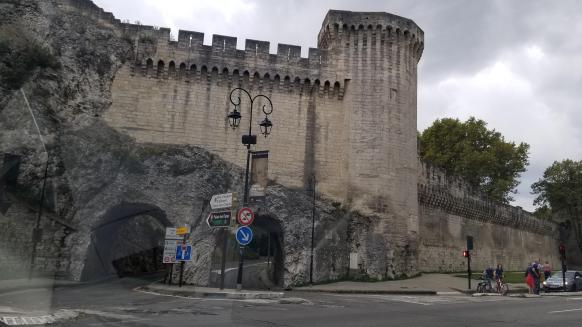
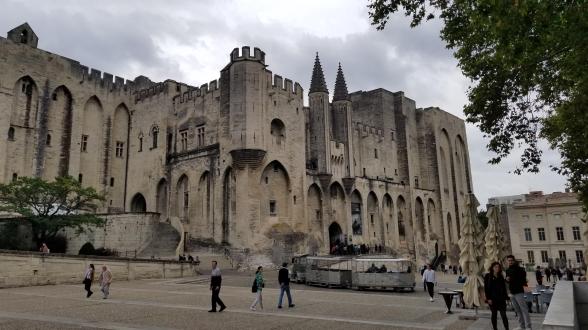
But after lunch, we left Lyon behind and drove on to Avignon for a quick stop to see the Palais des Papes (Popes Palace), Notre Dame des Doms, a park next to the Palace with a view of the remains of a medieval bridge, Pont St. Benezet, the Rue de Teinteruiers (an old street) and the Place de l’Horlage (a busy square of shops and restaurants).  While we walked, we stopped at a bakery for a couple giant meringues and Calisson de Provence, a small candy that was reminiscent of marzipan.

20191020_15185020191020_152656


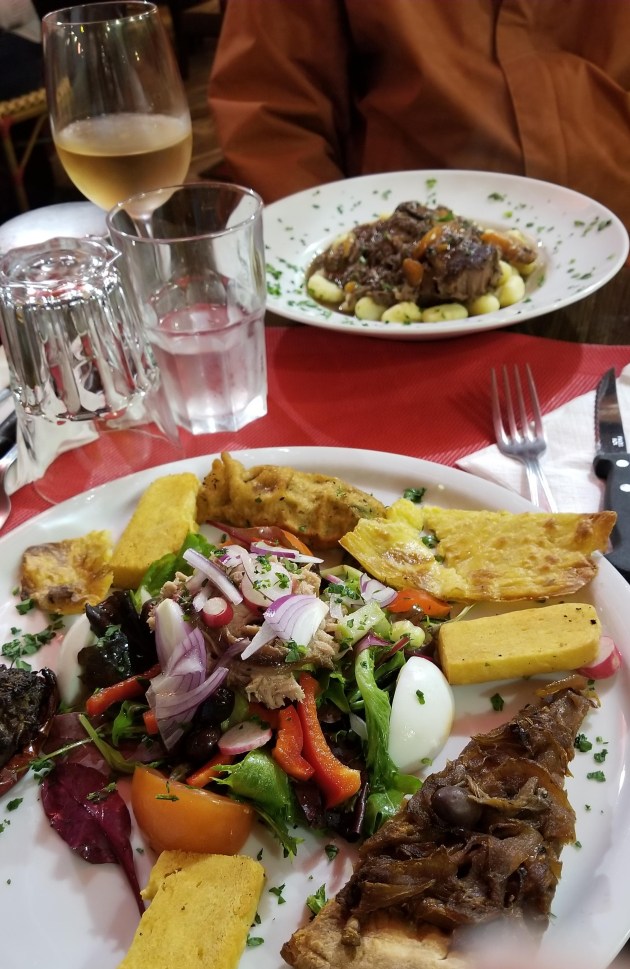
Finally, we ended our day by driving to Nice where we checked into our apartment and had a dinner of Farci (vegetables stuffed with a bread crumb mixture), Socca (a soft chickpea bread), Salad Nicoise, Beignets of Cauliflower, Panisse (a crispy bread made from chickpeas), Pissaladiere (kind of like pizza with toppings of olives, caramelized onion and anchovies) and Danube Nicoise (a meat stew) along with a nice Rosé from the region.

20191020_204134.jpg

Day 3

On the third day, we drove an hour into Monaco for the morning.  The hour drive turned into 1 and a half after we got stuck in a line of traffic, emerged and then made a wrong turn and had to sit in the line of traffic again.  After that fiasco, we had to try to find a parking garage with available spaces and the one we found was insanely small for an average-sized car, had the strangest layout of parking spaces and had an issue on one level causing the staff to try to get everyone to back up a narrow curve.  By the time we parked, everyone’s nerves were shot!  When we finally got out of the car, we decided to get a mid-morning snack of Barbagiuan (a fried dough stuffed with swiss chard and ricotta) and Pissaladiere.

20191021_095345

Next, we walked to Monte Carlo casino where we saw lots of fancy cars-Rolls Royce, Lamborghini, Ferrari.

20191021_102007


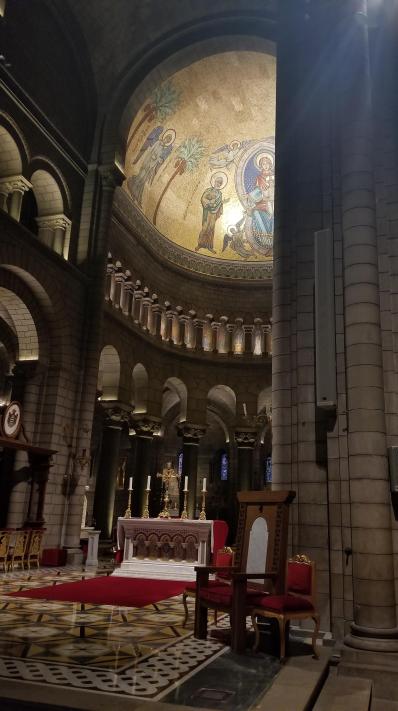
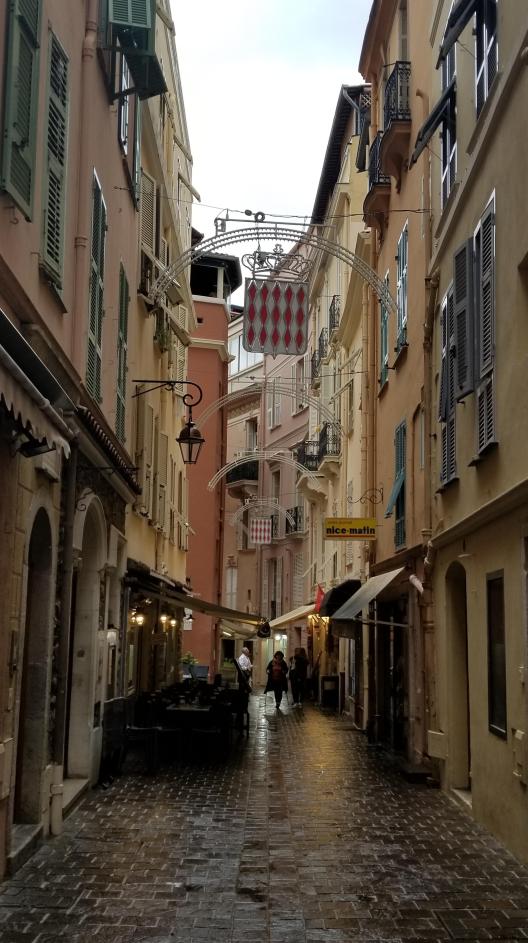
After that, we walked through a heavy drizzle to the old town where we saw the palace, old streets and the cathedral where Grace Kelly and Prince Rainier were married and buried.


20191021_11054620191021_11172320191021_112436

20191021_111118

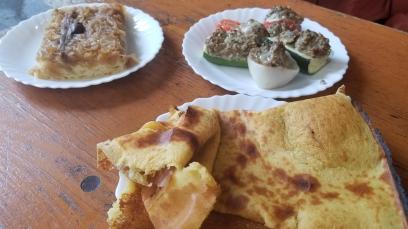
Finally, we walked back along the Jardin St. Martin (a garden along the coast) to a bakery on one of the small old town streets to try some Fougasse (a bread similar to Foccacia).  We got a couple of different varieties-cheese, ham and cheese, gorgonzola and olive oil- but decided that the olive oil was the best.


We drove back to Nice where we tried another restaurant’s Pissaladiere, Farcis, and Socca and decided it was much better.

20191021_134823

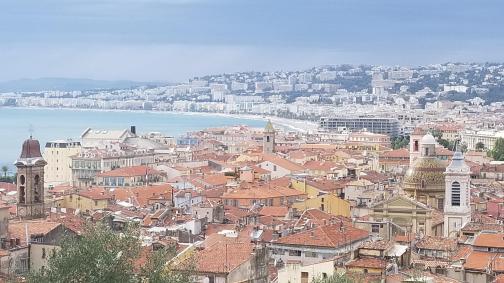
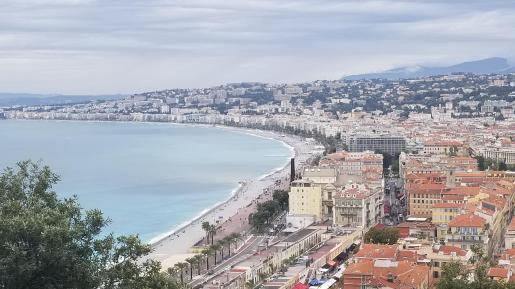
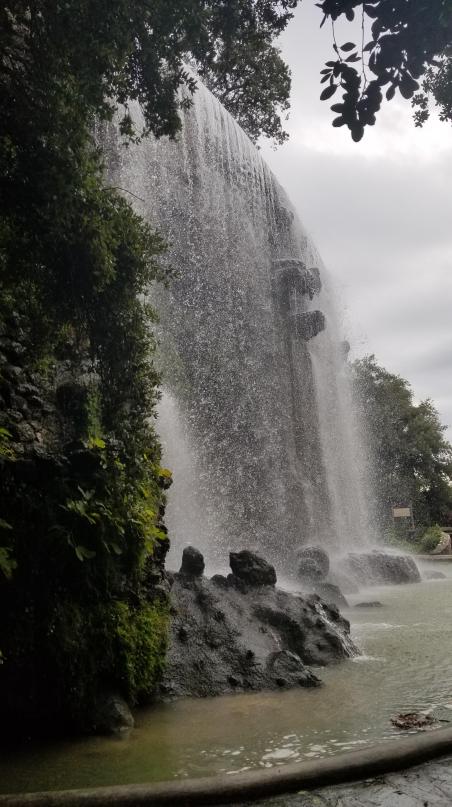
Then we spent the rest of the afternoon walking around Nice.  We went to Nice Cathedral which was very nice on the inside, Parc de la Colline du Chateau which was on top of the mountainside and featured a waterfall.  We stopped at an Israeli cemetery near the park and then walked down along the Cote d’Azur on the Promenade des Anglais.

20191021_14290720191021_14431020191021_144200

20191021_14450320191021_15192320191021_15354020191021_153900

Back in town, we walked through some of the streets, checked out a few shops and had drinks and a chocolate fondant at a street cafe.


Later that night, we ate at a very small, cozy restaurant where we had spinach gratin with mussels and a tomato tart as an appetizer and then tried pasta pistou (pasta with a kind of pesto sauce made from olive oil, basil and garlic rather than pine nuts), ravioli Danube and calamari.  We followed that with chocolate mousse and creme brulee for dessert.  It was a very delicious meal!


Day 4

Next up, we left Nice and headed to Marseille, the oldest city in France.  We began our day at the Palais de Longchamp.  It is a very beautiful building and fountain, set in front of a large park, which was built in the 1800s to celebrate the water system of the city.

20191022_09555720191022_100148

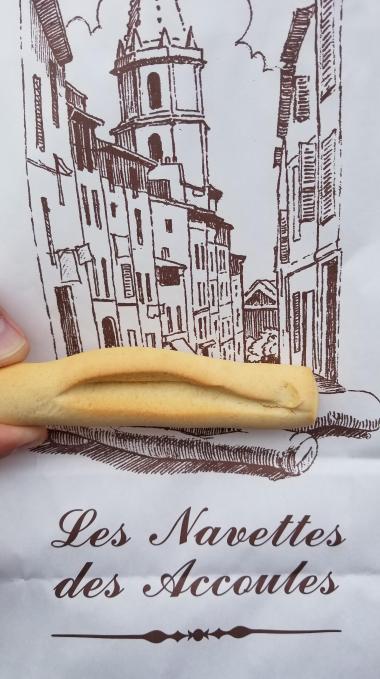
Our next stop was the old port area.  From there, we ventured into the surrounding city streets to see a couple of churches.  Along the way, we stopped in a bakery to buy the famous orange-flavored local biscuit, Navettes.  No one was a fan.

20191022_105042

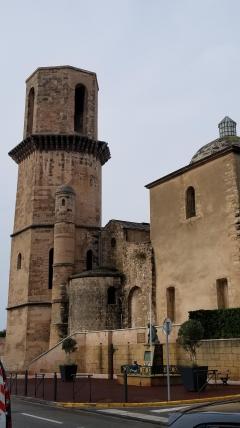
The first church we came to was a very small and plain church.  The second was called Major Church, and it was very large and done in a Byzantine rather than Gothic style which meant it featured pink marble, colorful ceilings, and mosaic-tiled walls and floors.

20191022_105408


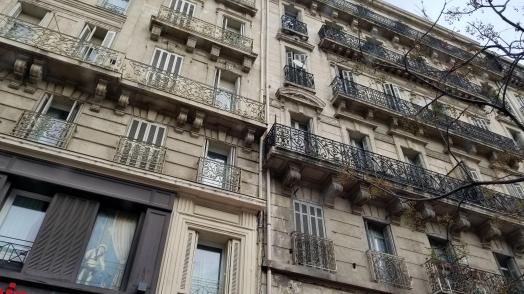
After viewing the church, we wandered through Le Panier district and back to the Old Port which was filled with sailboats.  Overall, we found the city to be pretty dirty and very graffitied, but there were some nice features on some of the old buildings like the ironwork.  After walking around, we found a restaurant at the Old Port and settled in to try several local specialties.

20191022_10283220191022_105524

The meal began with Pastis, an aperitif that was very strong and tasted of black licorice, along with tapenade and Panisse (chickpea bread).  The main meal consisted of Bouillibaise (fish stew that originated in Marseille), aioli (garlic, olive oil and egg sauce eaten with shellfish, cod and vegetables) and Moules Marinier (steamed mussels) with Cassis (regional white wine).


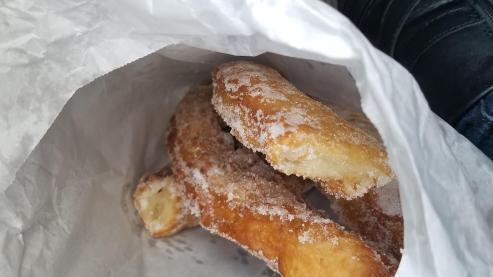
As we passed on dessert at the restaurant, we stopped at Chez Magali, a small stand in a different part of town, for a piece of deliciousness called Chichi Fregis.  This is like a very large and dense orangy flavored churro served hot and covered in sugar.  It was awesome!

20191022_142249 (1)

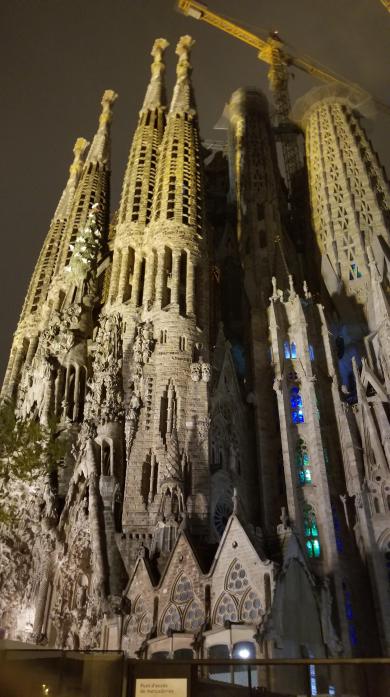
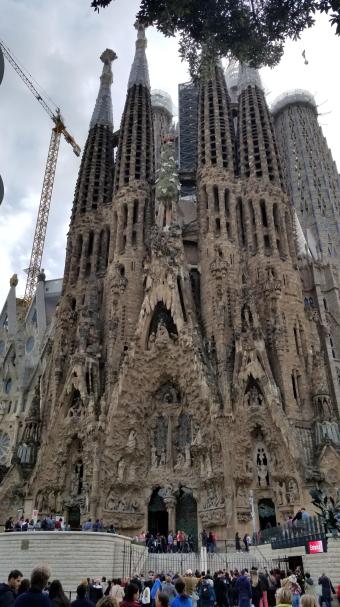
After getting our fill of delicious food, we had a long drive to Barcelona.  Once there, we checked into our apartment that was across from the Sagrada Familia, the famous church by Antoni Gaudi.  We strolled around the church after dark and then went to dinner at Cal Boter.

20191022_20453120191022_204937

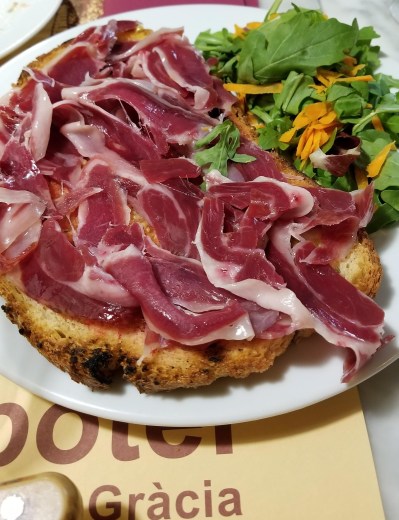
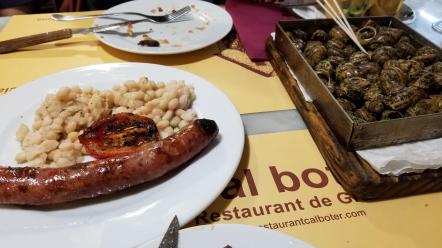
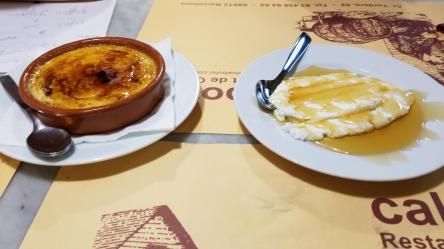
At dinner, we had Esqueixada (cod salad), Escalivada (grilled eggplant and red pepper in olive oil), Pa Amb Tomaquet (a toasted bread smeared with tomato), Jamon Iberico (famous Spanish ham), snails and Botifarra (sausage with white beans).  We also had to get a bottle of cava-not only is Barcelona known for cava, but it was very inexpensive.  Finally, we ended the meal with Crema Catalana (kind of like creme brulee) and Mel I Mato (cheese with honey drizzled over it).

20191022_21300220191022_214131.jpg20191022_21444020191022_223123

Upon leaving the restaurant, we discovered there was a thunderstorm outside, and we had to walk back to the apartment in the pouring rain.  It was not the most favorable end to the day, but we survived!

Day 5

Our first full day in Barcelona began with a trip to Casa Mila, one of Gaudi’s buildings in the city.

20191023_094448

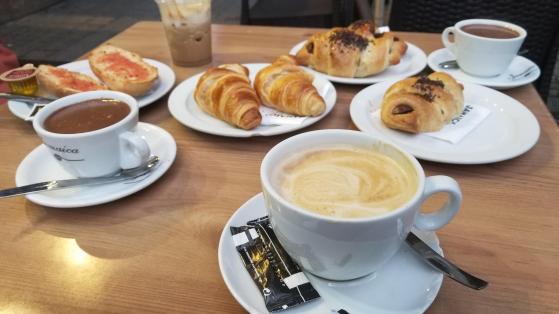
After viewing the architecture and examples of what the rooms looked like when they were used as a residence, we stopped for a breakfast of pastry, Pa Amb Tomaquet (bread with tomato smear) and hot chocolate (which in Barcelona is served as very thick chocolate).

20191023_100657

Then it was off to Casa Batllo, another Gaudi building.  We found this one to be too crowded to appreciate.

20191023_103813

After this, we made our way to St. Pau Hospital.  It was an entire complex of buildings that used to be used as the hospital but now houses training facilities, art exhibits, a museum and parts of the college of medicine.  The exteriors of the buildings were very interesting and pretty but the insides were nothing spectacular and the layout of the museum was rather confusing.


With all of this walking, we had built up quite an appetite so we stopped for a lunch of red wine, Escalivada, Catalan beans, Iberico and chorizo, sausage, Bomba (potato croquette) and empanada.


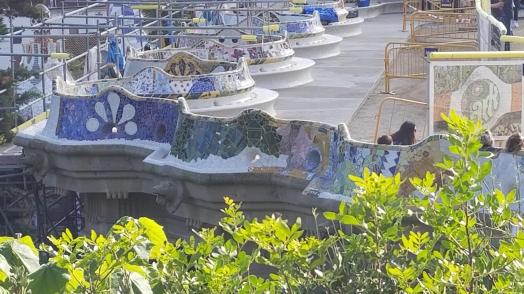
After lunch, we decided to complete our tour of Gaudi work at Park Guell where several of his pieces are installed.  There were also some amazing views of the city and coastline from the park.  Of course, you had to be high up to get such sweeping views and the walk up to the park was a killer!

20191023_15311320191023_154056

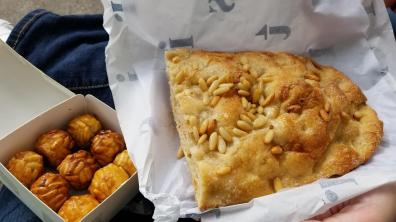
After the park, we went to the Gracia neighborhood to sit in a square and try a snack of Coca (a large pastry with pine nuts) and Panellets Pinyons (pine nut candy).

20191023_163139

After this quick break, we walked around the exterior of Sagrada Familia and went to the Gothic district to see Placa del Rei and the Music Hall which was a very cool building.  We walked around the area which had many interesting buildings before heading to Las Ramblas (the famous boulevard with many stalls and shops).  Off of Las Ramblas was the open market which we walked through on our way to dinner at Can Cullertes.


20191023_17261620191023_17434520191023_19201620191023_193002

At dinner, we had cava, Escudella d’Olla (broth with meat which was very much like chicken noodle soup), grilled calamari (so good), paella and cannelloni followed by Crema Catalana.


Day 6

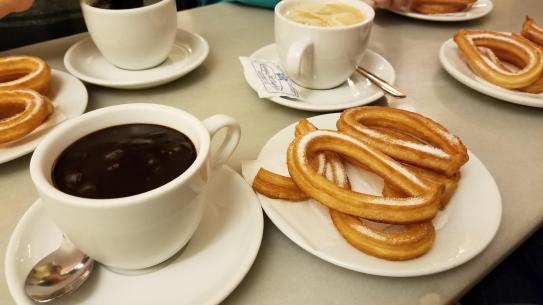
Our second day in Barcelona was a slower pace.  We began with some hot dark chocolate and churros for breakfast at La Granja M. Viader.  It was a great breakfast until one of our children proceeded to throw up in the bathroom.

20191024_104213

After breakfast, we walked down Las Ramblas to Barcelona Cathedral and then to a bakery where we tried Xuxo (fried pastry filled with crema Catalana) and Coca de Crema(another cream pastry).  At this point, said child threw up again in the public trashcan in the middle of the busy square.

20191024_115817

We decided to go ahead and head to the beach area where we sat looking at boats and ate some lunch.  We tried sangria, Bomba, Patatas Bravas (potato cubes with spicy cream sauce) and Fideua (paella made with noodles instead of rice).  Said child did not eat any of this, but instead threw up one final time in this bathroom.


After lunch, we walked to the beach.  It was a sunny, warm day so the beach was very crowded.  We decided not to stay too long and went back to our apartment to rest for a while before dinner.

When we did head out, we decided to go to a tapas bar.  The adults tried Cruzcampo beer and cava in addition to tapas of Iberico, tortilla (egg and potato tart), Pa Amb Tomaquet, calamari (which was amazing), albondigas (meatballs), Bontifara (sausage and beans) with mushrooms and croquettes (honey and cheese, onion and cheese, ham, and chicken).  It was all very good!


After dinner, we went to Montjuic Fountain to watch the water and light show.  It was a nice show, but there were a lot of people there.


Some of you may be wondering if Barcelona was safe as they were experiencing revolutionary protests of the government.  We encountered no problems, but on our last night, we did see a small group of protestors very peacefully chanting.  Other than that, the only sign of any disturbance was the number of yellow ribbon signs painted on buildings, the sidewalk and signs as well as hanging from people’s windows.

Day 7

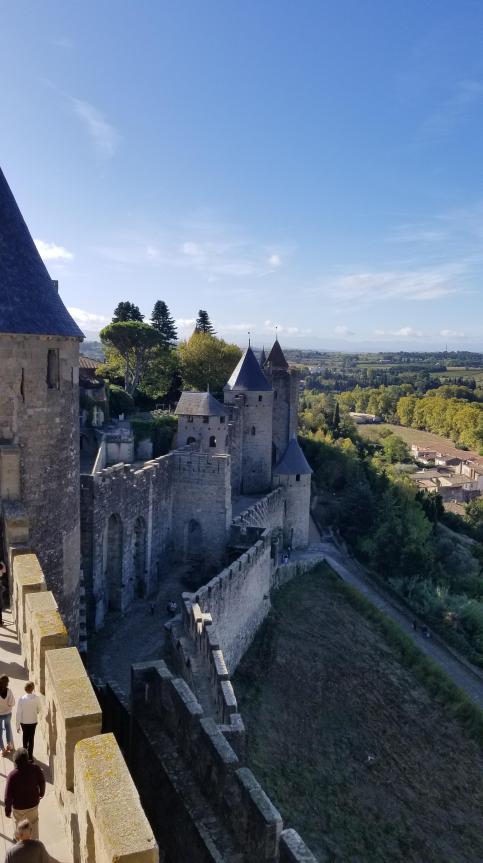
We drove back into France through some of the French countryside with many vineyards on our way to Carcassone to see the medieval citadel.  We toured the area inside the city walls as well as the castle and ramparts.  We enjoyed an informative movie about the citadel and the church was nice.

20191025_121751

20191025_111338

20191025_113634

20191025_115120


We stopped for lunch inside the city walls.  We tried cassoulet (sausage, pork and beans casserole), galette of ham, cheese and egg (like a crepe filled with those items) and chicken Carcassone (chicken legs with vegetables).


After lunch, we drove to Limoge for a stopover to sleep.

Day 8

Our final day was mostly spent driving, but we did stop in Paris to see the Van Gogh immersive experience at the Ateliers Museum.  It was very cool and an interesting way to view Van Gogh’s art.  There was also an exhibit on Japanese art that was very good.

Before leaving Paris, we stopped in a small restaurant near the museum for a lunch of mushrooms in cream sauce with a poached egg, vegetable ratatouille with polenta and goat cheese and a beefsteak.  Our final hoorah was a dessert of chocolate mousse and sticky toffee pudding.  It was a great way to end the trip!


Overall, our trip was a culinary delight, we enjoyed many architectural pieces, historic buildings, beautiful scenery and we were able to add in an educational component as one of our children had recently studied Gaudi’s works and Van Gogh’s work last year.  We’ll call that a success and a trip well done!

Lessons From the Volcano

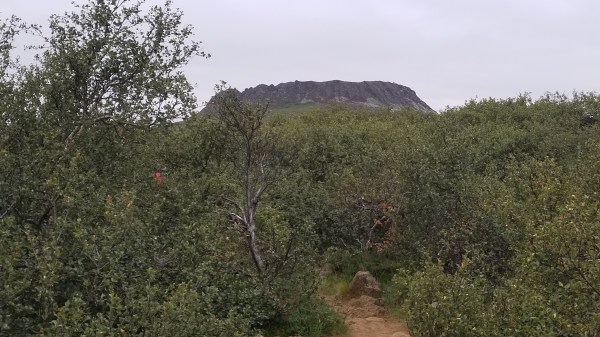
Our family recently went on a hiking excursion up to the top of a volcano.  It was an enjoyable hike filled with interesting scenery.  Reaching the top and surveying both the inside of the volcano and everything surrounding us for miles was quite amazing and very rewarding after the effort put into getting there.  But I think the more important part of that hike was the lessons along the way.  You see, if you have never stopped to ponder it before, you can actually learn a lot from a good hike.  And most of the things you learn can be applied to life.  So here’s what the hike to the volcano taught us.

1.  You Can Be Tripped Up by Small and Large Rocks

As we picked our way through lava fields on our way to the volcano, there was an abundance of rocks to step over and around.  It didn’t really matter if they were small rocks or large rocks.  They all hurt your feet, they all created a tripping hazard, they all slowed us down and they all made the hike much more challenging.  There are things in life that do the same thing to us.  It doesn’t matter if it’s a big thing or a small thing-an obstacle is an obstacle.  But the hike to the volcano reminded us that regardless of the size of the rock, the only way to keep going was to pick up our feet and go.  In life when we are faced with obstacles, we can’t just stop.  We have to pick up our feet, maneuver through and go.

2.  Keep Your Eyes on the Path (But Don’t Forget to Look Up Sometimes)

With rocks all over the ground, we really had to keep our eyes on the path to make sure that we didn’t trip or misstep which might have caused us to fall.  We had to keep our eyes on the path.  In life, don’t lose sight of what you are doing.  You are on the path to where you need to go, but keep watching the path to make sure you don’t misstep or get sidelined by an obstacle.  Be that as it may, if we never looked up from the path, we missed the scenery extending for miles and the volcano looming closer.  Even with your eyes on your path in life, you’ve got to look up sometimes and see the bigger picture so that you can make adjustments and appreciate everything around you.

3. Sometimes Your Path Is Empty and Sometimes It’s Crowded

When we hike, we generally enjoy hiking on secluded trails because it allows us to have quiet family time and to enjoy nature more.  As we began hiking the path to the volcano, we were alone-not many hikers had ventured out in the early morning hours.  But as time progressed, more and more people showed up.  Sometimes we wished they weren’t there and sometimes it was nice to encounter a friendly face and exchange a pleasantry.  Sometimes in life, we are more alone and secluded which can allow us to slow down, think about ourselves and take in the world around us.  At other times, we have many people coming in and out of our life.  During those times we can be uplifted and encouraged by others.  And, though you might have a preference, neither time is wrong; they both serve a purpose, so appreciate both the times you are alone and the times you are not.

4. Both Ups and Downs Can Be Tough

Of course, hiking up a volcano means both inclines and declines.  Experience, instinct, and knowledge tell us that going up will be tougher than coming down.  But, I’m here to tell you that they are both a challenge.  Going up there is a physical challenge required to propel oneself up, and coming down there are loose rocks and an equally steep decline requiring great effort to avoid slipping.  In all the hikes we have done, I’m truly not sure if going up or coming down is harder.  In life, we also believe that only the times that we are having to struggle to rise above something or rise up to new heights are hard, but there are also moments in coming back down from something great or an impressive achievement that can also be quite hard.  Anyone who has ever worked incredibly hard to achieve success at work on in school and is then forced to take a step back or begin again or who was celebrated for a while and then forgotten can understand how hard coming down can be.  Anyone who has fought for a relationship or struggled through difficult times just to lose the relationship in the end, can understand how hard coming down can be.  So don’t underestimate or devalue the process of coming down.  Reaching the top and the bottom are both successes.

5. Drop the Rocks

Our son is an avid collector of things on a hike (don’t worry, he almost never removes them completely from the trail).  But when you are hiking in a lava field, filled with lava rocks and your local friends encourage you to take some, you might begin to go a little crazy and fill your pockets with some rather large rocks.  After getting slower and slower and struggling to keep up, we asked our son what the issue was.  He shared that his pants were too heavy and weighted down, and it was making him go slow.  So we gave him the obvious advice-drop the rocks!  How many times in life do we collect things-money, accolades, schedule fillers, possessions, people, obligations that we don’t want?  In life, it is often hard to see the obvious-we’ve got to drop the rocks.  If the things that we are collecting are weighing us down or are unwanted and useless, why not just let them go so that we can move forward more easily?

6. If You Choose the Wrong Path, Try to Find the Positive (But Sometimes You Have to Go Back)

Sometimes our youngest complains incessantly about the path that we are on and how the hike is going, so we recently came up with a game to change the thought process.  We started naming everything that was nice about the trail or the nice things that happened because we chose this trail that wouldn’t have happened if we had chosen another.  And guess what- it worked!  On our hike to the volcano, when we began to regret the incline and length of one of the trails, we all began finding good things about the trail and before long our youngest was the one coming up with the longest list and the complaints stopped.  In life, we make choices and set ourselves on a path.  Sometimes we enjoy the decision and sometimes we regret it.  But there are times that once the choice is made, we have to keep moving down the path.  Those are the times to find the positive and before long we may find that the path wasn’t so bad after all; that it afforded us opportunities and experiences that another path would not have.  Now, having said that, hiking has also taught us that there are times when you just have to admit defeat or a mistake and turn around to find another path.  Turning around isn’t a failure.  You still had some experiences and learned some lessons from the path you were on, it’s just time to accept that you need a new path.

7. Don’t Worry Until You Get There

Sometimes when you are hiking, it is easy to look ahead and begin to worry.  As you hike to a volcano, you can worry about how far away it actually is and how long this will really take, if you will be able to climb up the steep side, if you will feel safe at the top, if you can make it back down, or if you will be too tired or get hurt along the way.  But even though all of those worries were expressed on our hike, none of them happened.  What did happen was time was spent worrying which took away from the time that could have been spent enjoying the scenery and the company of one another.  When you hike, being prepared is great-take water, take food, take first aid, take appropriate clothing for varying conditions, but worrying about what might happen is useless.  If problems arise, you will be able to handle them as they come, make decisions, and adjust.  The same is true in life.  Preparation is always a good idea and can save us a lot of grief and heartache, but worrying before the problem arises just takes away from living our life fully and enjoying it.  If problems come in life, you will be able to adjust and find ways to handle them, so don’t waste time worrying until you get there.

8. Negativity Slows You Down

I don’t know how many times on our hike to the volcano (and many others) our son stopped in the path to complain and have a meltdown over all the things that he felt were difficult or unjust.  But you know what, that just slowed us down.  It didn’t help us get where we were going, it didn’t help us complete the hike, it didn’t remove the things that he was complaining about, and it didn’t help any of us enjoy hiking.  Negativity creeps into all of our lives at times, but is it helping us at all or is it just slowing us down or even preventing us from reaching our goal, experiencing an adventure, appreciating the things around us and living our lives to the fullest?

9. Sometimes You Have to Have People to Encourage You

From time to time on our hikes, one or more of us has begun to feel tired or hungry or like they just can’t continue.  The hike to the volcano was no different.  But we never hike alone, meaning there is always someone to encourage you, to remind you that you can do it, to sit with you when you have to have a break, to help you get going again, to give you a little push or pull to move forward and to stay by your side until you get to the end.  Life is no different.  Everyone gets discouraged along the path sometimes, and if you are alone it is hard to push through.  Having people alongside you on the path can help you know when to pause and when to get going again, and they can encourage and support you.  It’s critical in hiking and in life.

10.  Go Your Own Speed

As I mentioned, our hike to the volcano involved a lot of loose rocks along the path.  Sometimes we could hear someone from behind that was hiking faster than us and the temptation would be to speed up.  But, this posed a risk in that it was much harder to walk safely on the rocks when we were going fast.  Typically, we had to just step aside and let the faster people pass us by.  That meant there were going to be more people at the volcano when we got there, but we could hike more comfortably and not worry about getting hurt.  It’s also tempting in life to try to keep up with others or “get there first,” but that isn’t always what’s best for us.  It’s more important to think about what we need to do and go our own speed.

11. Share the Path

When we are hiking, it is often frustrating to encounter others on the path.  If the path is narrow and they are coming toward us, we have to step to the side or off the path to let them go by or have others stop and wait on us to go by them.  And, sometimes, if people are coming up behind us and we feel pressured because we aren’t fast enough, we have to completely stop and get off the path to let them pass.  But, the trail isn’t just for us, so sharing the path is part of the hike even if it is inconvenient.  Life isn’t just about us either.  We exist with many others, some of who are a part of our life and some who just pass by.  But just like on a trail, we have to share the path.  We can do that by being respectful, considerate and accepting of others, making concessions and compromises, thinking about things from another’s perspective, taking care of the spaces we all share, and being kind.  There are just too many of us on this path of life.  We have to be able to share the path.

12. You Can Do It

Our hike to the volcano was filled with challenges, negativity, complaints, obstacles, frustrations, and uncertainty.  There were many times that we heard the mantra “I can’t, I can’t do it!”  To which we would reply, “You have to.  You have no choice.  You can’t just stop here.  There is nothing to be done but to keep going and get through it.”  And you know what- we did!  We made it to the top and we made it back down.  We have hiked many, many trails over the years- some are short, some are long, some have been in extreme heat, some have been freezing cold, some have been easy, and some have been very challenging, but the one thing they all have in common is that we completed them all.  Because even when you think you can’t, you can.  You can be determined, fix yourself to your goal and push yourself to the end.  Life is just like a hike.  There can be easy times and tough times, there can be obstacles and a million reasons why you think you can’t.  But in the end, you can’t just quit.  You have no choice but to keep going.  You have to decide where you are headed, set a goal, pick a path, commit, work hard, be determined and focused, push yourself or find others to push you, let go of things that slow you down, stop worrying, accept the path for what it is, learn to accept others on the path, enjoy the journey and just go.  You can do it!


Zundert Flower Parade

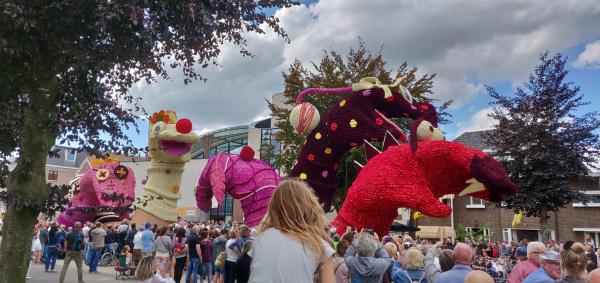
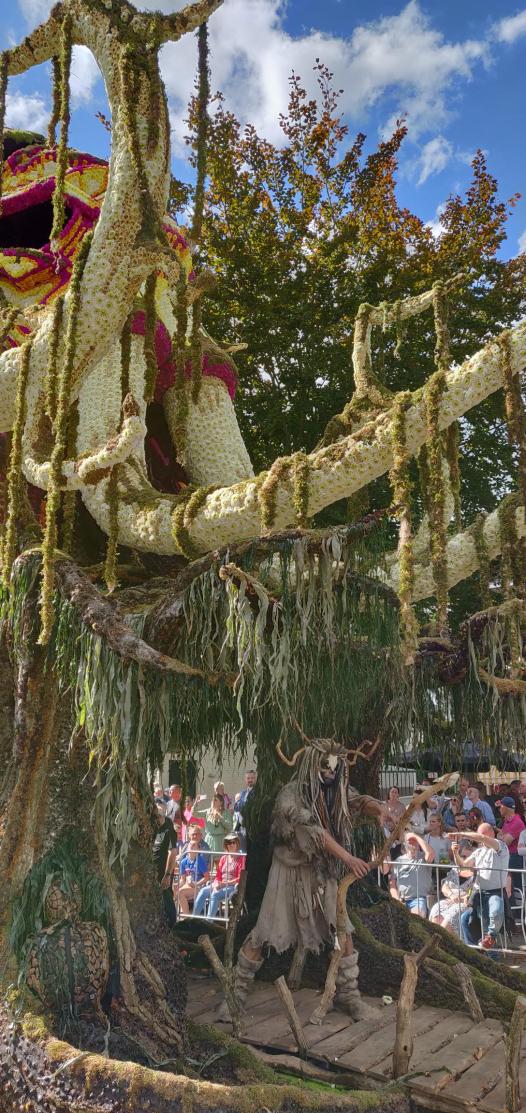
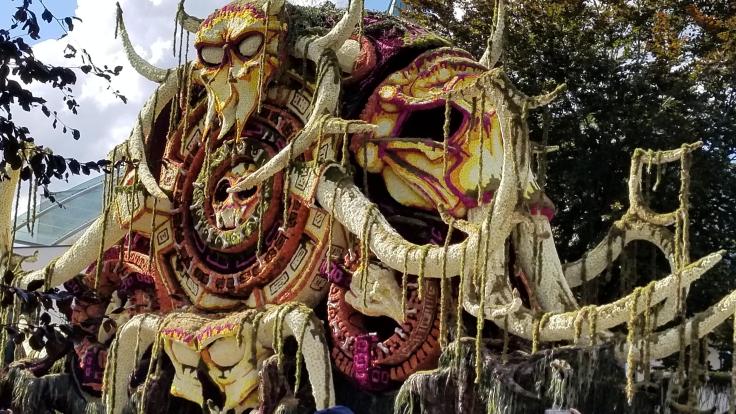
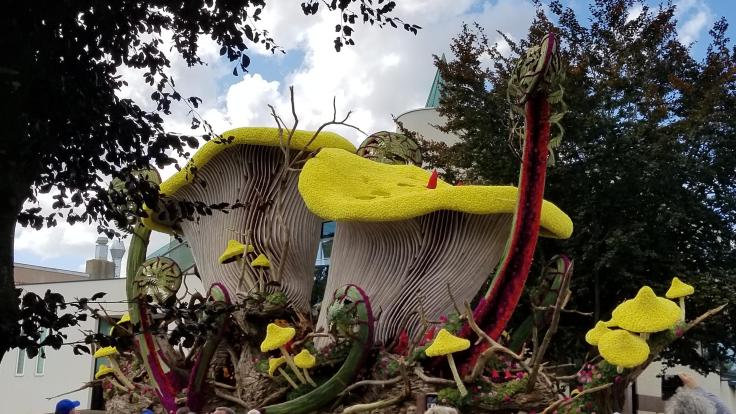
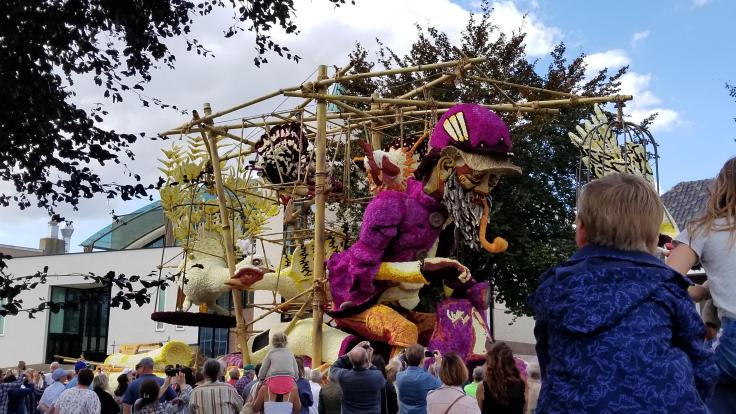
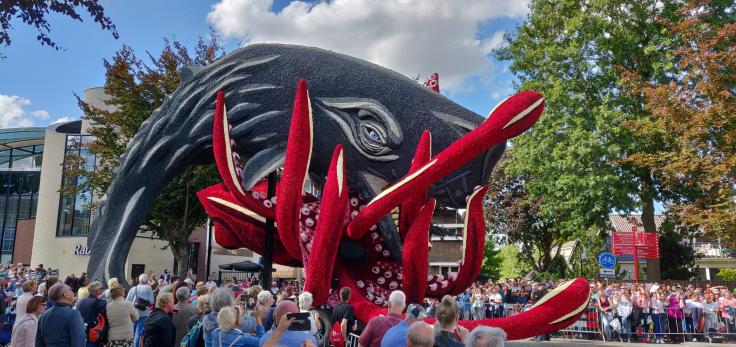
Today, we traveled to a small town near the Belgian border for what is billed as the largest flower parade in the world (I’m not sure how they came to that conclusion as I’m still pretty sure the Rose Parade is bigger).  None the less, this parade was pretty well done with lots of floats made mostly from dahlias that are grown in the area of Zundert.  Much like the Rose Parade, these floats are huge and elaborate with moving parts, sound, and special effects.  Unlike the Rose Parade, some of these floats are dark and bizarre-think The Grim Reaper, demonic, creepy figures and one float that seemed to be depicting an indigenous spirit type religion.

IMG_20190901_152551

20190901_15212720190901_15165320190901_14380120190901_14524320190901_14394020190901_150656

There were a few floats that were a little gentler and cute.

20190901_14561120190901_15091420190901_14184620190901_143629

IMG_20190901_151200

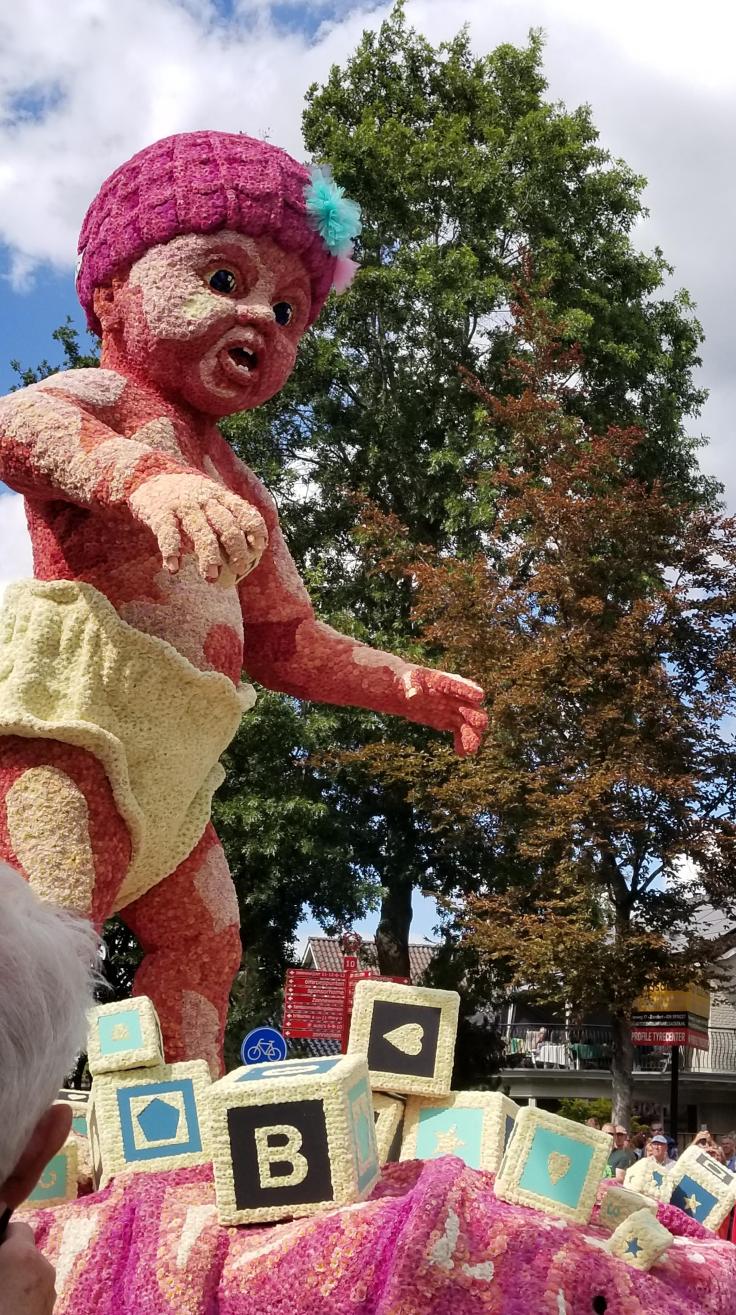
And then there was this one, which I’m not sure if it would fall in the cute or scary category (actually it was a part of a series of floats depicting babies from in utero to walking)!

20190901_142710

Finally, there was the quintessential Dutch moment when the band rode by on bicycles.  I’m not sure how they do it, but my guess is that you would only see that in The Netherlands!

20190901_141642

And to top it all off, Zundert is the birthplace of Vincent Van Gogh, so we took a quick stroll by the house where he was born.

20190901_112807

The weather was comfortable, the floats and bands were fun, and the town was nice for a walk.  All in all, it was a good day!

What’s It Like Being an Expat Anyway?

The experience of being an expat is somewhat difficult to explain.  Those who are or have ever been expats generally understand things that you are going through very readily (which is why expats often find solace in the company of other expats), while those who have never been in the expat situation find it harder to understand.  Having never been an expat myself, I really had no idea what the experience would be like (even being married to someone who was originally from another country as living in a country temporarily is not the same as making a permanent move to a new country which has its own set of rewards and challenges), and not really knowing any expats before our move, left me unaware of what to expect.  However, even if I had spoken to other expats, I think I still would have found it hard to comprehend what the life is really like as it is a unique situation that is best understood through experience.

So, while I have found it difficult over the past year to explain to non-expat friends and family what our experience and existence right now is truly like, I do find it easier to relate what I think are the two best things about living as an expat (especially operating within an expat community which is what we have with our school) and the two most challenging things.

Best Things

  1.  We get to travel to so many amazing places; places that I never imagined or even planned to visit.  Actually, many of these places are places that I never even heard of before living overseas.  Getting to see places of historical significance, places that existed long before my home country existed, world-famous works of art, breathtaking landscapes and getting to try delicious cultural foods is amazing.  Getting to have these experiences with my family, especially my kids, is priceless.
  2. Meeting people from all over the world and getting to learn about their cultures is wonderful.  Even better is learning firsthand that we are all different but also the same, and that there are always ways that we can relate to one another.  Watching your kids make friends with people that have lived in so many different places and have so many cultures as a part of their existence is awesome and, hopefully, something that will make them more accepting, broad-minded adults.  But the best part is just realizing that you have friends (and sometimes some of the best friends you have ever had) all over the world and that because of this, you are changing and shifting your perspective and becoming a better version of yourself.  A friend that left recently received a gift that was a world map and friends wrote their names on their home country or in the country where they now reside with a note that said, “wherever you are in the world, you can always find your friends.”  Finding friends and knowing you have people that you can count on all over this world is an amazing gift.

Worst Things

  1. While it’s amazing meeting people from all over the world, the expat community is also a very transient community meaning that people are always leaving.  You make friends, you spend a lot of time together (especially because you can relate to one another, you often have a common language and you have no other connections in the country) and then they leave.  This past year, I made some very good friends and then three of my best friends and several others left in one mass exodus.  Now, I have to start over, find people to socialize with and talk to, and it’s not easy.  In fact, there are days where it makes me quite sad.  But, it’s the nature of the expat life, and, so, I will find some new connections and strengthen those with the friends who remained.  But, more than likely, I will find myself (as will my kids) saying goodbye again very soon.
  2. As an expat, you exist within two or more worlds.  You have the country/home that you came from and the country you now reside in (and for some, you also have your country of birth/origin and/or the country of a spouse).  You often left behind friends and family in one country, but have also made or returned to friends (and sometimes family) in a new country.  You have a culture that you were familiar with in your home country and a culture that you are interested to learn in your current country.  There are things that you miss in your home country, but also things that you like in your new country.  In some cases, you have left behind a home or property in a home country, but you also have a home and property in the current country.  There are responsibilities and obligations spanning the globe.  And to make it worse, you are trying to maintain relationships and connections in a home country (and many of these people cannot quite relate to what it is like for you in the current country) while trying to make new connections in the current country (so that you have people to socialize with and relate to in what is, at times, a challenging existence).  Add on the fact that for many expats, there is no idea what the future holds-where you will live next, what the next job or assignment will be, where your kids will go to school or on what time frame any of these things will occur.  It’s all up in the air and there is no sense in planning or trying to figure it out because it is impossible -there are no answers.  To say that you live in two worlds, that you belong in multiple places but also belong nowhere at the same time, might be the best way to describe it.  It is a strange feeling, especially for someone who is new to the lifestyle and has been living in basically one place their whole life.

But having said this, I wouldn’t trade this opportunity, and I am not complaining or failing to see how lucky we are to have the chance to experience this.  I am merely pointing out, that like many things in life, there are multiple facets, good and bad, rewards and challenges, ups and downs.  This is my expat life and I hope that you all can take something away from both the exciting and challenging side of this existence.  That is what we try to do, and, while we may not know what will happen next, we hope that embracing all aspects of this lifestyle will make it a more rewarding experience which will help us to carry the things that we learn with us for the rest of our lives.

Medical Misadventures

After one year, maybe you thought there would no longer be misadventures.  But, I am here to prove that, as an expat, there can always be misadventures!  We were very lucky in the past year and didn’t have to make any doctor or vet visits, but recently we had to jump headfirst into medical care abroad!

First off, we needed to get a longterm pain in our daughter’s elbow evaluated.  The first step in using medical care in The Netherlands begins when you first arrive.  You must pick a doctor as a primary doctor.  You can not just pick anyone though.  The doctor you choose must live near your home.  We were informed that the reason for this is that some doctors will still make housecalls if necessary, so their office needs to be near your home.  Also, for those used to things in the US, you do not pick a pediatrician for your children.  They too use the primary doctor and may be referred to a pediatrician if necessary.  And there is no need to check if a doctor is on your insurance.  While there are variations in what is covered/amounts based on the plan, insurance covers the medical expenses regardless of where they are received.

Once we knew we needed to see the doctor, we called and were able to get an appointment very quickly, even though it was holiday time here, and we were not sick or with an emergency.  The doctor listened to the symptoms and made some preliminary predictions, but suggested we go get an Xray to verify that there was nothing fractured.  We immediately went to the hospital where the radiologist is located.  Upon arriving, you have to first register at a desk in the main lobby area (you only have to do this once; if you have registered before and are in the system, you can skip this step).  After registering, we had to then find radiology and take a number.  As a side note, when we were called in, the person receiving an Xray before us was leaving, and it was quite exciting to find it was a man being escorted by four police officers!  Receiving your Xray is just like receiving one in the US except that they do not use any kind of protective vest on the patient as they would in many situations in the US (this held true for dental Xrays as well).

As soon as the Xray results were sent to the primary doctor, they decided to refer us to a pediatrician as there was nothing on the Xray that would indicate the reason for the pain.  They do work on a referral basis here in The Netherlands, so you do need to receive a referral to see most specialist doctors.  As soon as we received the referral, we called the pediatrician, whose office is located in the hospital, to make an appointment.  Again, they were able to schedule an appointment for a date within a week of the date we called.

Here is where things began to get a little different.  When we arrived for our appointment at the pediatrician, we signed in and were sent down the hall and around the corner to an office where a woman looked us up in the computer and then took height and weight measurements.  She imputed the information and then sent us back to the waiting room for the pediatrician (which was also the waiting room for a gynecologist and perhaps some other specialists as well).  When they called us, we went into a room that looked like your average room at a pediatrician’s office, but, in addition to the exam table and sink, it also had a desk with a computer and chairs as you would find in an office.  This is where we sat while the “doctor” informed us that she is actually a doctor in training and will consult with her supervisor who was not present at this time.  She asked a lot of questions and then finally asked my daughter to sit on the exam table while she did some manipulation of her arm and hands to test some things.  After this, she exited a rear door in the room to retell everything to the actual doctor and consult with her.  About 10 minutes later, she returned with the supervising doctor and they told us what they thought might be going on.  They also said, that since they are not certain, they would be consulting the next day with some rheumatologists and Xray technicians that they meet with monthly for further review of our case.  We left with a referral to a physiotherapist and a promise that they would call the next day with the results of their conversation.  The next day, they called several times, but we missed the calls and they left no information (though they did make an attempt to call after hours which was nice).  On the second day, we finally managed to speak to them in person, and they told us that they wanted us to do some bloodwork just to rule out arthritis.

The bloodwork was made very convenient.  We were able to go in the next day, they explained.  As the doctor informed us, we should just go in and tell them that we had a blood draw order, and, before leaving, we should make an appointment for one week later to receive a phone call from the doctor to receive the results.  It all seemed so simple, but as an expat, simple things are not always simple.  The lab was, of course, also located in the hospital, so we ventured back, and, since we did not know where the lab was located, we headed to the front desk to ask.  Here we had a slight language difficulty, but they sent us to the lab.  Hurdle one was out of the way.

Upon arriving at the lab, there were two people at a counter receiving patients.  We walked up and were promptly informed we needed to get a number.  We found a digital machine issuing numbers, but, of course, all options were in Dutch.  Using our very limited language skills and the power of deductive reasoning, we were able to obtain a number which was immediately (I mean within 1 second of spitting out of the machine) called to the counter.  I told the clerk that we were sent by the pediatrician to receive a blood draw.  He asked for my paper.  I did not have one.  In a rather curt manner, he informed me that we needed to go to the pediatrician’s office to obtain it.  Then he told me to get a “B” number and leave it with him so he could help us when we returned and pointed to the number machine.  Now, I had barely figured out how to get a number at all, let alone a special “B” number, and he certainly was not going to assist me as he just kept saying B number and pointing to the machine.  So, after staring at the machine for several seconds, an older Dutch woman walked up to get her own number.  I asked her how to get a B number, and she showed me what to press.  B number in hand, I returned to the counter to leave it with the clerk, and then headed up to the pediatrician’s office.  Hurdle two-done!

At the pediatrician’s office, I was met by a receptionist who first began asking for my daughter’s date of birth in Dutch, even though I had explained what we needed in English-hence she probably knew that I didn’t speak Dutch.  This is fine because maybe English is not strong for her and she prefers Dutch, so I made an attempt to understand what she was saying but wasn’t quite getting it, at which point she said it in English.  I answered, and she promptly went back to Dutch to ask for our last name.  That time I did get it, but asked, in English, to verify that I had the correct meaning.  She found us in the system, printed our lab order and said something else to me in Dutch before sending us on our way.  Now, I have no problem with people not speaking English or even expecting that I speak Dutch, but when she knew I couldn’t and she clearly could speak English, I’m not sure why she was making me struggle (especially in a medical setting where you might be having some anxieties anyway).

But, hurdle three out of the way, we headed back to the lab where we approached the clerk who had taken our B number.  He told us that his colleague would instead help us, so we moved to her counter.  She took our paperwork, said one thing, and then told us we needed to step aside.  She helped someone else and then called us back.  The chaos of what was happening was beginning to make my head spin and my daughter was also having some anxiety about having her blood drawn, so I was starting to feel the pressure.  After verifying our information, the clerk told us to watch for our number.  After a few seconds, our number came up on the screen, but I realized I didn’t really know what to do when the number appeared.  She had told us to go to an automatic door in the room when we were called, so we did.  The door admitted us into a room with several lab tech stations set up, but I didn’t know which one to go to.  Finally, the tech called us over and then began to speak in Dutch.  When my daughter said she didn’t speak Dutch, we got a very strange look and then, I believe seeing my daughter’s anxiety, she became a little friendlier and proceeded to do the draw.  As soon as it was done, we followed the exit signs.  All hurdles were complete!

It was only after we were almost back to the parking garage and my shoulders were starting to relax that I realized I had forgotten to make the appointment for our results call.  I had no idea if I was supposed to make this at the lab or with the Dutch-only receptionist in the pediatrician’s office, but I was not about to go back in to find out.  Later we had to call to schedule it, and they told us that it was no longer possible to schedule an exact time, but they would just call us some time on the following Friday.  Luckily, we were able to answer the phone when they called.  They informed us that the results were fine and that they would call back in 5 months to see how the elbow is doing.  Quite an ordeal!  I’m not sure if I breathed a bigger sigh of relief over the fact that the results were favorable or that I was done with that process.  You see, you can often fit in within the confines of your daily life as an expat, but something that is outside the norms of what you “know” in another country can be overwhelming and make you really feel how much you don’t really belong.

But, for those of you who have stuck with me through this long post and are still curious about other forms of medical interventions, we can also report on the dentist and orthodontist.  The dentist is much the same as in the US, however, when you schedule, you choose whether you would like a 15 minute, 30 minute or 45 minute cleaning session and whether or not you would like to see the dentist for an exam with your cleaning or just have the hygienist clean.  Also, you can determine how often you want to go in for a cleaning, although the insurance (at least the plan that we have) only covers one cleaning a year.  We have been informed, though, that the costs of dental care (routine items anyway) is so low, that the insurance really only saves you a few dollars and thus many Dutch people do not carry dental insurance.  The orthodontist is also similar to the US, although, one thing that I have found different, is that you don’t actually see the orthodontist each time you go in.  In fact, the assistant put the braces on and the orthodontist didn’t even check them.  Also, the time between appointments seems to be more like 6-8 weeks instead of 5-6 weeks.  The cost for orthodontics is also very inexpensive compared to the US.  We will pay about half of what we paid with insurance and a prepay discount in the US.  But, children’s orthodontics here are covered through the parent’s health insurance plan rather than a dental plan.

Finally, we can also speak to the medical care of pets here in The Netherlands as our dogs recently decided to injure one another necessitating a visit outside of the annual exam they had received a month prior.  The annual exam was similar to the one in the US in which the vet examined the animals and administered vaccinations, the difference being that some of the required/suggested vaccinations are different than US requirements/suggestions.  Also, they administered the vaccinations in a nasal spray format rather than by injection (not sure my dogs were big fans of this).  The procedure in an emergency was very similar to the US.  The most seriously injured dog received antibiotics and pain medications while the less serious received a natural cream to rub on the swollen/bitten leg as well as a pain medication.  The main difference, again, was that the costs for these treatments were a fraction of what we would have paid in the US.

Fingers crossed that this is all that I will be able to report from the medical front in The Netherlands.  In the meantime, you can rest easy knowing that we have survived a few more misadventures!


“Chilling” Out in Iceland

Last week, we spent an adventurous seven days exploring Iceland.  Iceland was never a place that I had a desire to travel to nor did I know much about it, but after meeting several Icelandic people in the past year and with the constant nudging from my husband, we booked our trip.  And despite the initial lackluster response to the trip, let me just say that Iceland was great (even though it was a bit cold and windy)!

Day 1

We got right down to business with my husband fulfilling his desire to dive Silfra-the crack between the Eurasian and North American tectonic plates.  He really loved his dive and was blown away by the clarity of the water.  The water was really clear in a lot of places; you could see everything in the water and the reflection of items in the water was unbelievable.

diving silfra

The kids and I hiked around the park that Silfra is located in, Thingviller.  We hiked to some waterfalls and through some rocky and forested areas before checking out the Silfra area including a small church and the Prime Minister of Iceland’s summer house.

We also made a quick stop for some kleinur (a popular pastry kind of like a cake donut with no icing) and Happy Marriage Cake.

20190803_104950

After the park, we went into Reykjavik, the largest city in Iceland, for dinner.  We had a 7-course Icelandic dinner which began with a shot of the local spirit, Brennevin.  That was followed with puffin, lamb tartare, cod, whale, sea trout, plaice (a white fish like flounder),  and a lamb rump steak.  It was topped off with a skyr cake which is made with skyr yogurt, an Icelandic favorite.

Day 2

First, we had to have breakfast, so we decided to try snudor, a giant cinnamon roll with icing, and several other pastries.

20190804_082606

After eating, we met up with a former colleague of my husband and his wife who are Icelandic.  They are adventurous, so they took us to Elborg Volcano.  We took an hour to pick our way through lava rocks and scrubby brush and to hike up to the rim of the volcano.

Then we headed to a nearby fishing village to have lunch of seafood soup which contained mussels, scallops and shrimp and some grilled trout with potatoes.  It was delicious!

20190804_135508

After lunch, we drove through the lava field, which is just bizarre.  All you can see as far as you look are lava rocks covered in white or light green moss.

Along our drive, we also drove by many waterfalls and stopped at a couple.

Our next stop was a black sand beach with unusual rock formations that looked like walls extending into the sea.

Then, it was up to a glacier through some rough roads before heading down to another black sand beach with rock and cave formations.  There were a lot of sea birds nesting there and a small cafe where we stopped for hot chocolate and swiss mocha (blend of chocolate and coffee) and Icelandic waffles with whipped cream and rhubarb jam.

After our snack, we headed to our friends’ summer house in the country (think driving on a dirt road for 30 minutes) which had really spectacular views (they invited us back to see it in the winter when it is snow-covered and you can watch the Northern Lights!).

Day 3

We began by taking the back roads (read more scenic and bumpier) to Geyser and Gullfoss, two very popular tourist spots.  Geyser, as the name suggests, features several geysers, though only 1 erupts consistently every few minutes.  Gullfoss is a huge waterfall.  We had a good time walking through the mist to various viewpoints.

After these stops, we drove to Reyninfjord to the black sand beach.  The beach was very cold and overcast but the sand was interesting as were the rock formations along the beach.

We continued our drive, which was very interesting.  We saw the strangest huge lava rocks covered in whitish moss.  It was so hard to get a picture that really conveyed the way it looked.

There were actually a lot of varying landscapes throughout the day-waterfalls in mountains that were very green with black rock, desolate black muddy sand fields, barren and rocky land, pasture like fields and glaciers and volcanoes.  The strangest part about the landscape is that you can be in one type of area, and, almost instantly, it changes to another type.  Sometimes it can even be green on one side of the road and barren rock fields on the other.

When we arrived at the hotel, we had a dinner of char (another white fish-this time coming from the glacial stream in the area) with potatoes and rack of lamb.  We had a really nice dessert of creme brulee with thyme and honey and a polenta cake with skyr yogurt.

20190805_195943

Day 4

In the morning, we drove to Skaftafell Park for a hike up the mountains to Black Falls.  The hike was enjoyable and the falls were pretty with nice hexagonal rock formations around them.   The views from the mountaintop were fantastic.

After a quick lunch of lobster soup, fish and chips and ribs, we moved on to Jokulsarlon (glacier lagoon).  As we drove up over a hill, the icebergs floating in this lagoon seemed to pop up from nowhere.  The icebergs were large and were all floating away from the glacier behind the lagoon.  The light blue colors of the icebergs were really pretty.

On the other side of the road was Diamond Beach.  This was an incredible black sand beach studded with tons of icebergs, both large and small.  The sea in front of the beach carried the floating icebergs out further from the lagoon.  It was very cold and windy, but so cool!

Our drive today once again featured waterfalls, mountains, streams, really blue lakes, pastures, glaciers, desolate black sand plains, and lava rocks.

Near our hotel, we stopped at a small detour recommended by our host.  The location featured a replica of a Viking village that was a former movie set and black sand dunes.  But, the best part of this stop was that along the sea were many rocks where we could see lots of sea birds, and we saw one swimming and one sunbathing seal!  There were many other seals further out on some rocks in the sea, but these two were pretty close to our viewpoint.

20190806_174735

After the excitement of the seals, we headed into town for some Icelandic beers and some more fish.  This time we tried redfish with potatoes and some surf and turf which featured tiny lobsters.  And of course, no meal is complete without some dessert-caramel and whipped cream pancake and cheesecake.

Back at our hotel, we watched a sheep with several babies from our guestrooms.  These mountain sheep are everywhere in Iceland.  They come very close to the roads, but they can also be seen high up in the mountains.  They could definitely make a bid for the national animal of Iceland.  They would be closely followed by Icelandic horses which are said to be a pure breed brought over by Vikings.

Day 5

Today we did a lot of driving including a scenic drive through the East Fjords which featured pretty grasses along a coastline surrounded by cliffs and mountains.  It was very beautiful, and we got to see many sea birds including some swan/goose type bird that was covering one of the lakes we passed.

We continued up into the mountain where the scenery became more foresty and headed into an area that literally looked like a wasteland of rock-when you hear that parts of Iceland look like the surface of the moon or Mars, I think this is what they are referring to.  In the middle of this area, was Dettifoss, a massive waterfall that was very powerful.

Driving out of this area, we entered a geothermal area around Lake Myvaten.  We stopped to walk around the smoking stone piles and holes.  It was pretty smoky (and smelly-see if you can find us in the picture where we stood in the smoke)!  We also checked out a small hot spring cave in the area that was pretty neat.

The destination at the end of our drive was Akureyri (the large city in the North).  We found a place for dinner and enjoyed some plokkfiskur, an Icelandic dish made of mashed white fish and potatoes in a bechamel sauce and served with rye bread.  We also tried dried fish with butter.  Everything was very good!

Day 6

We were scheduled for a whale watch tour though the weather was not cooperating.  There was a very strong north wind and cool temperatures which meant the water was much choppier than usual.  We were on a small high-speed boat with just 12 passengers.  Let me tell you, that was a fun ride!  The boat would jump high on the swells and come down with a hard bang.  Some of the time, saltwater would splash in our faces as well.  It was a lot of fun and a bit extreme, but sadly, we only saw one whale fin in the distance and a porpoise.  We left with a make-up tour scheduled for the next day in Reykjavik, but we were pretty disappointed.

whale watch.jpg

When we arrived in Reykjavik 5 hours later, we tried to lift our spirits a bit by viewing Hallgrimskirk church and enjoying a nice traditional dinner.  We tried harkal which is a fermented shark.  You are supposed to take a bite and then do a shot of Brennevin.  The shark has a very strong taste and I would be lying if I didn’t tell you it was not pleasant, but it wasn’t horrifying either and we did it!  We also got some cod, Icelandic lamb stew, trout tart, and plokkfiskur, smoked trout and sheep head jelly (you probably don’t want to know!).  It all came with a lot of rye bread and a very interesting rye bread ice cream which almost tasted like mousse.  We also had a pancake (think crepe) with jam and cream.

After dinner, we were able to meet up with a friend of mine who moved back to Iceland several months ago.  She took us around to see several sites in Reykjavik including the Sun Voyager monument, the concert hall (really beautiful glass building) and a small beach area.

reykjavik concert hall

Day 7

We headed out on our redo whale tour, although this time it was on the bigger boat that held about 100 or so passengers.  We saw several sea birds including some puffin and several minke whales and 2 basking sharks.  Some of them were fairly close to the boat so it was pretty cool.

Once we arrived back on land, we headed to a famous hot dog stand to try Baejarins Beztu Pylsur (a hot dog with minced and dried onions and some unique sauces) and got some ice cream.

20190809_124541

Then it was off to the Volcano House to look at various lava rocks-some are very interesting and very beautiful.

Next, we drove to the Blue Lagoon-the famous geothermal bathing pool.  We opted not to pay to swim, but we did walk around several pools outside of the facility.  They were such a pretty blue color and while they were warm, they weren’t steaming.

Finally, we went to the Lava Tunnel, which is a cave formed by lava flow under the ground.  It was a very interesting tour and there were some unique features such as the colors which are formed by iron and sulfuric acid, lava drips which have been solidified on the walls and ceiling and a thin layer of obsidian covering walls that actually had lava flow touching them.

We ended our trip by meeting up with my husband’s colleague again and having a final 7-course dinner that featured tasting dishes of several interesting fish, lamb, and some really fun desserts.

Iceland provided us with plenty of scenery, good food and fun.  It was a great trip and if you enjoy adventure and amazing landscapes, I would highly recommend it.


Website Powered by WordPress.com.

Up ↑