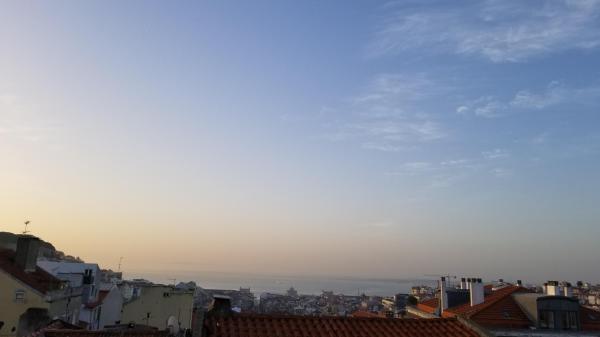
Fun in the Sun in Portugal

Our past week was spent in sunny Portugal and while it was not a place I had ever thought of visiting when living in the US, we really enjoyed it (not to mention the food and wine) and we actually learned some new things!

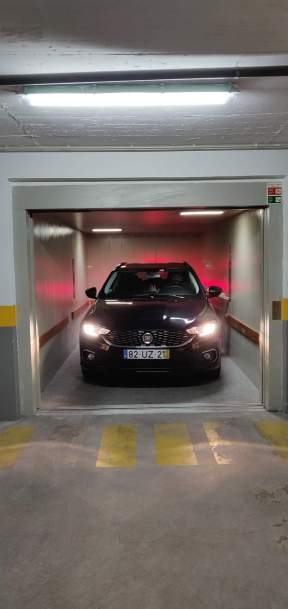
Day 1:  We arrived in Lisbon and headed to our apartment for the week where we got to drive our car into an elevator to park it on a lower level-interesting!
facebook_1551718407261

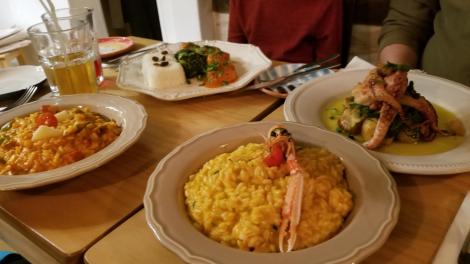
Then we ventured out to get dinner at a restaurant serving traditional dishes.  We started the dinner with a Portuguese cheese board including sheep cheese which has a fairly strong taste.  For the meal, we tried octopus (very good), duck risotto and fish and shrimp risotto along with some local beer, wine and port.  For dessert, we tried a rice pudding and an egg yolk pudding cooked with bacon (sorry, we ate it before we thought about taking a picture) which was very good.
20190223_210549

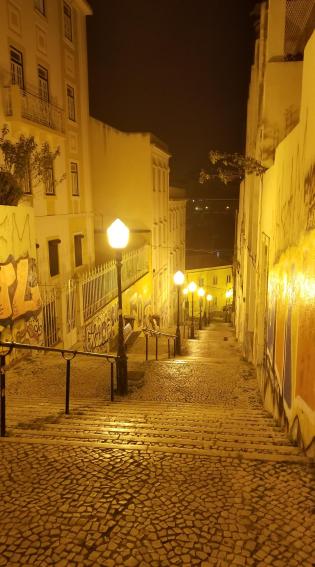
After dinner, we decided to walk around a bit and we learned the first lesson about Lisbon-what goes down must also come back up!
20190223_201136

Day 2:  On our second day, we headed out of Lisbon to Evora, about 1.5 hours east.  As we were driving, we saw tons of storks nesting in the utility towers.
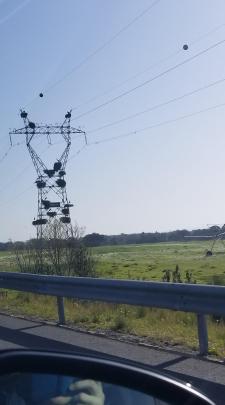
20190224_105654

Once in Evora, we walked around the Praca Giraldo (open square with shops and restaurants as well as a church) and went into the church (note the wood and stone floor-different than many European churches that we have seen).


20190224_114945

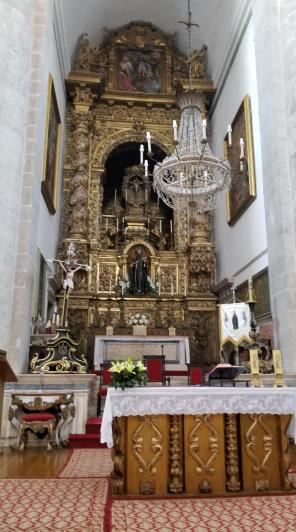
Next, we toured the Church of Sao Francisco, which had a lot of Portuguese tilework, statues and dolls.  The walls were also rainbow in some places due to the stained glass.
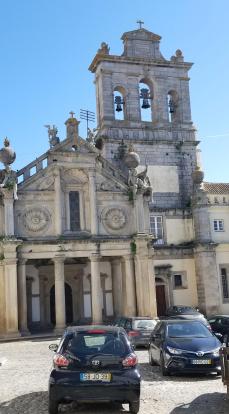
20190224_130020


Next to the church was the Capela Ossuary (the bone chapel) and a small museum featuring a special exhibit of nativities from around the world.


Finally, it was time for lunch and we decided to go all out with dishes traditional to this region of the country.  We shared Seafood Migas and Black Pork Migas (migas basically referring to a type of stuffing dish and black pork being thin pieces of grilled pork), Sopa de Cacao (shark fish soup) and Acordas (cilantro seasoned soup eaten with bacalhau-dried, salted cod and egg).  For both soups, there was regional bread and we couldn’t pass up some regional red wine as well.  We finished it all off with Toucinho de Ceu for dessert (an almond pie that uses pork lard in its preparation).


After lunch, we walked to the Evora Cathedral and the town’s Roman ruins.  We took a walk through the old town streets to the Aquaduct and then headed back to Praca Giraldo where we decided that all that walking entitled us to stop in a bakery and try a selection of pastries from the region including Queijada Evora, Queijada de Ceu, Pastel de Nata (egg custard pastry), Queijada de Coco (coconut pastry) and Pao de Rala.


On the way back from Evora, we stopped at Almendes which is a Neolithic stone site.  The stones date from 4,000-6,000 B.C.   There were also a lot of cork trees growing in this area- cork products are everywhere here.


Once back in Lisbon, we had another traditional Lisbon dish for dinner-Piri Piri chicken.  It is essentially a roasted chicken that you eat with an oil sauce that is very spicy.

Day 3: On our third day, we went to Sintra which is just less than an hour west of Lisbon.  We began at the westernmost point in Europe, Cabo Roca.  It was very quiet and we had some beautiful views of the water and the rocky beach.


The rest of the day was spent walking nearly 29,000 steps (most of which were uphill!) as we visited the castles and palaces of Sintra.  We began at Quinta Regalaria which had beautiful carved wood ceilings.   The real gem of the palace area though was the gardens.  They were immense and contained all sorts of grottos, caves and ornamental decorations and structures.


Next, we visited Monserrate.  We walked through pretty tropical gardens on the way to this Asian/Indian style mansion which contained some elaborate stonework.


Next up was the Moorish Castle (Portugal has a long history with the Moors).  There were a lot of stairs at this one, but we walked around the remains of the area which essentially added up to a wall with towers and saw a few archeological sites.


Last up was Pena Palace-another uphill battle getting there, but it was a very interesting style of building.  It seemed to have some elements of Asian influence but was also somewhat European.  It was home to the royal family but the rooms inside were very small with low ceilings, unlike other European castles.


On our way out of the palace park, we walked through an area called the Valley of Lakes.
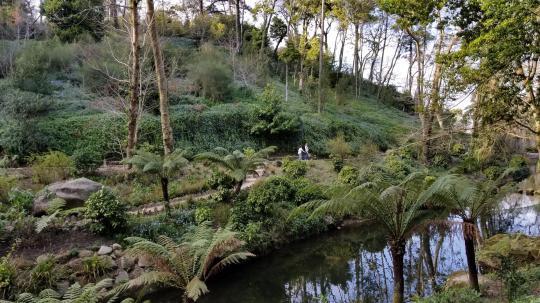
20190225_162041.jpg

If you have learned anything about us and our travels by now, you have probably guessed that by this point we were ready to try some local treats.  So, we headed to old town Sintra which was mostly tourist shops but also contains Casa Puriquita-a little bakery known for its Queijada da Sintra and Travesseiro (which means pillow).  If you recall, we also had Queijada in Evora but these were denser and more cinnamon flavored.  The Travesseiro was a very light pastry with an almond paste type of filling.
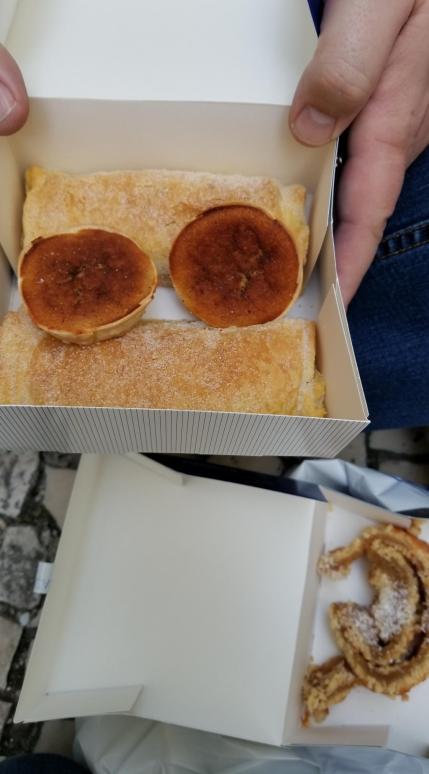
20190225_165350

And if you thought we were done eating, you are crazy!  We headed back to Lisbon for dinner at a restaurant with lovely views of the city.
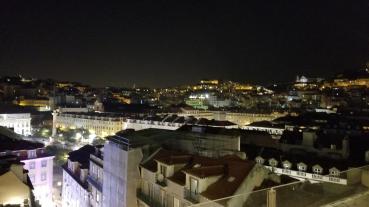
20190225_201740

Here we had bacalhau a bras-dried, salted cod mixed with onion strings and shoestring potatoes-really delicious.  We also tried a port tonic (made with white port) and a tawny port.  If you have never had a port, I highly recommend it!

Day 4:  Today we spent the first part of the day in Sesimbra (about an hour south of Lisbon).  We began the day at Cabo Espichel, a lighthouse on the coastline.  Next, we took a very windy walk through the coastal area to a dinosaur track site (if you see the large indentations in the rock to the bottom middle of the bottom picture- that’s them!).


Next, we headed to the Castelo Sesimbra- the remains of a fortress wall and a small church with lots of blue tilework and a graveyard.

After the castle area, we went to Urso and California Beaches and stopped for some Bifana for lunch (a very small sandwich with a very thin piece of pork-don’t worry, we made up for it later!).

After leaving the beach, we drove back to Lisbon to go to Torre de Belem (a tower which was often the last thing that explorers like da Gama would see when leaving Portugal) and the Padro dos Descobimentos (a massive sculpture celebrating the age of discovery in Portugal).  And yes, if you think that bridge looks familiar, it was designed by the same people that designed the Golden Gate Bridge.

Across from these landmarks, is the Monastery of Jeronimo that boasts a sanctuary with ornate stonework, more of the statues and dolls found in the Portuguese churches and the tomb of Vasco da Gama (the famous Portuguese explorer).

And then, as I told you, we made up for our small lunch by eating a ton of Pastel de Nata (the egg custard pastry) from the famous (and the only ones with the original recipe) Pastel de Belem.  You eat these little pastries with powdered sugar and cinnamon sprinkled on top.  They are very good and a little addictive.  While these were our only ones from Pastel de Belem, we may have found another place in Lisbon that was our supplier several additional times!!  But at Pastel de Belem, we also had a few pastel de carne, and for my Brazilian friends and family, it was very different from the ones featuring carne moida.  It was more like shredded beef.

20190226_154523

After our snack, we stopped by the Basilica da Estrela which had very pretty stonework and some very large statues near the ceiling.

On our way to dinner, we stopped at A Ginjinha which is a famous distributor of the popular Lisbon drink, ginjinha, which is made with sour cherries infused in liquor.  The stand itself is just that.  You walk up to a small open doorway with a counter (and the stickiest floor I have ever encountered), order your drink and then stand off to the side in the square to drink.

At dinner, we tried some grilled cod and Portuguese meat while the kids ate an Alheira sausage.  The sausage is made of bread like stuffing and various meats, most of which are not pork.  This particular version was fried on the outside, but we also tried one a few days later that was not.  It was quite different and very soft, but it had really good flavor.
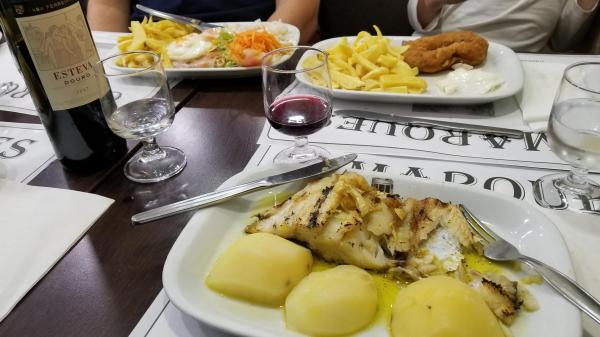
20190226_192405

Day 5: Finally, we stayed in Lisbon on our fifth day.  We started the day with a walk down from our apartment to a lower square where we stopped into the Sao Domingo church which had very pretty rose-colored ceilings and very dilapidated, worn walls.

20190227_093119

Next, we took the famous Tram 28 to the St. George Castle area.

20190227_103608

In this area, we stopped in the Cathedral of Lisbon (note the interesting door frames that you have to step through).  Inside the Cathedral, they had a small dressing room displaying the vestiges of the priests and bishops.

After leaving the Cathedral, we stumbled upon the ruins of a Roman theater on our way up (yes, uphill) to the castle.
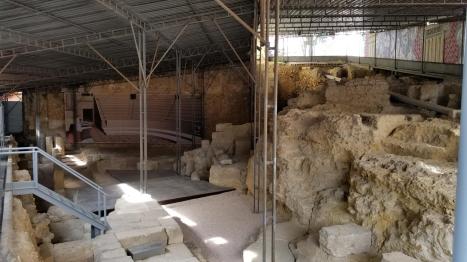
20190227_115443

At the castle, we saw the gardens (with tons of peacocks in the trees-we even saw one flying), an artifact collection, archeological ruins and the remains of the castle itself (again mostly just walls and towers).  They also had a periscope camera by which they give you an aerial tour of Lisbon.

20190226_173745

In the afternoon, we walked around the Praca do Comercio and the Rossio district and then rode the tram around more areas of the city.

20190227_153516

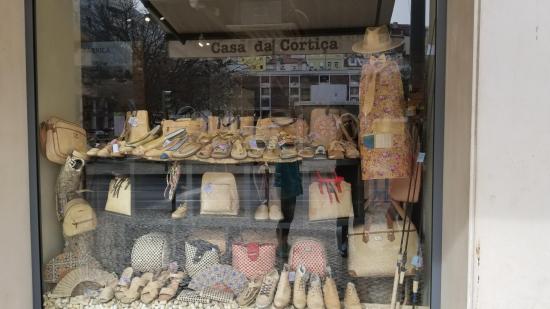
Here are a few of the sites from around the city including a store featuring all of the cork products you can purchase, the Christ statue overlooking the city, a massive elevator in one of the city districts and some of the many buildings with the tiled walls for decorative purposes.
20190227_102804

I also really love this street that was right by our apartment with all the laundry.  One day we got stuck behind this “trash truck”-guess it’s the only truck that can pick up trash that is small enough to fit the street.


And finally, who can resist this really cool store featuring cans of sardines.  There were tons of fancy sardine stores like this around the city.  The displays-cool, the product-not so much!


For dinner, we ventured to the Bairro Alto district and tried a selection of Portuguese meats and Acorda de Gamba (shrimp in stuffing dish-very good).
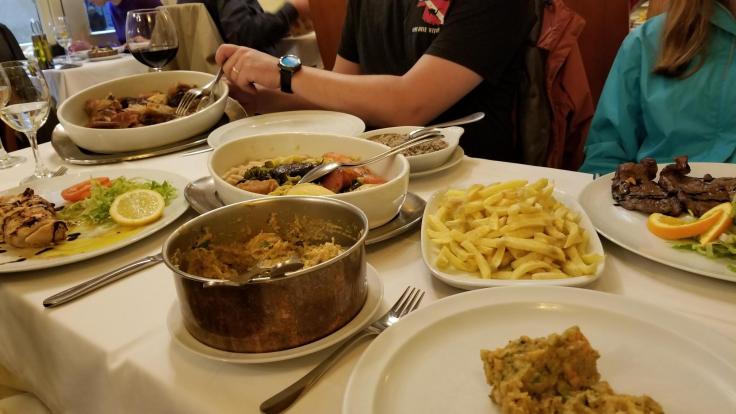
20190227_191749

Day 6: On the sixth day, we again headed out of Lisbon to the north.  First, we stopped in Fatima to see the church there that was built after three children saw a vision of the Virgin Mary.  It is a massive compound featuring several sanctuaries and praying areas.

Next, we drove to Porto which is 3 hours to the north of Lisbon.  Our first stop was lunch at Cafe Santiago where we had the famous Francesinha sandwich featuring sausage, steak and ham in a sandwich topped with a fried egg, cheese and a special gravy and surrounded by french fries.  We also tried Portuguese beer, a green wine and some port.  And we once again ordered Toucinha de Ceu for dessert (the almond pie cooked with bacon lard).

After lunch, we wandered the city seeing many churches including Santo Ildefonso, Santa Clara, the Cathedral of Porto, Sao Francisco, Clerigos Church and Igreja do Carmo.  Our favorite was probably Santa Clara because we got a private tour.  The church features lots of wood covered with gold leaf (sadly you could not take pictures).

We also walked down the narrow old streets to the Cais Ribeiro area near the water where you can get a good look at the Dom Luis I bridge (built by a student of Eiffel).

On our walk, we were able to get an up-close look at some of the tiles that you can find on so many of the building facades in Portugal.
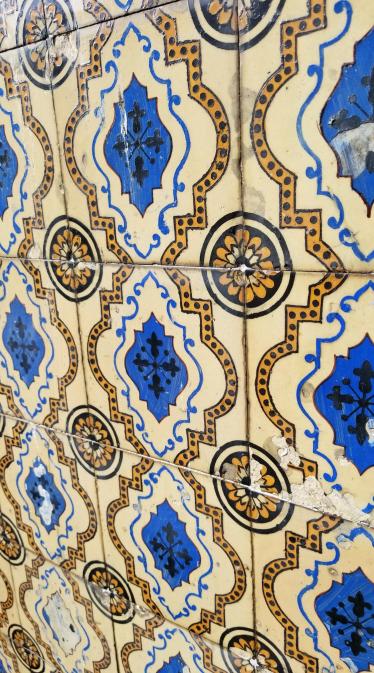
20190228_150927

We also stopped by many historic buildings including the municipal building, the stock exchange building and the Estacao Sao Bento (train station) which was very beautiful with all of its tilework.
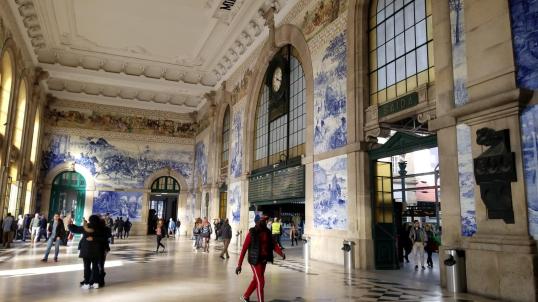
20190228_160342

And of course, no trip would be complete without stopping for some local foods like this massive bread (this was just one-quarter of the whole piece) called Broa de Avintes and a few pastries like this almond pastry and Jesuitas (puff pastry with a meringue top).

On our way back to Lisbon, we stopped in Coimbra for dinner at a restaurant located outside of a famous monument.

Day 7:  On our final day, we spent the morning on the balcony of our apartment enjoying the sun and the view before wandering around a park area near the apartment which featured a statue for a famous doctor and hundreds of little stones carved with thanks to this doctor for watching over or healing loved ones (the doctor died in the 1800’s but apparently people still ask his spirit for protection of the sick).

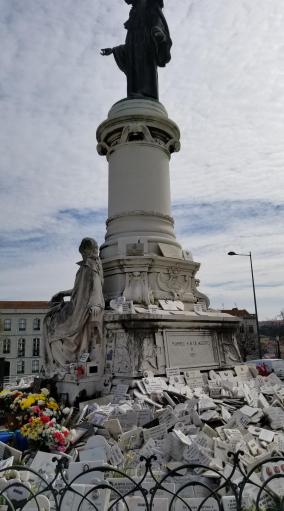
20190224_084037

20190301_111722

After lunch at the restaurant with the nice views, we decided to hit up our Pastel de Nata supplier one last time for a few of the treats before leaving the city!

20190301_132529

Portugal was a lot of fun, the food was great and we saw many beautiful places and buildings.  We are definitely glad we visited and hope you enjoyed coming along for the ride.  And if you are tired after reading this post, get ready because we have another travel adventure coming up in just a few short weeks.  Until next time!

It’s Beginning to Look a Lot Like Christmas (Markets?!)

Christmas is upon us and it’s a little different here in The Netherlands.  There are Christmas decorations and lights though nothing to the magnitude of the displays in the US.  There are Santa decorations here and there but no Santa at the mall or on street corners ringing a bell.  The radio has all Christmas music stations just like in the US and we found a store that was like Christmas on crack with tons of snow village displays, trees, decorations and more.  There aren’t many Christmas parties or specifically Christmas themed events but there are ice rinks, special shows, and light displays.  And of course, tis the season for Christmas markets in Europe, so we had to check some out.

First, I went to a small Scandinavian market.  Not many exhibitors at this one, but there were some nice things and it was held inside the Norse church in Rotterdam which was very interesting.

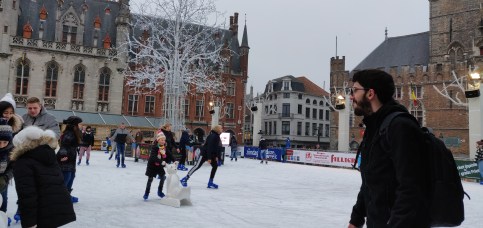
Next, we ventured to Brugge, Belgium.  Here the Christmas market was outdoors and spread into several sections of the city.  They had some craft and artisan vendors but there were a lot of food vendors as well as an outdoor ice rink and several midway-style rides and games.  We bought a lace ornament for our Christmas tree and some candy coated peanuts and almonds.  And while everyone else had some hot chocolate, I had some gluhwein, a staple of the Christmas market. (for those wondering, it’s essentially a hot, spiced red wine).

IMG_20181125_124023

Finally, we went to Monschau, Germany.  This market consisted of several areas of market stalls spread all over the city.  There were a lot of vendors selling artisan products as well as cheeses, candies, gingerbread confections, breads and of course a lot of food and drink vendors.  Some stalls were inside city buildings and many of the shops around the town were open as well including a three-story Christmas store.  We bought some cheese at this one and then we decided to get out of the cold and eat at one of the restaurants.  Monschau is well known for their mustard so I tried the schnitzel with mustard sauce.  It was a spicy brown style mustard which was good-even the kids liked it.  We also tried their famous dessert Monschauer dütchen which was essentially a hardened cake shaped like a cone with vanilla ice cream inside-no one was very excited about this one.  But our favorite part was trying some chestnuts roasted on an open fire, or rather, in a large kettle type drum used for cooking chestnuts.  We had never had them before and they were good in a strange sort of way.   Monschau definitely had some European charm with the half-timbered buildings which was enhanced by the snow on the ground and the twinkling Christmas lights and garland strung everywhere.


Overall though, I think that the Christmas markets may not live up to their “romantic European” hype.  Instead, they are sort of like the fair-you pay to park, pay to get in, pay if you want to buy anything and pay for food which ends up being the highlight of the adventure anyway.   But they are a nice excursion for a weekend in December if you don’t mind being a little cold.  We’re already scouting out a few that we want to check out next year as well as some other winter events.  So, for this year, I raise a glass of gluhwein and wish you all a Merry Christmas!


Germany and Austria and Prague…Oh My!

We have just returned from a whirlwind of a trip through several spots in Germany and Austria as well as Prague in the Czech Republic.  This post is long, but how else can I tell you about all the things we packed into 8 days!?  So, grab a drink and a snack, sit back and join us on our fall trip.

Day 1: We pulled away bright and early and headed to Frankfurt, Germany for a quick stop.  While there, we wandered around the main square of the Aldstat or Old Town and took a peek in the church there before trying a snack of cake and apfelwein (apple wine) which Frankfurt is known for (I think we will stick with wine made from grapes!).

After Frankfurt, we headed to Regensburg, Germany, which was a very lovely town.  We started at an Abby from 700, St. Emmeram’s, which seemed to be very dark and heavy in half and light and airy in the other half.  It also had many bizarre elements and skeletons.


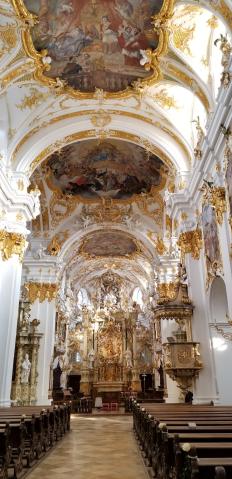
We strolled through an open-air mall on our way to Alte Kapelle, the oldest Catholic place of worship in Bavaria, which was built under order from Charlamange.  This church was very light and had lots of “gold” elements.  A wedding had just concluded there and the bride and groom were greeting their guests at the side door of the church.

20181020_153658

Next, we looked at St. Peter’s which was very big and very dark with lots of stained glass.  After that, we walked by the Porta Pretoia, an old Roman gate built in 179AD by Marcus Aurelius.  We decided to stop for a snack at Wurstkutch on the river next to the Old Stone Bridge from the 1200’s that linked the city with the outside world.  We sat outside enjoying a beer and some sausages with saurkraut and brown mustard.  The kids even got “kids beer” (carbonated apple juice)!

After our snack, we walked to the Rathaus (Town Hall) with its large clock and through the town square.  There were many “old elements” along the way such as statues, wells and a large painting of a Roman soldier.  The old town itself was very quaint with small side streets and colorful buildings.

44471508_10156855528729452_7424780595332382720_oFinishing our day, we drove to Munich, Germany for a dinner of sausages, 3 types of dumplings, crispy roast pork and beer.
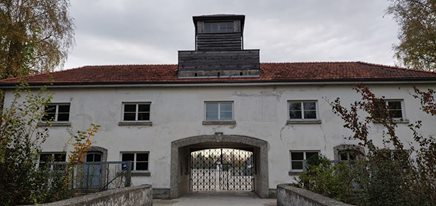
Day 2: We began our day at Dachau Concentration Camp Memorial Site.  This was a very somber and surreal experience, and I’m not sure any of us was prepared for our emotional response to this place.  As we approached the entrance gate, it was very cold, cloudy and desolate.  There were almost no other people there and blackbirds were circling and cawing.  As we walked through the gate, you could almost feel a sense of foreboding, fear and helplessness.  We walked the grounds and saw the barracks, crematorium and some memorial churches constructed on the site.  Many times, we all had the urge to cry just being in a place where so much sadness and humiliation and the worst of human behavior occurred.  It was a powerful experience.

44436100_10156856916449452_2226468934092062720_n

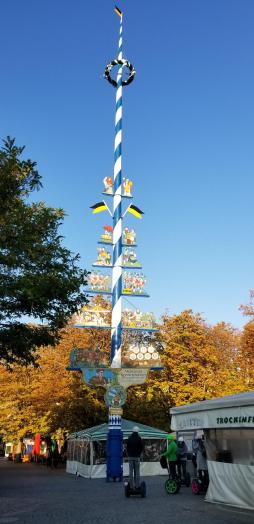
After Dachau, we visited Nymphenburg Palace which was the summer palace of the royal family.  Our favorite room consisted of large ceiling and wall paintings along with gold trim and chandeliers.  Munich’s old town center was our next stop and we immediately headed to the Glockenspiel on the Town Hall.  The building itself was very attractive with cascading flowers on its side but the highlight were the figures on the clock which reenact jousting and dancing to a musical piece at certain times of the day.  In addition to the town hall, there were other clock towers and a statue of the Virgin Mary (Mariensaul) in the square.

By this point, we were hungry, so it was off to the famous Hofbrahaus for lunch.  This beer garden was a lot of fun with a German band playing a rousing piece every couple of minutes.  We tried as many traditional items as we could including a large pretzel, obatzda (cheese spread), pork knuckle, sausage, red cabbage and potato salad, and of course, beer!

Next, we wandered down to Odeonplatz and the Theatine Church which had ornate stone carvings on the inside.  We also checked out Frauenkirche which was a very plain interior church with stained glass and some incredibly strange statues and paintings and Asamkirche which was a very small church that was heavy and dark.  Finally, we saw St. Peter’s Church with had a huge clock tower and was filled with golden statues along the main aisle and a massive golden alter area.

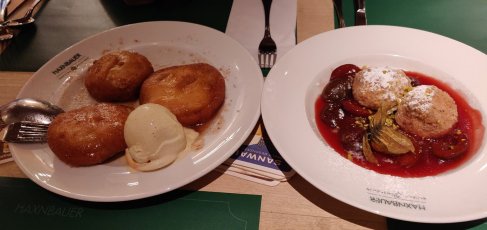
After all of that, it was time for a snack at Haxnbauer im Scholastikahaus.  We decided to try the plum dumplings and flambeed apple fritters.  With that, it was time to call it a night!44654946_10156857189764452_5824778146540421120_o

20181021_171231

Day 3: We headed out of Munich to Neuschwanstein Castle.  The drive was very beautiful with lovely views and towns along the way, but it was very foggy as we approached the castle area, so it was hard to see the castle (or anything).  We decided to hike up the path to the castle which was a nice hike through the fall forest and the views of the valley from the top were impressive especially with all the fog.

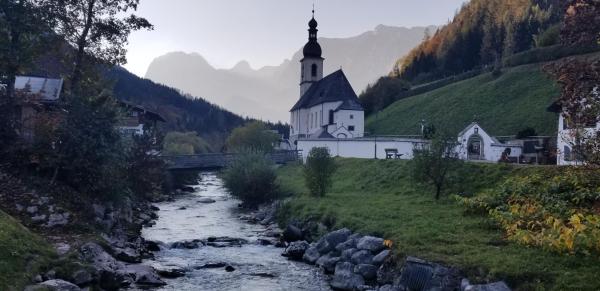
Next, we drove to Ramsau bei Berchtesgaden, Germany.    We drove through many small towns along the way which were dotted with small church spires and Bavarian-style homes displaying wooden balconies with bright flowers spilling over the edge.  In Ramsau, we hiked the Zauberwald trail to Hintersee Lake.  The hike was beautiful with lots of fall colors.  The trail followed a running stream with very clear water and the rocks and trees along the way were covered with moss.  44528272_10156860401909452_5850654186332487680_o

In the town, we visited Parish Church.  It was very small and simple on the inside but had a very lovely graveyard in the back which had many plantings on each plot.  In addition, the church is one of the most photographed in Germany because of its idyllic setting.

We ended the day with an amazing dinner on top of the mountains.  While it was getting a little chilly, we couldn’t pass up the opportunity to sit outside and enjoy the views.  As we waited for our food, the kids played on the small playground while some sheep with tinkling bells grazed on the hill.  We had some delicious schnitzel, beef and venison goulash, and cheese dumplings, but the crowning moment of the meal was the dessert, Kaiserschmarrn, which is a shredded pancake.  It was huge, so we shared, but I think everyone wished they had their very own!

Day 4: We started our day with another hike, this time in Wimbacklamm Gorge.  It was a bit of a hike up the hill to get there but totally worth it.  As we hiked up, we walked past some cows wearing bells on the hillside pasture and a pen containing sheep and their herding dogs.  The fall colors were beautiful, but the best part was the rushing, clear water flowing down the Gorge. 20181022_11074044675153_10156862577269452_5345180533238267904_o

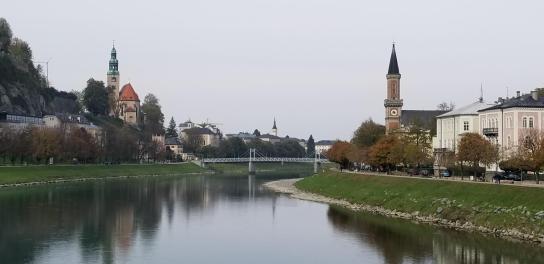
Next, we drove to Salzburg, Austria.  The drive into the city was once again beautiful with Bavarian homes and pastures and all the fall colors.  Once in the city, we saw Mozartplatz, Residenceplatz and Dom Platz.  All were large squares with either large statues or fountains in the center and both Residenceplatz and Dom Platz were used in filming The Sound of Music.  We also saw the amphitheater where the Von Trapp family performed in the Salzburg festival in the movie.  We checked out Salzburg Cathedral where Mozart was baptized.  The church could best be described as opera house meets church.  We also walked by Mozart’s birthplace and residence and stopped at Kondotori Furst, a confectioner, for Mozart Balls-a center filled chocolate truffle candy.  20181023_123327

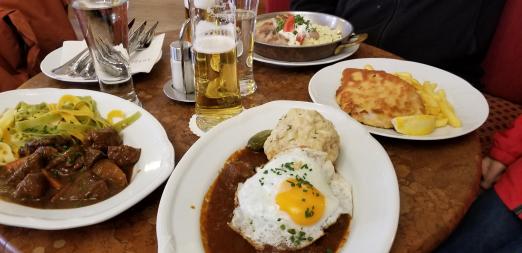
We ate lunch at Mozart Cafe and enjoyed another delicious goulash as well as schnitzel and beef in beer sauce.  We tried some local beer and finished the meal with Salzburg Nockerel, a meringue type concoction with fruit on the bottom.  We also got to meet “The Queen of Mozart Cafe.”  Before she arrived, we saw pictures of this elderly woman behind one of the tables with the moniker “Queen of Mozart Cafe” and then lo and behold she came in before we left.  She came to our table to talk to the children (though it was not in English!) and as we left she said “Auf Wiedersehen” so of course, we said it back!20181023_113256

After lunch, we went to Mirabelle Gardens where some of the scenes from the “Do a Deer” song in The Sound of Music were filmed.  We snagged a jam filled, chocolate covered Salzburg pretzel or Brezen and ate it on our way to the actual Von Trapp family home which is now a hotel.  We took a quick peek from the gates, before heading to Hellbrunn Palace for the Trick Fountain tour.  The fountains and garden were very pretty and a lot of fun, especially all of the grottos.  Before leaving Hellbrunn, we saw the Gazebo from The Sound of Music.  Then we drove to St. Michel’s Bascilica in Mondsee which was the church used in the wedding scene from the movie.  The town itself was quite cute.

*Update-I am happy to report that after returning home, we watched The Sound of Music and were able to identify the places we were in.  The kids were very excited about that!

Finally, we drove into Halstatt, Austria.  Small towns dotted the edge of the massive lake with the tree covered Alps in the background.  Breathtaking!  We walked the lakeside streets of Halstatt to a couple of churches.  One of the churches also housed another planting filled graveyard and the Beinhaus.  As it was closed, we weren’t able to go in, but the Beinhaus houses one of the last collections of painted skulls in Austria with around 700 skulls.

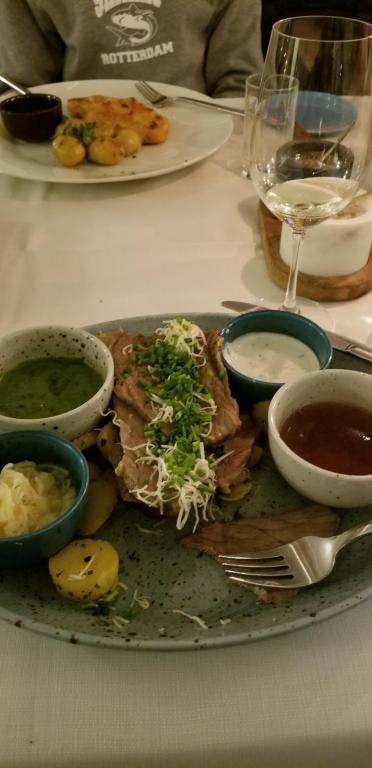
After walking, we stopped for dinner at a hotel in the village.  We tried some local beer and wine and Tafelspitz which was thin pieces of beef that can be dipped in various sauces.  Very good!  We finished the meal with an apricot dumpling.  20181023_184851

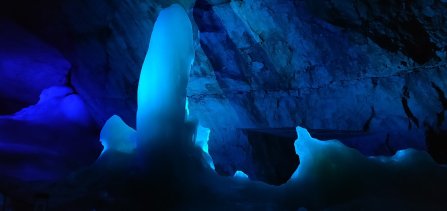
Day 5: This was the one and only soggy day of our whole trip, but we tried not to let it get us down too much.  We got up early to take a lift up the side of the mountain to go to the Dachstein Ice Cave, the largest ice cave in the world.  We had to hike 15 minutes on some steep uphill switches in the pouring rain to get to the cave entrance-it was not very pleasant.  Then after waiting for 20 minutes in the cold, the tour began.  Luckily, it was a private tour as no one else was crazy enough to come to the Ice Cave on a cold, rainy morning.  Unluckily, it was only about 32 degrees inside the cave and we were soaking wet!  But we made the best of it and enjoyed an informative tour and some massive, thick ice. 44452999_10156864971619452_3269506870116614144_o

After the tour, we decided to take a second tour, so we headed over to the Halstatt Salt Mine.  It is the oldest Salt Mine in the world as they have been mining there for 7,000 years.  We took a mountain car up and once again had to hike several minutes in the rain to the entrance.  Once we entered, we had to put on miner clothing over our clothes, which some people in our party were not too happy about.  Then we walked the tracks into the mine, which is still an active mine.  The path in was dark and dank, but the walls sparkled with the salt.  During the tour, we learned all about the mine and how the salt was formed and we got to slide down two wooden miner slides.  One was 24 meters, the other 62 meters making it the largest underground slide in Europe.  The slides were surprisingly fast!  We also got to see the oldest staircase in Europe at 3,000 years old-a discovery made just a few years back in the mine.  Finally, we rode a little mine car out of the mine.  Before heading back down the mountain, we had some cheese strudel which our children did not like at all.44842614_10156865035094452_6504662458655834112_o

We drove into Vienna and by Sigmund Freud’s old apartment where he treated patients before fleeing the Nazis and headed to dinner at the famous Grienchensbiesl.  The restaurant has had many famous patrons over the years including Beethoven, Schubert, Strauss, Brahms, Wagner and Mark Twain.  As we drove to our apartment, we were able to see the city at night which was very pretty.

Day 6:  We began our day with a walk to the Rathaus (Town Hall), a tour of Schonbrunn Palace and a walk through the famous outdoor market, Naschmarkt.  We decided to grab a Wiener Wurst from a stand and eat it outside the opera house.  We walked through an outdoor shopping area to St. Stephens which was very elaborate from the outside with fancy spires.  The inside was dark and heavy.  Next, we went to the Hofburg.  We walked by the Spanish Riding School where they train the Lipinezzer stallions and saw a few in their stables.  Then we viewed the Imperial Treasury which housed many interesting artifacts such as crowns, clothing, jewels, relics and more.

We ate lunch at Cafe Demel where we tried both apple strudel and the Sachertorte-we weren’t big fans of either, but who would be after having that shredded pancake!!  I also had a cafe melange which was good. 20181025_140046

Overall, Vienna was a nice city with lots of old architectural elements, reliefs, and building decor and ornaments, but it was time to head to Prague.  The drive in was a little nervewracking as the traffic was a little crazier in Czech Republic, but once there we headed to a little place for a dinner consisting of fried cheese in potato cakes, pork stuffed with sausage and bacon and topped with cheese and some local IPA and a digestif called Becherovka-very good!

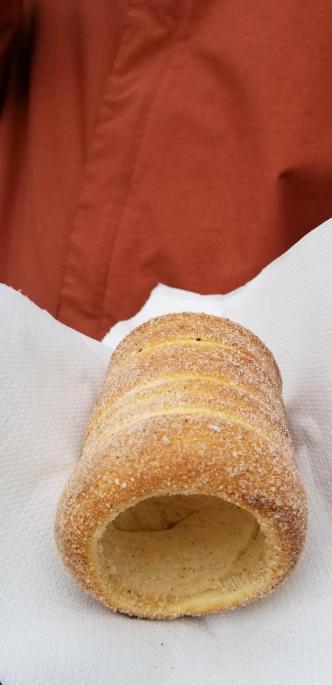
Day 7:  On the seventh day, we walked a lot and ate a lot -32,000 steps and what felt like 32 pounds!  We began the day by heading to a bakery for buchtna (dough pastry filled with fruit) and Kolac or kolache-this version was a raspberry topped pastry with a streusel topping.  We walked through part of the city and by the Spanish synagogue.  We headed to the Old Town square and saw the town hall.  We wandered by lots of old buildings and monuments.  We tried Tredlink, a dough cooked on a cylinder and sprinkled with sugar on our way up to Prague Castle.  At the Castle complex, we went to Lobkowicz Palace which had some interesting artifacts including some musical scores of Beethoven’s as well as his signature on a financial document and Mozart’s arrangement of Handel’s Messiah.  Then we walked to Golden Lane inside the complex, which is a row of old homes in the castle walls.  We saw a display of armor and weaponry as well as some torture elements.  We also viewed St. George Basilica and St. Vitus inside the complex.

20181026_101823

After leaving the castle, we walked to the Mala Strana for lunch.  We started our meal with steak tartare, which our children actually liked, and Pilsner Urquell-the famous Czech beer and originator of the Pilsner.  We had goulash with dumplings and beef svikora with dumplings-very good!  After filling up, we headed to the Church of Our Lady Victorious which houses the Shrine of Infant Jesus (my Tulsa friends who have ever driven I-44 to OKC have surely heard of this guy!).  After the church, we decided to eat again-don’t judge!  We stopped at Cafe Savoy for fruit dumplings (very interesting dumplings with plum inside that you top with butter, powdered sugar and gingerbread crumbs) and vetrnik (delicious).  Then we walked across the bridge that joins one side of the city with the other providing some beautiful views and entertainment.
As we walked back toward our apartment, we saw a crazy, rotating sculpture and a giant silly bear.  44827943_10156869269909452_3573314143463145472_o
Since it had been a few minutes since we had eaten, we decided to try another tredlink (the dough on the cylinder from the morning).  This one was served hot and with nutella inside-delicious!  We also tried some Svarak (hot wine)-not delicious!  It was just a bit strong and had a strange aftertaste.  We walked by the Jerusalem synagogue which was a very interesting building and to Pernickuv Sen, a small bakery where we got a Kolach cookie (gingerbread filled with a poppy seed paste filling) and a Pernicky (gingerbread) cookie.  Finally, we ended our day with-you guessed it-more food!  We had dinner which we started with yet another Czech beer and pickled cheese.  We tried Kulajda which is a Czech soup served with a poached egg in it-very good.  And since we felt we had done more eating than walking, we walked back down to the Old Town Square after dark.  It was lit up and there were tons of people wandering around the monuments, shops and restaurants.

Day 8:  It was time to head home, but not without a quick stop at the halfway point-Kassel, Germany.  We went to the Bergpark Wilhelmshobe.  We saw the main palace or Schloss from the outside and then hiked up the trails by ruins of an aqueduct toward a huge statue of Hercules.  Finally, we walked over to Lowerburg which is a castle built in a medieval style in the late 1700’s to early 1800’s.  However, the area was undergoing renovation to restore it, so it was an outside view only.  The area was very beautiful with the fall colors, the ponds and waterfalls and bridges.

Now, if you are tired from reading all of this, imagine how we felt!  But it was an amazing trip- we saw a lot of wonderful places, learned a few things, and ate a lot of great food!  The only question is: Where should we go next?!


Day in Bruges

Yesterday, we spent the day in the capital of West Flanders-Bruges, Belgium.  Upon arriving in Bruges, the first thing we did was pass under one of the original city gates.


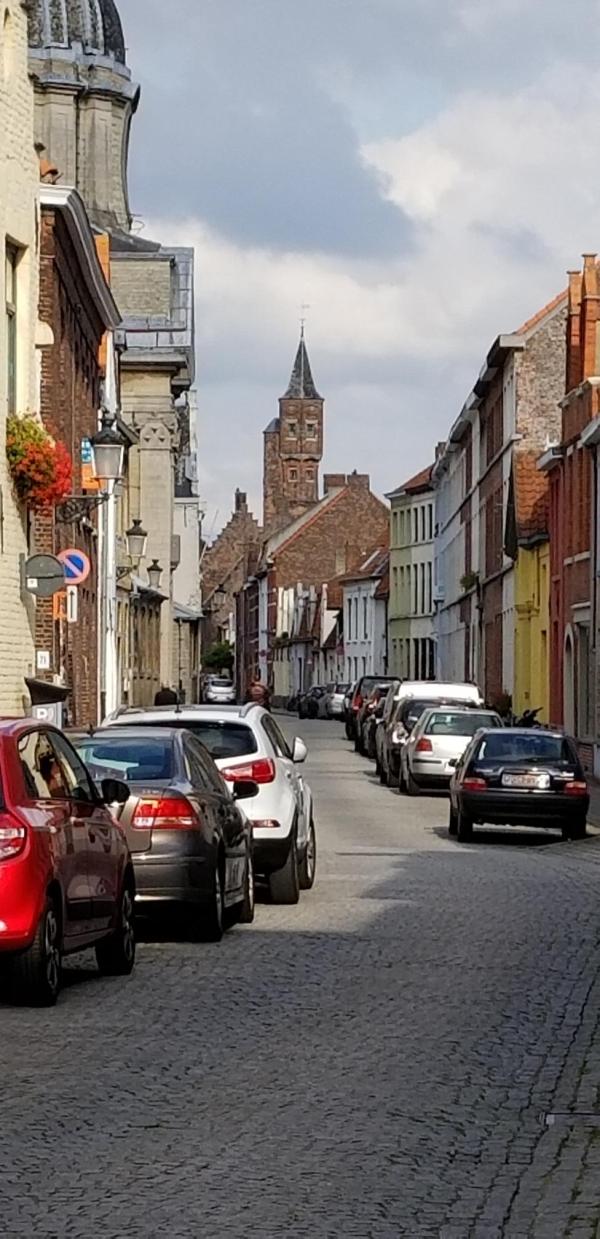
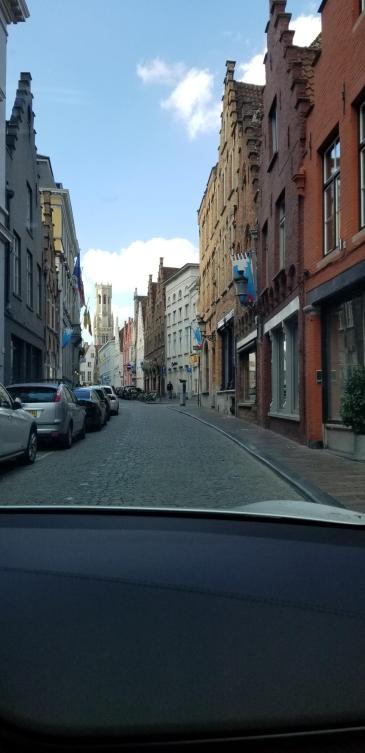
We drove through the streets, which all had a very “old world charm” to them on our way to the market square.

20180930_120835

At the first city square, we saw some elaborate buildings.

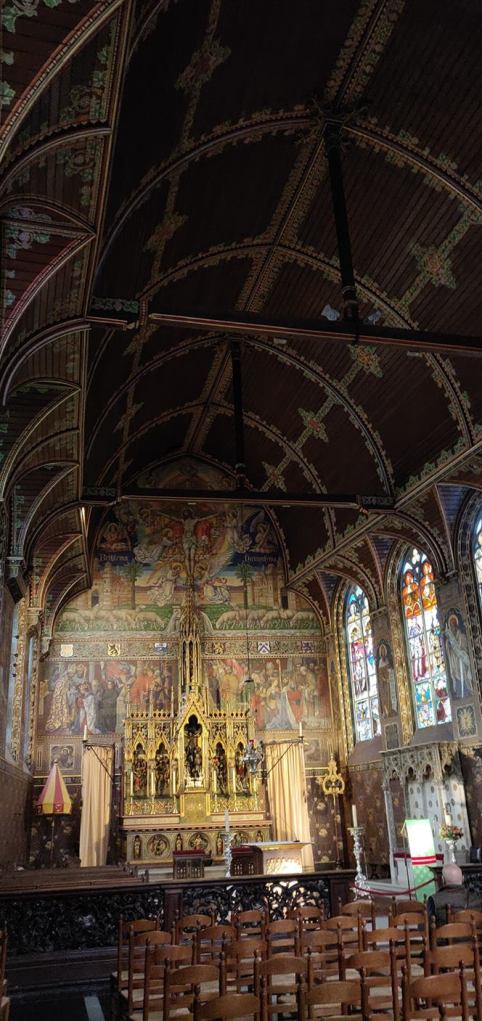
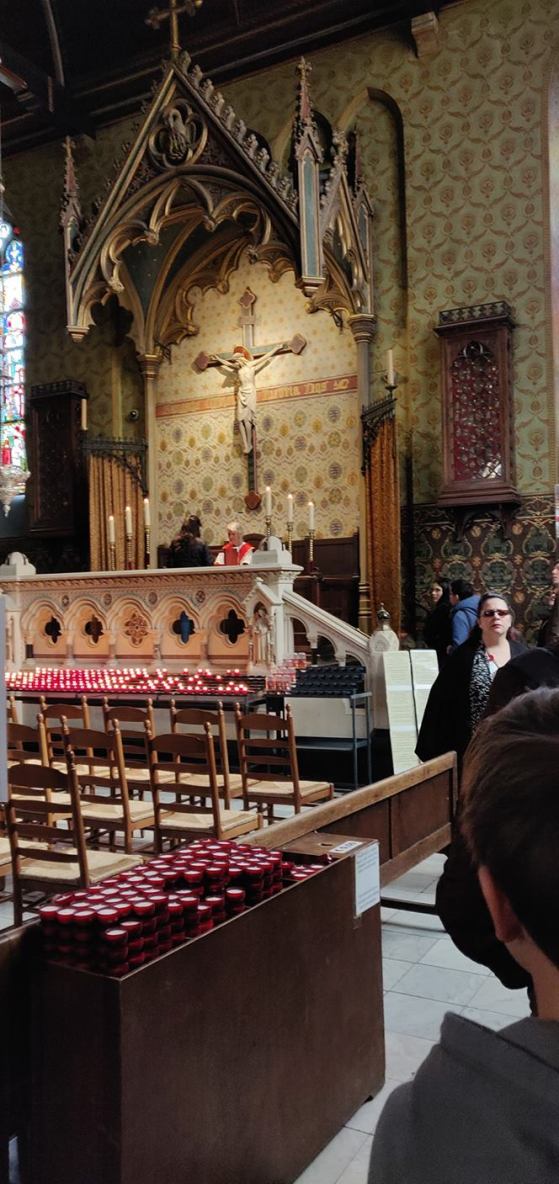
In addition, we went into this church which is called The Basilica of the Holy Blood and was built in the 1100’s.

brugge 2

brugge4

The reason it is called this is that inside they have a vial that contains a cloth that is supposedly stained with the blood of Jesus.  According to the history, the blood was wiped off of Jesus onto this cloth after the crucifixion by Joseph of Arimathea and sealed in the vial which was brought from the Holy Land by Thierry of Alsace, Count of Flanders in the 1200’s.  They allow people to view the vial, which we did.  The vial is watched over by the woman in the photo and laying on a table in front of her.  After looking at it, she hands each group a prayer card with a prayer in many different languages.  It was interesting, though I must say, the children thought the contents of the vial were a little gross looking.
brugge3

We also grabbed some lunch in this first city square.  The adults decided to go traditional with a Flemish beef stew and Flemish rabbit (and some Belgium beer and fries of course!).  Both dishes were very good.

20180930_131135

After lunch, we walked to the Markt square.  Interestingly they were having a small parade and concert to commemorate the troops that helped the city during WWII, particularly some Canadian forces which liberated the city.

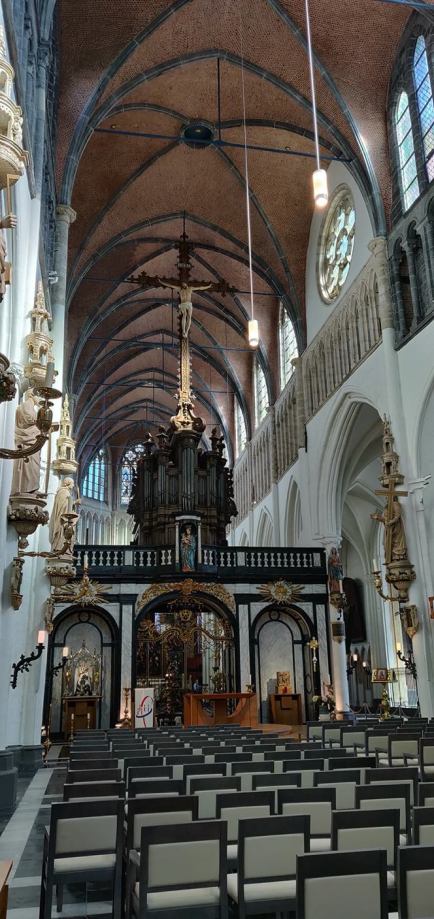
Next, we made our way to the Church of Our Lady, which houses Michaelangelo’s Madonna and Child sculpture-his only sculpture to leave Italy.  We weren’t able to see the sculpture on this day, but we have plans to go back for another event so we will hopefully see it then.

brugge6

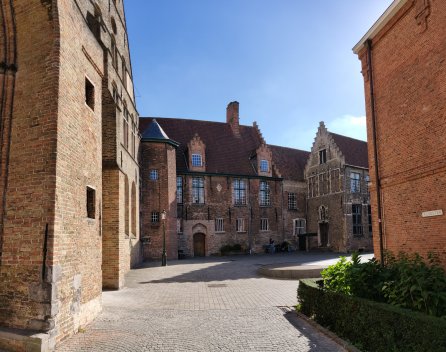
We then visited Hospital Sint Jan, an 800 year-old hospital where monks and nuns took care of the sick, poor and travelers.  We were able to see the main area, the chapel, the attic, and the pharmacy.  The buildings house a museum with medical and pharmaceutical instruments, paintings and other relics of the past.

brugge 5

While heavily invaded by tourists, the city was still very lovely as we wandered around.


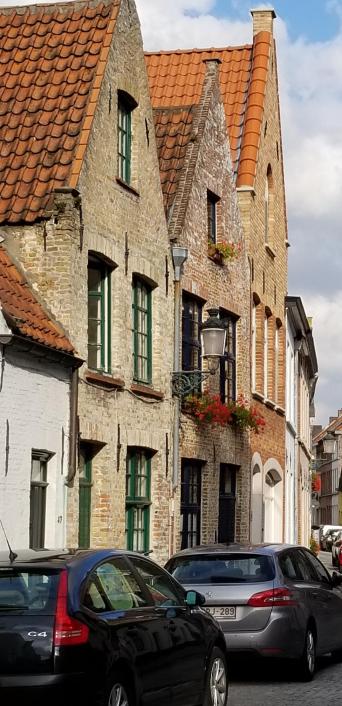
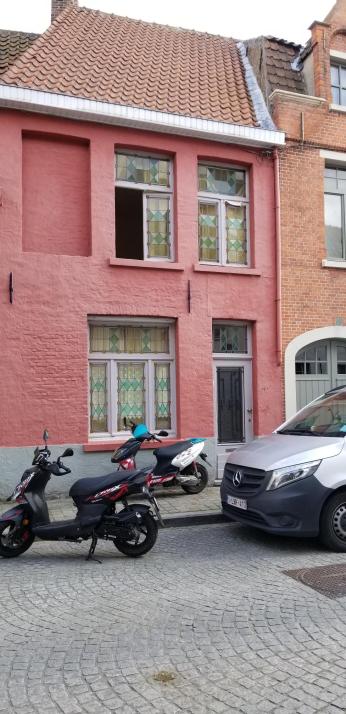
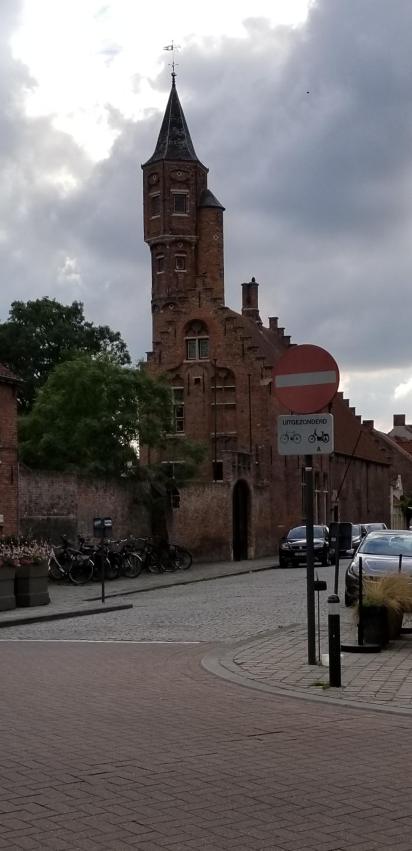
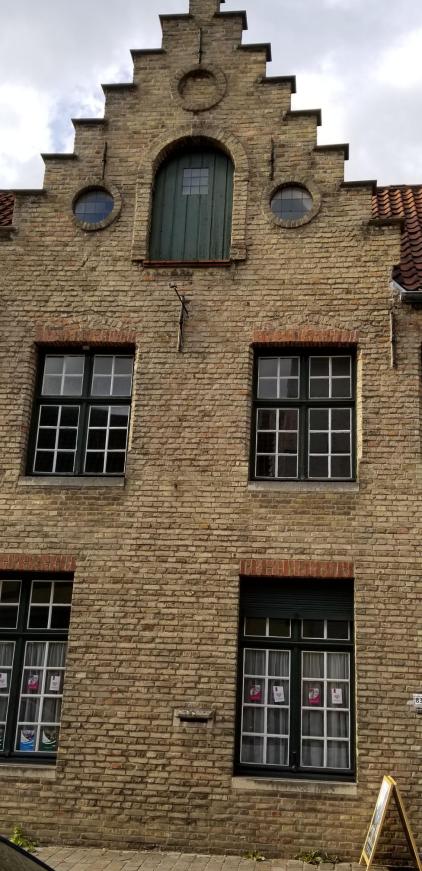
To end our trip to Bruges, we left the busy city squares and other tourist areas and headed to an older district.  Aside from the modern cars, signs and parking meters, you could almost picture how it would have looked hundreds of years ago.

20180930_162758

20180930_16271020180930_16195420180930_163623

20180930_162948
Notice the door to nowhere and the metal hook below it-this is how they get the furniture to the upper floors.

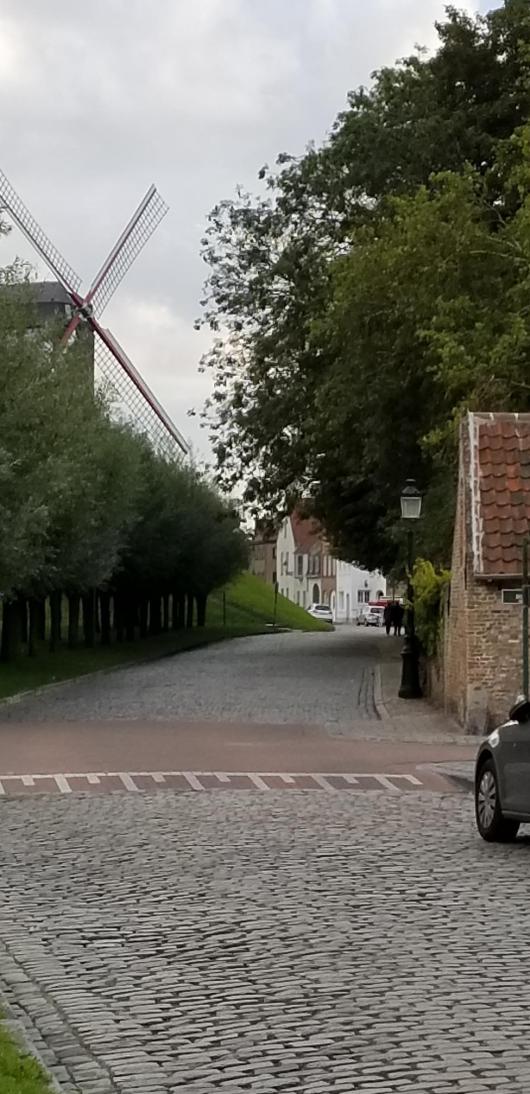
This area also features a walking path with four turning windmills.

20180930_163850

All in all, though it was rather touristy, the city was very charming and had many interesting historical and cultural items.

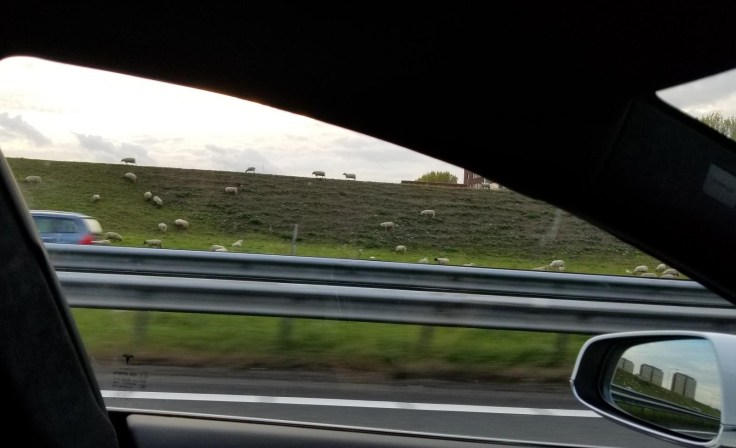
And finally, on our way home, we saw these “mowers” working hard on the side of the road (they were there in the morning too, so it was an all day job)!

20180930_184119_002

The Mussels from Brussels (Among Other Things)

Our first excursion out of The Netherlands was to Brussels, Belgium, which is a short hour and a half from our home.  Belgium borders both The Netherlands and France so both Dutch and French are spoken there-decidedly more French the further you go from The Netherlands’ border.  They also speak a mixed language known as Flemish.
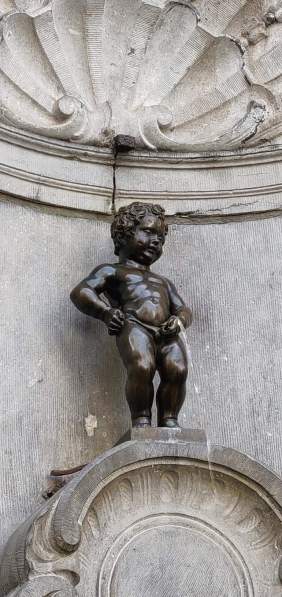
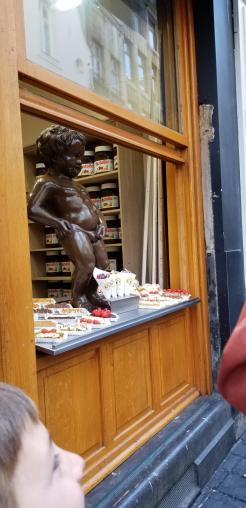
Our first stop on arriving in Brussels was a small statue that has become very famous known as Manneken Pis.   Sometimes this statue is dressed in different costumes, but today he was au natural.

FB_IMG_1535313419121

Essentially it is just a fountain statue of a little boy tinkling.  But the street he is on is filled with souvenir shops, chocolate shops and Belgian waffle shops.  And almost all of them pay homage to the statue (like this chocolate version).

20180826_101149

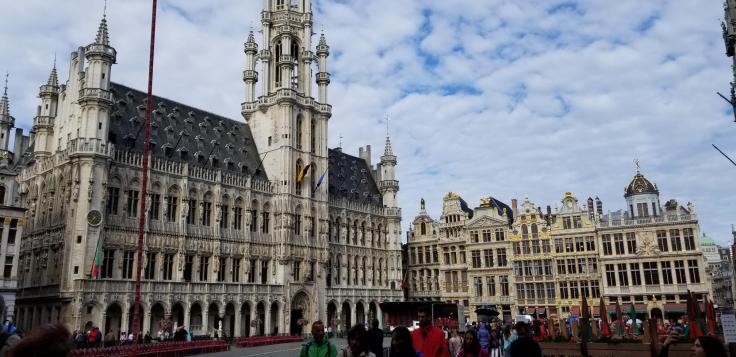
After sampling a little Belgian waffle with white and semi sweet chocolate, we headed on to the Grand Place.  This is the center square of the city and houses the Town Hall as well as a museum and other buildings (hard to see in the picture but there is lots of gold overlay on the buildings).

20180826_103643

After the square, we walked through a market building with a very cool ceiling.  Again there were lots of chocolate shops (one even had a bust of their founder carved from chocolate), lace stores and a whole lot of displays with Smurfs-apparently they were created in Brussels.

20180826_104105

Next, we visited the cathedral of St. Michael and St. Gudula.  Being that it was Sunday, they were having mass so we were only able to see parts of the church.


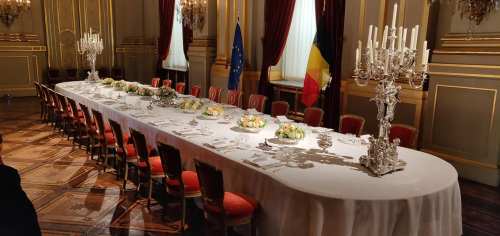
Next we toured the Royal Palace, though the royal family do not actually live there.

They even had dinner ready for us!

40136619_10156718439539452_2817381821849796608_o


But, alas, we had to decline as we had more pressing matters such as viewing this room with a ceiling covered in beetle wings.

After the palace, we visited the Notre Dame du Sablon.  Mass was also being conducted here, so while we didn’t get to see a lot of the cathedral, we did get to hear some beautiful singing.

FB_IMG_1535313369205

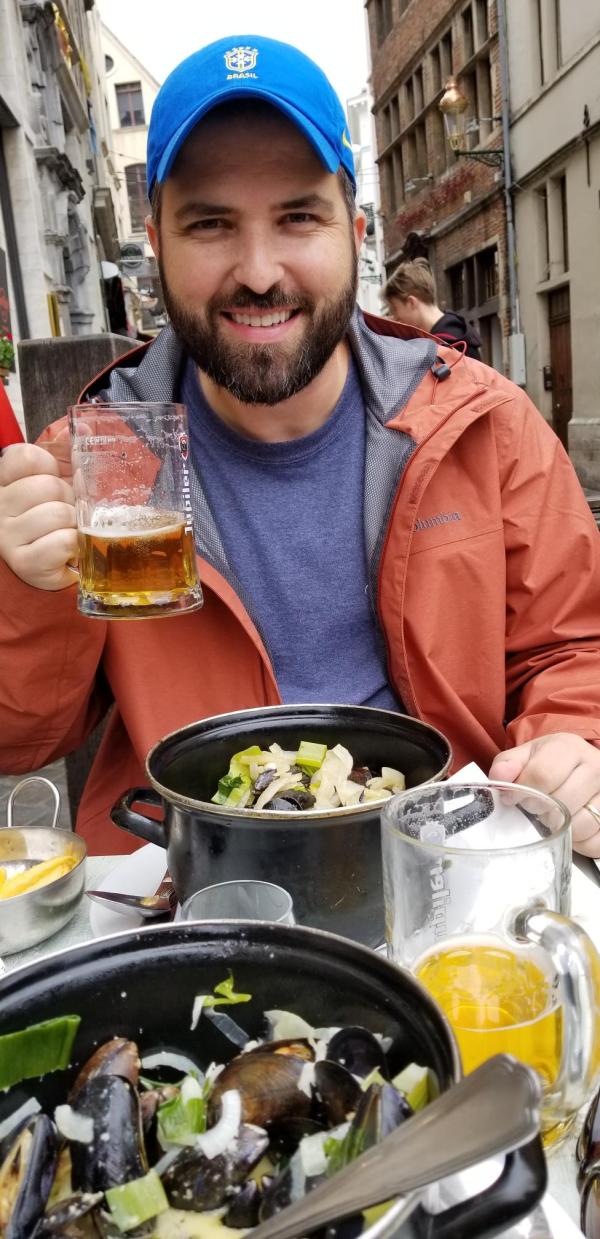
After heading back to the main square for a lunch of mussels and beer and grabbing another Belgian waffle each (sorry no pictures-by the time we thought to take one, we had eaten it all! But, I can report that they were delicious!), we decided to leave Brussels and head north to Antwerp.

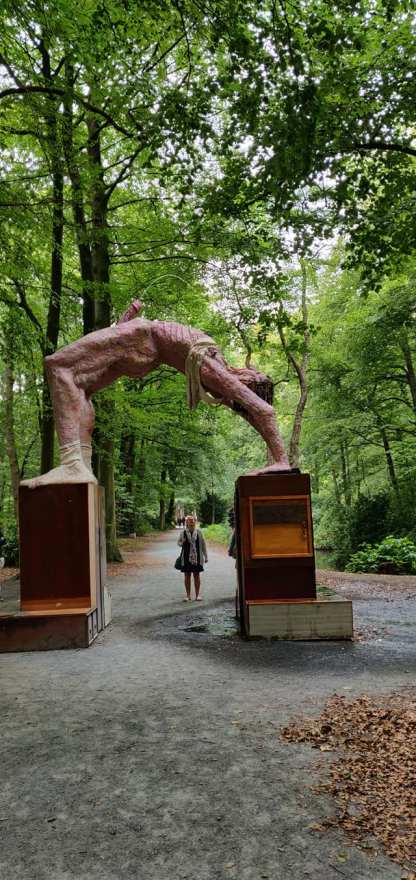
In Antwerp, we went to the Middelheim.  This is a large park with various modern art sculptures and other works spread along the walking paths.  It was an interesting trip-our son was excited to see a play area with swings, only to be disappointed when he got there and realized it was actually an artwork.  He felt that was trickery.  And all of us were a bit surprised to walk upon this statue (warning-not suitable for tender eyes!)

middelheim

So after a good laugh, we decided that we had had enough male genitalia for one day and headed back home.

All in all, our trip to Belgium was a nice day trip.  And I’ve got a few Belgian chocolates to try over the next few weeks, so I’d say it was a success!

20180826_125102

Website Powered by WordPress.com.

Up ↑