Witches and Wildlife

This past weekend, we checked out two places that we have been interested in – Oudewater and Biesbosch.

Oudewater is a very charming town; the highlight of which is the witch weighing house.  The house is currently a museum but it was originally a weigh house for all kinds of products.  Then during the 1500-1600s, it became a place to weigh suspected witches.  If the suspect was found to be of normal weight for a human of their stature, they received a certificate of clearance that they could then keep and use as clearance any time they were accused of witchcraft or sorcery.  The museum itself is fairly small, but they do provide some interesting information on witch persecution and the best part-they still have the weigh scale and they will weigh you and provide you with your clearance certificate (kids at least, not sure about adults).  Our youngest has been cleared, though I still have my doubts!

Aside from the museum, Oudewater has some lovely architecture and historic buildings.  Being that the area was small, it made for a nice stroll on a pleasant day.

Our other stop for the weekend was Biesbosch.  This is a nature reserve that is well known for its beaver population.  While we didn’t see any beavers, we did see many birds and waterfowl (they have sea eagles which look like bald eagles) and we learned a little about the history of the area and the harvesting and use of the willow cane that grows there.  We also saw a ton of those “soap” producing trees.  There are many hiking and biking trails at Biesbosch and many people take boats or canoes out on the water.

Though our weather has been struggling to stay dry, warm and sunny, it was a nice weekend for these excursions and as pleasant as they were, we would definitely go back.

Koningsdag 2019

Today is King’s Day or Koningsdag in The Netherlands.  This is a celebration in honor of King Willem Alexander’s birthday.  According to Wikipedia, this day was first celebrated as Princess Day in 1885 in honor of Princess Wilhelmina who would one day become queen.  It used to be celebrated in August for Wilhelmina’s birthday (and of course was called Queen’s Day), but when her daughter ascended the throne it was moved to her birthday of April 30th.  It remained on that date through both she and her daughter’s reign (because her daughter’s birthday was in January and who wants to be out on the streets celebrating then) and then was moved to the King’s birthday of April 27th in 2013 when he ascended the throne (so sensible of him to have a spring birthday).

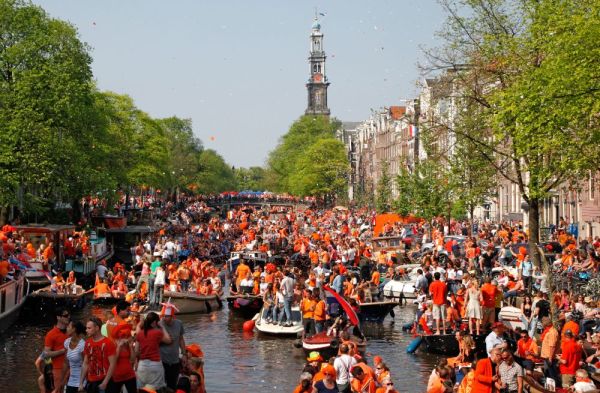
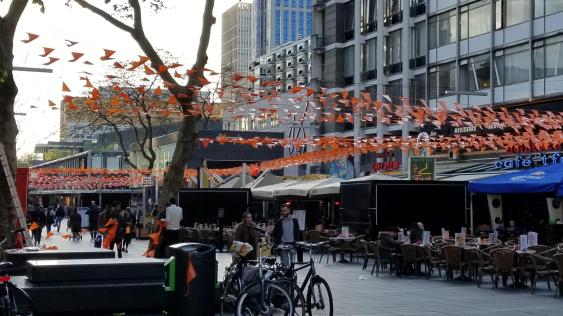
Many people wear orange for King’s Day in honor of the ruling family being of the House of Orange-Nassau (that is the line that has been ruling The Netherlands for a long time) and orange decorations are everywhere.

20190426_200834

20190426_191939

There are also tons of Dutch flags being flown.

20190427_130739

One of the biggest activities for King’s Day is the countrywide flea market.  People bring out their unwanted belongings and sell them on the street.  There are large flea markets in big cities like Amsterdam and Rotterdam, but all the smaller cities and districts have them as well.

kings day flea mkt

There are also lots of food and drink stalls, bands and music stands and activities for kids.  In Amsterdam, there is a huge party and people go out in boats on the canals.

We decided to just stay in our district of Rotterdam, so the festivities are much smaller.  We missed the flea market as we didn’t get out early enough in the day, but there were still games for kids, food stands and music.  The most interesting kid’s activity that we saw was giant inflated balloons that kids were getting inside and floating on the canal in.


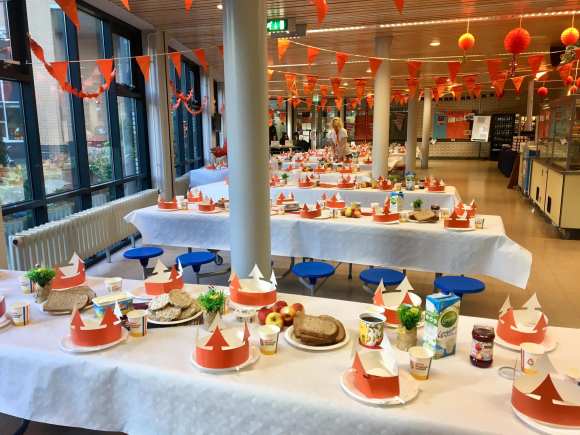
The kids also got to celebrate at school yesterday with breakfast and games provided by the King’s Day Foundation.  All schools that sign up receive the food supplies for the breakfast as well as sports supplies for the games.  The PTSA decorated the school in tons of orange and we had an orange-themed bake sale.

kings day bkfst

As an American who has never celebrated a king before or even really done much to honor the presidents, it feels strange to celebrate a royal, but it has been fun to get in the spirit of things.  So, Happy Birthday to the King, Go Netherlands and we’ll see you next year at Koningsdag!


Bonjour to the Loire Valley and Normandy

We spent last week in the Loire Valley and Normandy regions of France.  The Loire Vally is famous for its Chateaus (castles) and its wine.  Normandy is of course well known as the site of the Allied Invasion into France.

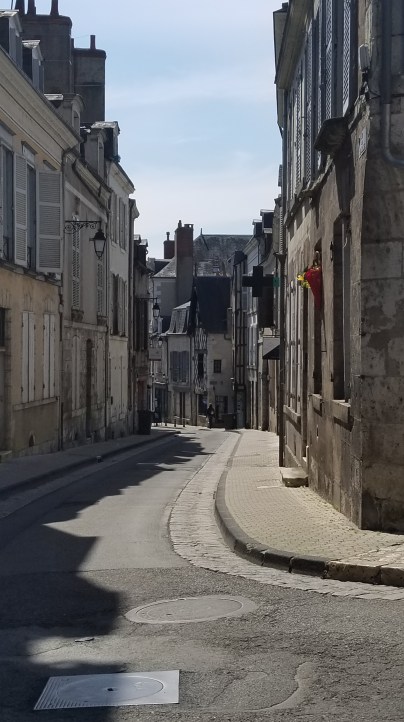
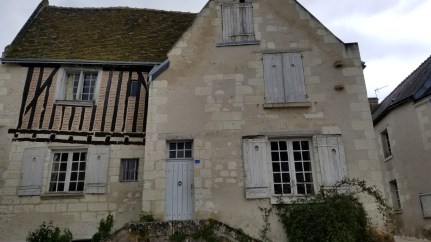
Day 1: We began by driving through Paris on our way south.  We stayed on the outskirts of the city but we could see Sacre Coeur and Notre Dame in the distance (little did we know that a few days later Notre Dame would be burning).  As we made our way south, we began to see a lot of yellow flowers in what looked like crop fields.  We later discovered that these flowers contain the seeds that are used to make vegetable and canola oils.  We continued to see fields like these for the whole trip.  They made the landscape look like a patchwork quilt and they were beautiful.  We finally arrived in Aunay-sous-Auneau, a very small village about 30 minutes from Chartres.  After checking into our accommodations, we walked around the village which was very small and seemed like a proper French town with its old church in the center and the monotone colored homes surrounding it.

IMG_20190413_191445IMG_20190413_191601


Day 2: We began our day by driving into Chartres.  The city was very quaint and featured lots of crooked houses.  The cathedral was pretty.  There was a good mix of light and dark elements and the stained glass is elaborate and contains beautiful colors.


Next, we drove to Sully sur Loire (our first chateau) and to get there we had to drive through numerous French villages.  They were all very cute and very quintessentially French.

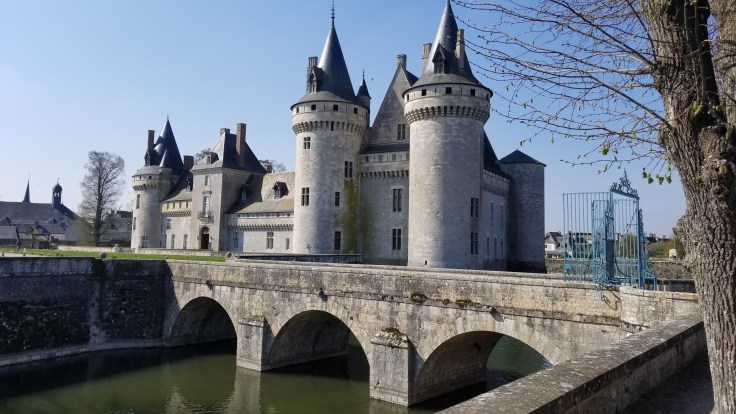
20190414_111013

Sully sur Loire was a very pretty Chateau.  We only looked from the outside, but it made a nice impression they way it was situated on the water.  Next to the chateau was a little bridge that led over the river into the village.  In the village, we stopped at a small church having their Palm Sunday service and then went to a Boulangerie and Patisserie (bakery and pastry shop).  We bought a baguette and a pastry bread and they were delicious-possibly one of the best things we ate on the whole trip!

Next, we drove through forest rodes to Chateau de Chambord.  This was the hunting lodge of King Francis I in the 1500s.  It was a sprawling chateau and made quite an impact over the landscape.  We did go inside this one, but it was pretty sparse with a few historic artifacts.  The impressive thing about the inside was the spiral staircase in the center of the chateau.  The exterior was also unique in that it featured some interesting black geometric designs.


After Chambord, we drove to Blois.  In the city, we went to an old church, St. Nicholas.  It was a nice cathedral but was in disrepair as some of the artwork was destroyed and the ceiling was falling off-there were actually nets installed to catch falling rock.


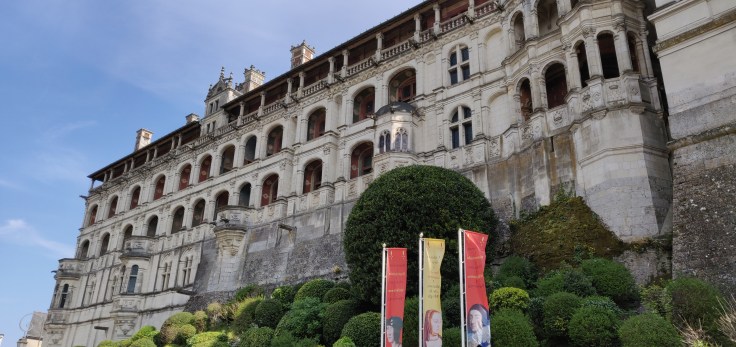
The town of Blois was pretty and it was a nice walk up to the chateau.  This chateau was lived in by many French kings and Joan of Arc was blessed at this chateau before heading to battle.  While we were looking at the outside of the chateau, the House of Magic across the street began making noise and six large dragons (animatronic) came out of the windows.  It was kind of cool and the youngest among us really enjoyed it!

20190414_15092320190414_15201020190414_15475020190414_152602IMG_20190414_152431

20190414_152839
20190414_153442
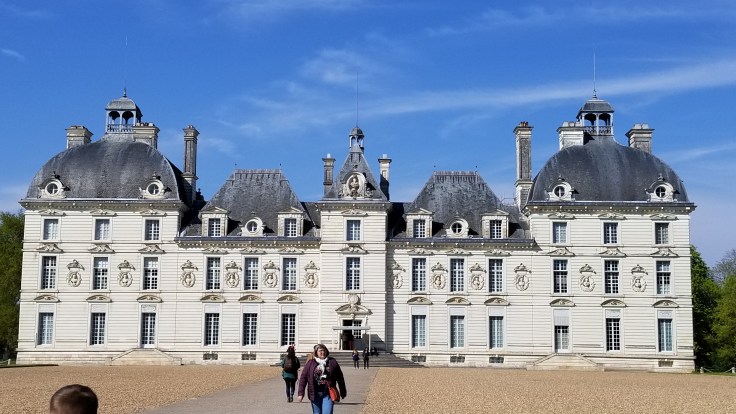
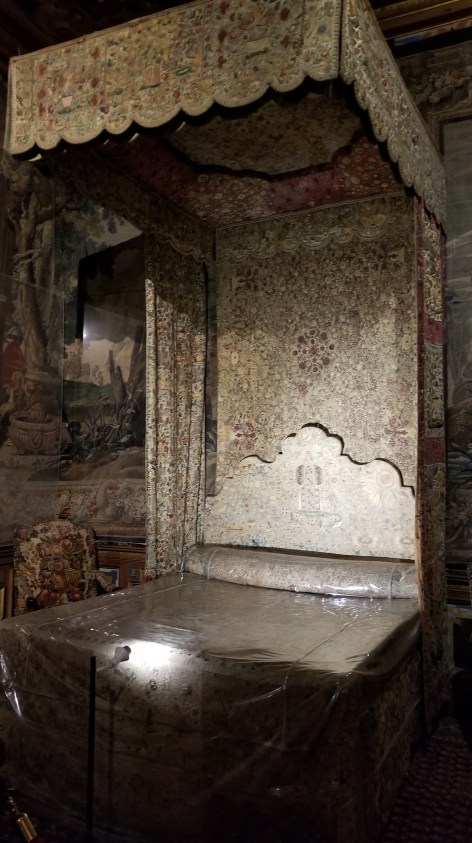
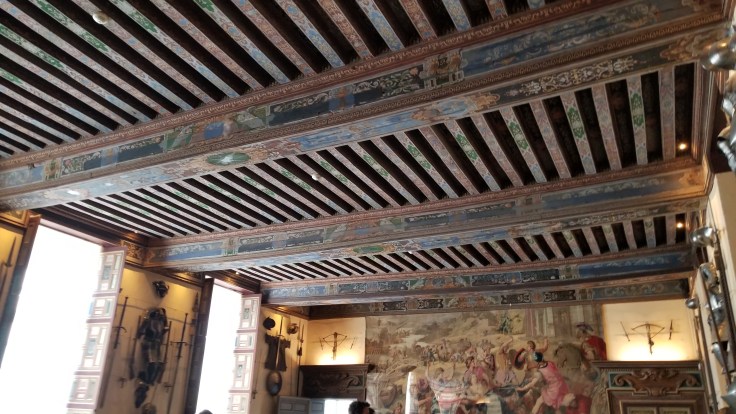
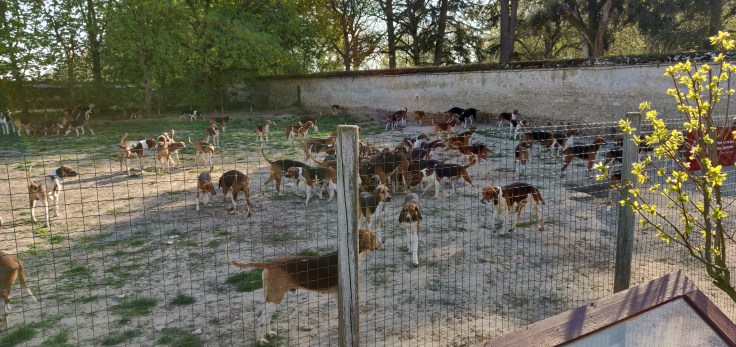
Finally, we went to Chateau Cheverny. This chateau was given to Diane du Poitier, the mistress of King Henry II, but she sold it in favor of Chateau de Chenonceau. Cheverny had nice interiors but there was a Lego display going on so it was a little unusual to see the rooms with old furnishings and elaborate Lego creations. On the grounds, we walked through the tulip gardens and the labyrinth and then we went to view the kennels. The kennel is apparently very famous for its training of hunting dogs but it was a little disturbing because there were a lot of dogs in a space that wasn’t that big.  Several of the dogs were injured and a dog fight broke out while we were standing there.
20190414_16393020190414_16492420190414_16495320190414_171838IMG_20190414_171407

IMG_20190414_181513.jpg

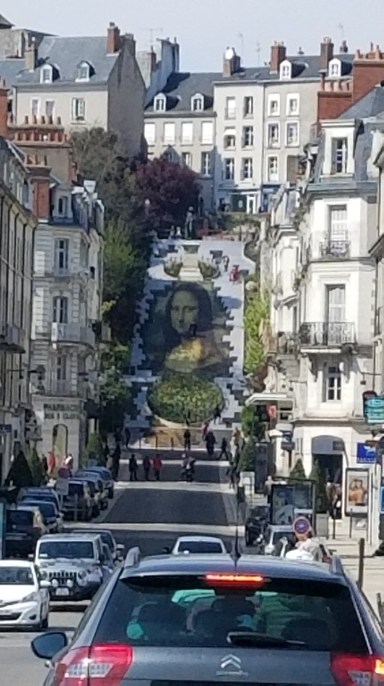
After Cheverny, we went back to the town of Blois for dinner. It seems that nothing is open in France on Sunday and Monday, so we struggled to find a restaurant. We finally settled on pizza which was not French at all (something we really hate to do), but we did try the local red Chinon wine and the tart tartin ( a local apple tart dessert). Both were good. We also walked in the city a little and saw this interesting Mona Lisa artwork which is painted onto steps.
20190414_145902.jpg

Day 3:  We planned to begin day three with a look around the gardens of Chateau de Chaumont, but when we arrived they told us the gardens would not open for another week.  So, we decided to skip this castle and we just got a few glimpses of it as we drove out of town.

We moved on to Chenonceau.  This is a very beautiful castle that has a lot of interesting history surrounding it.  It was originally built by a husband and wife team and then became a possession of the crown in the 1500’s.  It was given to Diane du Poitier, mistress of Henry II, but Catherine de Medici, the queen, had wanted it for herself.  When King Henry II died, the queen forced Diane to turn it over to her.  She then lived there while serving as regent for her young son who had become king.  Finally, her other son became king and when he was murdered, his widow made it her home.  The castle itself has interesting furnishings, a chapel where Mary Queen of Scots’s (also briefly the queen consort of France) guards carved sayings onto the walls, a wedding present of Mary Queen of Scots and Francis II, elaborate kitchens and a hall of the history of the chateau.  There are also extensive gardens and maze and a collection of carriages.  It is really one of the most beautiful settings.

After viewing the chateau, we ate lunch in town.  We had some fish and meat dishes but nothing was exceptional.  We did have some of the regional chenin blanc.

After lunch, we set off for our next stop.  Along the way, we saw several wild pheasants along the roadside.  Our next chateau was Clos Luce which was a chateau given to Leonardo Da Vinci to live in for the last three years of his life.  Apparently, he and the king of France (Francis I) were very good friends and Clos Luce was connected by an underground passage to the castle where the king lived (Amboise).  The chateau itself was very nice and though smaller in size, it was set on an expansive property.  There were interesting displays set up throughout the property and house about Da Vinci’s inventions and visitors could see the room where he died and his studio where he continued to work on three of his paintings including the Mona Lisa.

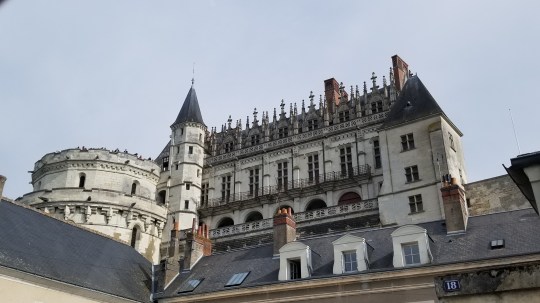
After leaving Clos Luce, we stopped at Amboise and walked around the city below the chateau.  We got a look at the chateau from the ground level and then headed onto Tours.

20190415_165122

At this point, we were getting so frustrated that none of the restaurants had the regional cheeses and not much in the selection of regional wines, that we went to a grocery store and bought everything that we were looking for (not to mention for much cheaper than it would have cost at a restaurant).

After getting our groceries, we found an authentic restaurant called Au Coin Gourmand.  A couple of us began the meal with a bone marrow starter (yes, they just ate the marrow out of the bone-I suppose it was seasoned or something.  I did try a tiny piece but that was all I could muster).  For the meal, we had Sandre fish (a typical fish for the region) and pork medallions.  We also tried a Vouvray wine.  Everything was very good.  We ended the meal with a pear crumble which was also good.  When we got back to our apartment, we enjoyed a little of our purchased cheese (Saint Maure and Crottin-both goat cheese and our favorites of everything we bought) and some red Chinon.

Day 4:  Today we headed into Chinon to see the chateau there.  Along the way, we passed by many vineyards.  The chateau itself was a complex inside the castle walls that consisted of the royal rooms, a clock tower, a watchtower, artillery rooms and the keep.  It was not really furnished in any way but they had a cool device called a histopad that was like a tablet you wore around your neck and when you went into a room, you could see what it might have looked like when furnished, read about the history and learn what the rooms were used for.   Two interesting pieces of history from this chateau were that this was the site where Joan of Arc convinced the king to let her lead troops into battle and the Knights Templar were imprisoned here and made some interesting wall carvings in their cell.

After this, we moved on to Chateau d’Usse.  We didn’t go in this one, but it was very lovely and looked like something from a fairytale.  We sat across the street and had Croque Monsieur sandwiches for lunch (a grilled ham and cheese sandwich that is popular in France).  We tried two French beers-one was a rouge which was interesting and very fruity.  We finished our meal with the local tart tartin.

Next, we drove to Azay le Rideau.  Again, we just looked at this one from the gates and then we walked in the city where we stopped in a small cathedral.

Finally, we finished our chateau tour with Chateau de Villandry.  This one is well known for its gardens so we spent our time wandering those.  The gardens were very manicured and sculpted, but there weren’t many flowers in bloom yet at this time of year so they probably weren’t at their most beautiful.

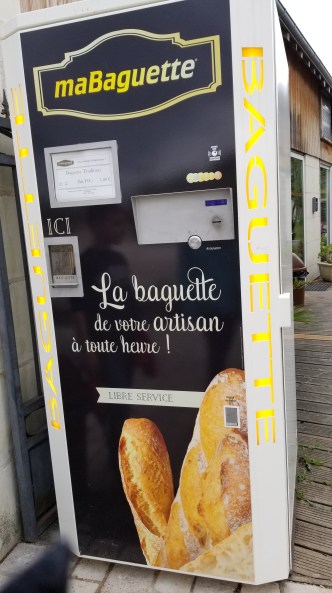
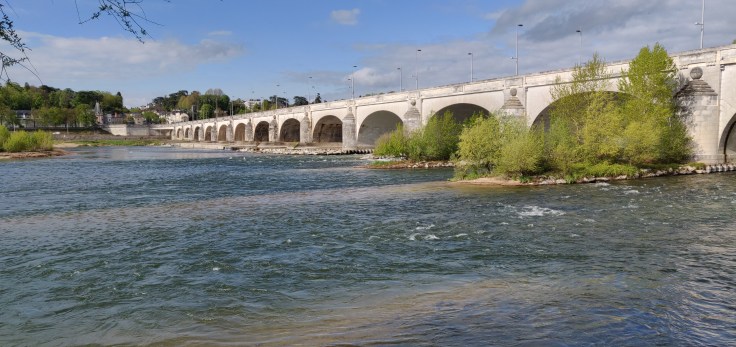
We walked around the village outside the chateau here as well and then went back into Tours to walk around the Guingette de Tours sur Loire-basically a riverfront area.  Notice also, the baguette vending machine.  We saw several of these, especially in these small villages.  I guess when you need a baguette, you need a baguette!

20190416_16215520190416_15230820190416_161159IMG_20190416_173505

After grabbing some dinner, which none of us were overly excited by, we stopped in a cathedral that was being renovated for a quick look.  Finally, back at the apartment, we broke out the rest of the cheese (Pyramid de Valencay, Pouligny Saint Pierre and Selles sur Cher) that we had purchased at the store as well as a Muscadet wine.  It was nice, but the kids were not fans of the cheese!

Day 5:  On our fifth day, we left the Loire Valley and made our way into Normandy.  On our way to Mont St. Michel, we drove by tons of the yellow flower fields and even saw some deer in one of them.  We also saw many Ecobridges-bridges built over the highways that are designed for animals to use for crossing so that they don’t cross on the road.

At Mont St. Michel, we took the bus to the island and went into the city.  We first stopped at a small church before making our way uphill to the abbey.  The abbey itself was very interesting as not only had it been an abbey, but also a prison.  There were also some really beautiful stone carvings inside from the 1500s and the columns and arches were fantastic.

We left Mont St. Michel and drove to Omaha Beach.  There were many monuments to the Allied Forces and several bunkers that could be seen.  We walked the beach and it was very surreal.  First, it was hard to imagine from such a pretty beach that something so gruesome had taken place there.  Then it felt somewhat odd because there were people playing on the beach and it seemed strange to go somewhere to have a good time while remembering what had taken place-how many lost their lives there and what the beach must have looked like that day.

We also went to the American cemetery near the beach.

That night we stayed at a bed and breakfast-our first time.  It was very nice and the owner, though she spoke little English, was very kind.  She had a drink of cider with us (popular to Normandy region) which was enjoyable.  We went into a small town for dinner, St. Pierre sur Dives.  We walked the town a little and went into a church before heading to the restaurant.

At the restaurant, we tried Pommeau which is an aperitif local to the region.  It was good.  We followed that with pork medallions, steak and fish.  All of it was very good and came with some very tasty vegetables.  We ended the dinner with Calvados, a digestif local to the region.  That was reminiscent of whiskey and was fairly strong.  We also had an apple and salted caramel sorbet.  The calvados could be added over the apple sorbet to form another regional specialty called a Trou Normand.


Day 6:  We began the day with breakfast with the owner of the bed and breakfast.  She made a lot of food for us including fresh orange juice, homemade jams and milk that had come from the local farm.  After breakfast, we went on a tour of the Graindorge Cheese Factory.  There they produce 4 cheeses of the region-Pont l’Eveque, Livarot, Camembert and Neufchatel.  The tour was very interesting and informative and at the end, they had all of the cheeses for us to try.  The best part- it was free!

After the tour, we drove to Claude Monet’s house in Giverny.   The house was very nice and there were pieces of art from Monet and his contemporaries inside.  But the gardens were spectacular and it was fun to see the famous Japanese garden that served as his inspiration for many of his paintings including the water lily paintings.

After the gardens, we walked down the street to a small outdoor restaurant where we had some white ham risotto and a lamb dish with some regional beer.

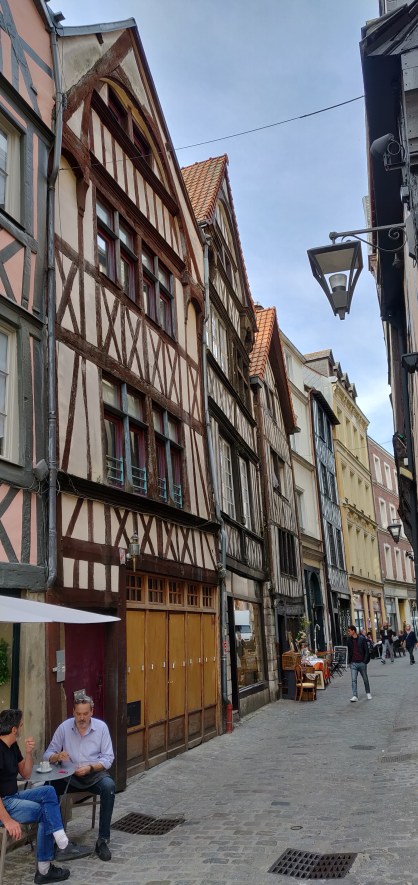
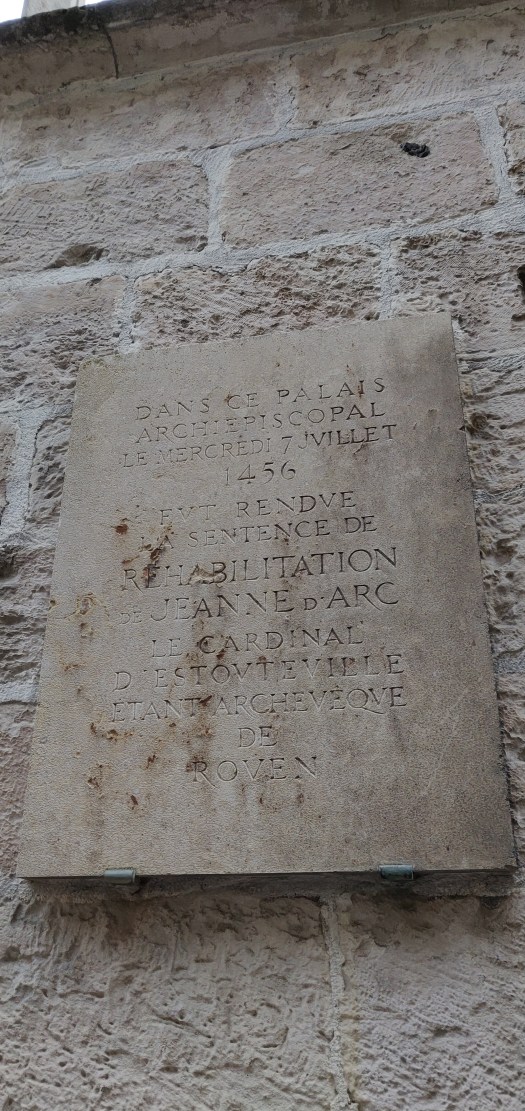
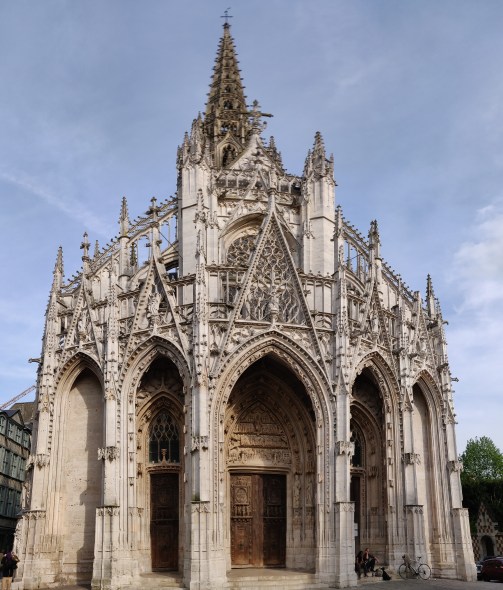
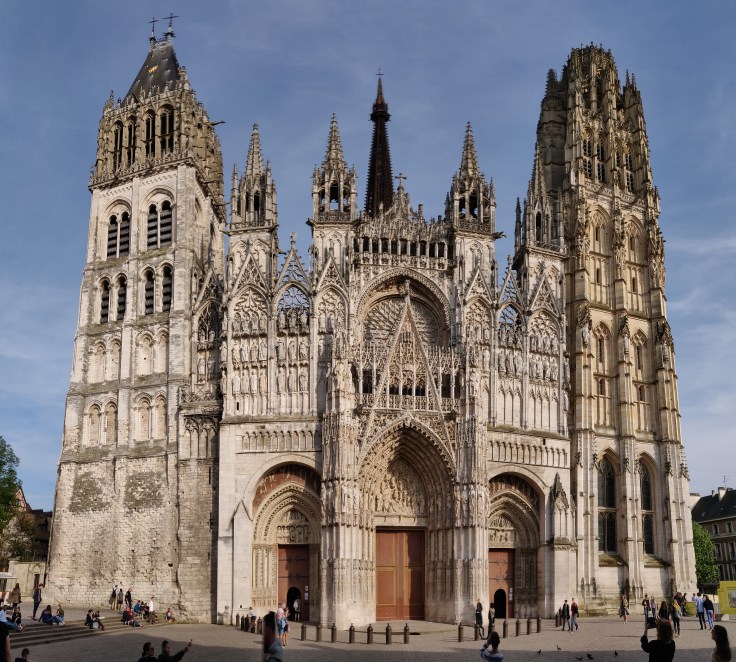
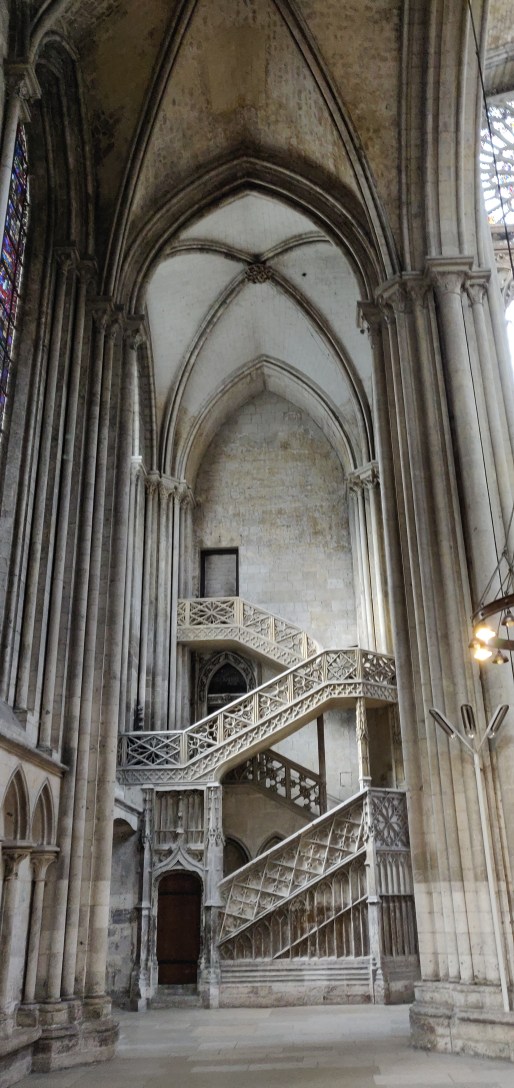
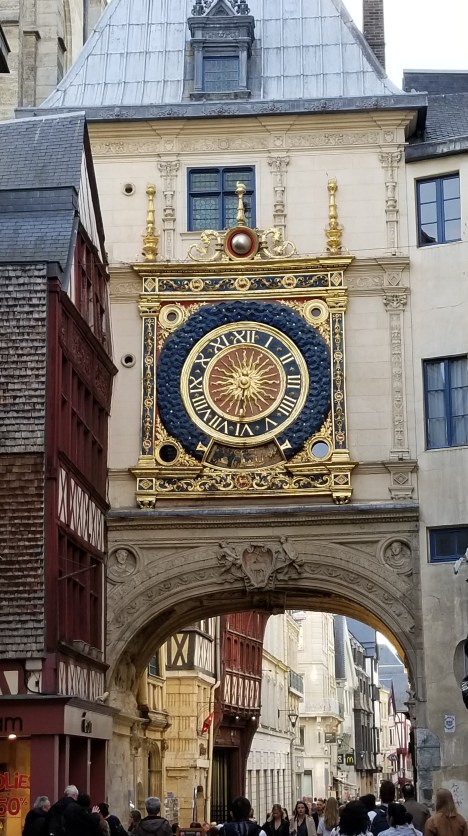
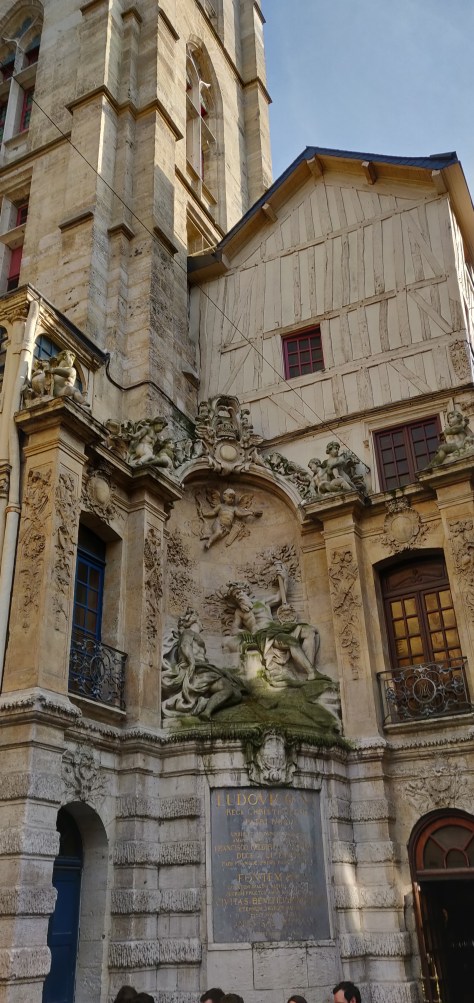
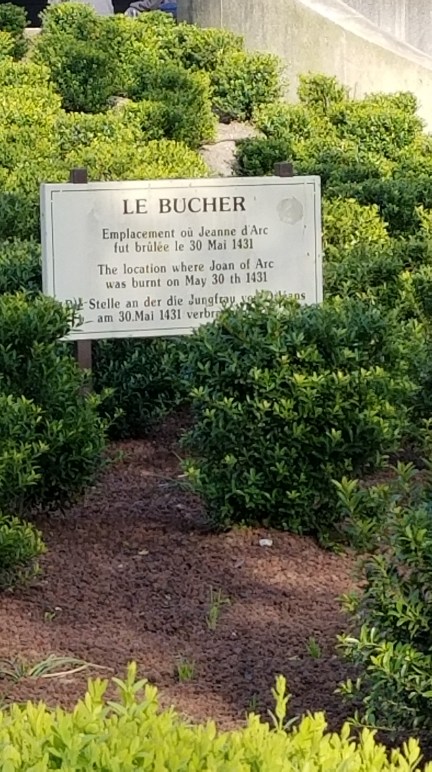
After lunch, we drove to Rouen and walked the old district.  We went into Notre Dame de Rouen and saw Joan d’Arc cathedral and an abbey.  There was also a huge astronomical clock and some beautiful little streets and building facades.  Finally, we brought the Joan of Arc story full circle by seeing the site where she was sentenced to death and where she was burned at the stake.

IMG_20190418_173455IMG_20190418_173629IMG_20190418_173717IMG_20190418_174500IMG_20190418_173756IMG_20190418_180930IMG_20190418_17522720190418_18060320190418_18142620190418_181548IMG_20190418_181641IMG_20190418_182004IMG_20190418_18264720190418_18261820190418_184023IMG_20190418_185011

After walking the city, we had dinner at Made in Normandy and I thought my kids might kill me as the food was very authentic and a little outside of their normal dietary choices even though they are pretty adventurous.  After some Pommeau and appetizers, we had Marmite Dieppoise (a sort of fish stew), steak and Andoiullet (tripe sausage).  I redeemed myself a little with dessert which consisted of specialties of the region-Teurgoule (rice pudding), Normandy tart (apple tart) and something that was like a pudding consistency cheese with a browned butter topping.

We ended the day on the terrace of our apartment overlooking the city.


Day 7:  Our last day began with a drive to Calais.  We walked to the coastline at Cap Blanc-Nez which is the equivalent to the Cliffs of Dover on the French side of the English Channel.  It was a hazy morning but we could just make out the UK and the cliffs on that side.

We went into town and saw the City Hall and the statue by Rodin of the Burghers of Calais.  We also walked around a large WWII bunker that has been converted into a museum inside of a small park.

Finally, we stopped and bought a few pastries before driving by the lighthouse and heading back to The Netherlands.


Overall, it was a fun trip.  We learned some new things, brushed up on quite a bit of history, the kids stayed engaged and we saw some beautiful places.  The language barrier was a little harder this trip and the food was a little disappointing, but we have plans to check out another area of France later in the year, so until then, Au Revoir!

Bloemencorso Flower Parade

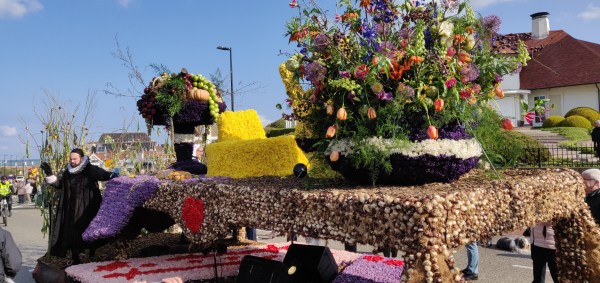
Last weekend we went to the spring flower parade here in The Netherlands-The Bloemencorso.  Think of the Rose Parade in which the floats are turned into designs comprised of flowers.  Now shrink the floats down in your mind in terms of scale, types of flowers (I think they only use local flowers, no imports) and detail, but lengthen the parade route so that it takes 6+ hours and winds through numerous cities.  Voila-The Bloemencorso!  While it wasn’t quite up to Rose Parade standards, it was fun to go and watch in person.  The floats smelled great, we got to hear some fun bands and it didn’t take too long (about an hour) for it to go by our viewing spot in Noordwijk, a cute sea town.

Actually, the thing that struck us the most about the parade was the lack of crowd control.  Don’t get me wrong, there were police and parade escorts but they just didn’t do much to keep the crowds off the parade route.  People continuously migrated further off the sidewalks and into the street, often walking or standing right in front of a float as it came down the route.  No one seemed concerned about it at all.  But unlike the Rose Parade, it was also very easy to park close, walk up to and leave the parade and we didn’t need to show up more than 30 minutes or so in advance to get a good viewing spot.

Apparently, there is another parade in the late summer which features summer rather than spring flowers so we might check it out.  Also, just like the Rose Parade, they park the floats in a lot the day before or the night after, so that you can get an up-close look.  That might be fun for a future parade as well.  In the meantime, I hope you enjoy some of these pictures of the parade.


Excursion to Groningen

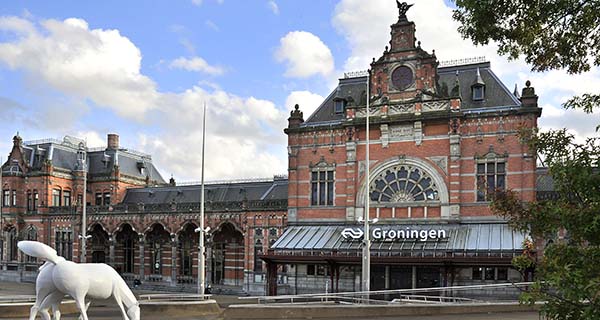
This past weekend we decided to make a day trip to Groningen in the northeast of The Netherlands.  It was about a two and a half hour drive.  On the way, we drove past a few tulip fields and a lot of wildflowers.

Upon arriving at the city, we left the car in a parking garage and headed toward the museum that prompted our visit.  As we began down the street, we suddenly realized we might be in the red light district as to our right was a store window display featuring variously sized penises and on our left was a very old prostitute in her undergarments awaiting business.  We quickly ushered the children along (they seemed oblivious to it all) and made our way to a less controversial area.

Our first stop was the Groniger Museum.  The museum currently had a special exhibit of Chihuly work so we thought we would check it out.

In addition to the Chihuly exhibit, the museum has a permanent collection of oriental china, paintings and sculpture work (you can be certain there were a few strange pieces thrown in the mix-yes that is Ronald McDonald, the Hamburglar and Mayor McCheese).

43.jpg

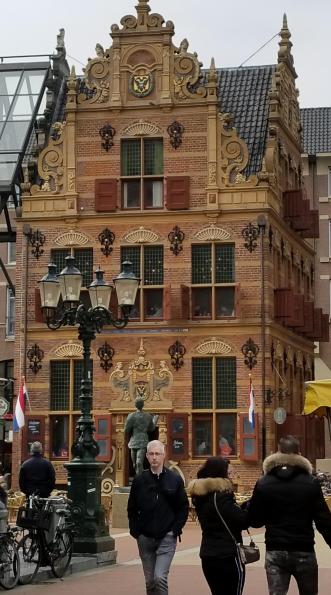
After the museum, we made our way to some of the historic areas of the city.  Most of the places we stopped were almshouses, housing areas provided as a charity for the poor.  They are walled in areas featuring courtyards and what we would think of as apartment-style housing around the courtyard.  People still live in these areas today.  The first one that we stopped at was St. Anthony’s Gasthuis.  This used to be a hospital for plague victims and later became a mental institution for 200 years before becoming housing.  Across from this was St. Joseph’s Cathedral.

Next, we went to another almshouse, the Pepergasthuis.  You can see the bars on some of the windows which are left from the days when part of the building was a home for the mentally ill.  This one had a pretty courtyard with a historic water pump.

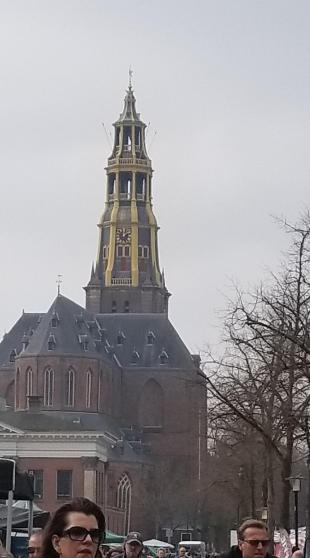
We moved on to Martini Church with its tower.  We chose not to climb the tower but instead walked around the church to the area where they have some of the government buildings.

We stopped for lunch and while I’m not sure of the history of the building that the restaurant was in, but it was a beautiful building.

20190406_115728

After lunch, we walked through the outdoor market and bought some vegetables before heading to A-Kerk.  It was closed but the dome on top was impressive and has apparently had to be put back on several times in its history.

20190406_130920

Finally, we stopped at the Pelstergasthuis, which is one of the largest almshouses in the Netherlands and the oldest in Groningen dating from the mid 1200s.  It used to be a hospital for the poor and an overnight stop for medieval travelers but has been housing the elderly since 1600.  It had nice courtyards.

After leaving Groningen, we drove to the nearby city of Leek and stopped at Nienoord Castle.  The castle is not a fairy tale European castle as you might see in Germany or France but more of an estate home or mansion.  This one, however, did come complete with two drawbridges and a moat.  The castle houses the National Carriage Museum so we had a peek at the various carriages from over the years including ones used by the royal family.  They even had a simulation in which kids could try to drive a carriage.

There was a small house featuring shell walls next to the castle.

The grounds at Nienoord were very nice as well.

While Groningen wasn’t our favorite place that we have been in the Netherlands, it was a pleasant trip and not a bad way to spend a Saturday.

Our Neck of the Woods

For those who are curious about what the area around our home is like, picture a suburb on the edge of a larger city.  While we are actually considered to live in the city, we are in one of the districts outside of the main downtown center.  Just like in suburbs, we still have shopping and restaurants in our “neck of the woods” (all within a 5-10 minute bike ride), but our district has more of a suburban residential feel and is a bit more nature and recreation filled than some of the others.  We have many parks and lakes, biking and walking trails, a bowling center, paintball facility, gyms and tennis courts, a children’s farm and an outdoor amusement center.  There are also lots of fields for soccer and field hockey.

Yesterday, as the sun was shining and the temperature was warm enough for short sleeves and no jacket, lots of people were outdoors engaging in adventurous activities, and we decided to bike around the area.  Our bike ride began in the park near our home (just a 5 minute ride).  There were many people out with their dogs and several people riding horseback through the park.  Next to the park’s large, lakeside restaurant, there is a remote control car race track.  On this day, they were hosting a race and there were many racers and spectators.

race track

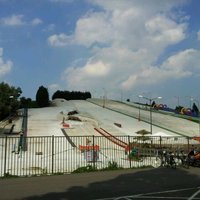
We headed out of the park to bike along the street.  While it was a street, there was probably more traffic on the bike paths than the road.  We biked along a large golf course, many houses, some of which had sheep, horses and cows on their property, and an outdoor ski simulation and intertube “sledding” facility.  The skiing looked scary, but I would definitely try the sledding!

ski

sheep

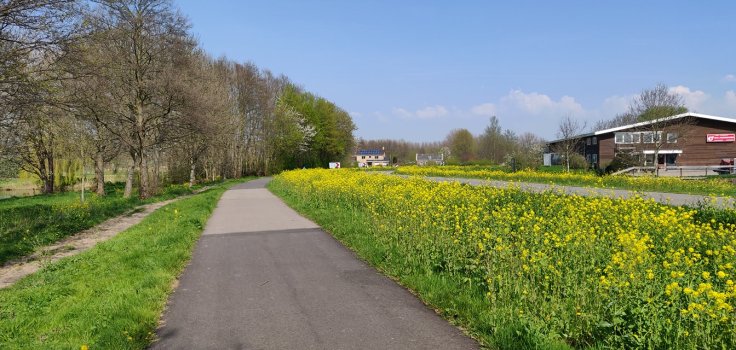
It was a very scenic bike ride with lots of wildflowers and blooming trees.

bike path

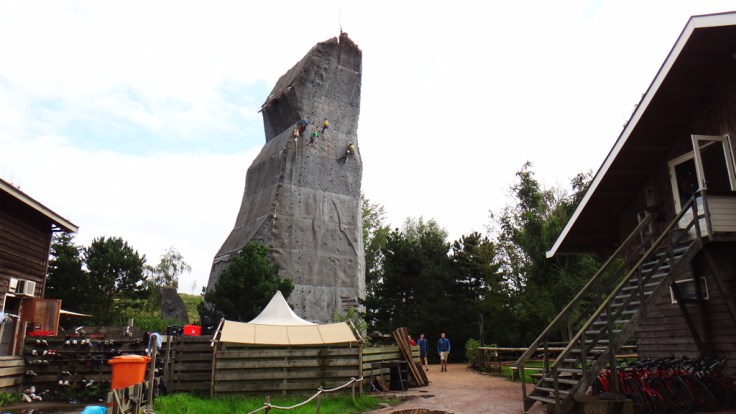
Further down the path, we reentered a section of the park and found the other side of the facility that operates the skiing and sledding.  At this side of their facility, there is an area for renting kayaks and canoes, playing some sort of water sport with nets, doing a massive climbing wall and an adventure obstacle course.  There is also a large lake and numerous mountain biking trails.  There were a couple of people out paddleboarding on the lake as well.

climb wall.jpg

Finally, we ended up back at the restaurant in the park by our house.  It was packed with people (and dogs) just sitting outside enjoying some food and drink, and there were also people using a paddle boat on the lake as well as someone driving a small remote-operated boat.  There is also a sandpit, climbing areas, a playground and small swing bridge for kids near the water and restaurant and the children were out in droves putting all of it to use.

20180823_195243

After relaxing for a bit with a snack, we headed back home through the nature trail.  It was a lovely, relaxed afternoon, and we realized that Rotterdam and it’s surrounding cities are great, and while we enjoy going into the city center for shopping, food and other activities, we are very happy with the amenities and overall feel of our district and feel fortunate that it is what we currently call home.

Bon Appetit or Eet Smakelijk

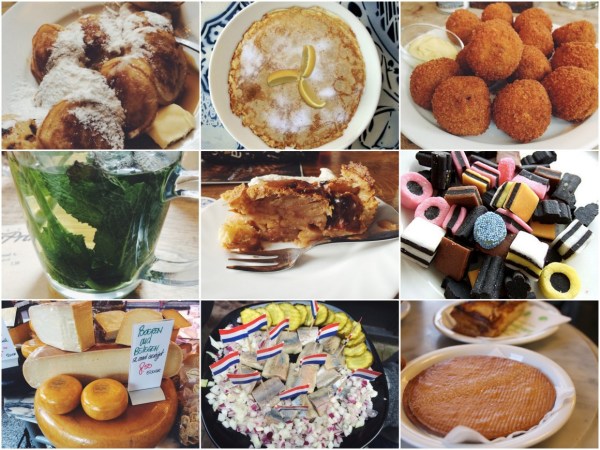
Food is one of my favorite things.  As I’m sure most of you have noticed from our travel posts, trying different foods makes up a large portion of our adventures.  We are always interested to see and taste the things that people eat in different countries and cultures.  So with that in mind, I thought I would share a post about the things that we enjoy eating here in The Netherlands that you might be unfamiliar with in the US.

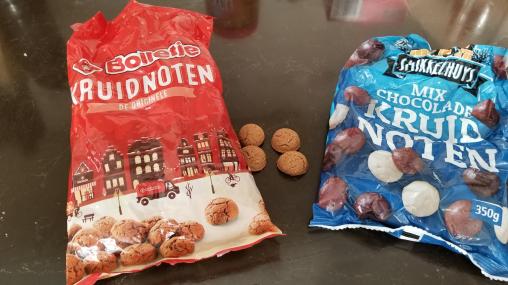
Let’s start with the sweets.  Licorice/Anise flavored items are huge here (they are called drop), but we have not been able to bring ourselves to enjoy that so you won’t find any of that in our home.  We do however enjoy Kruidnoten.  Kruidnoten is actually a winter/Sinterklaas (that’s Santa Claus here) treat.  They are tiny hard spiced cookies.  You can find them plain or they can be coated in milk chocolate, white chocolate, dark chocolate, salted caramel coating, toffee coating, etc.

20190402_103904

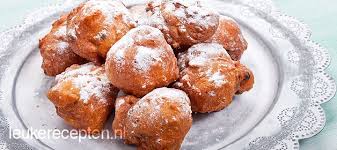
Another winter sweet that we enjoy is Oliebollen, which are traditionally eaten with champagne on New Year’s Eve.  You can find them at stands all over town in the winter season or you can buy box mixes at the store and make them yourself.  They are essentially fried dough that is covered in powdered sugar.  A lot of people here eat them with raisins but we prefer them plain or with a filling.  We have had them filled with apple (very good), Nutella, and banana.

images

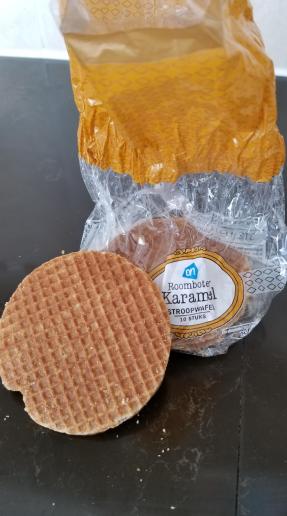
We also enjoy stroopwafels.  If your child was ever in a class with my children in elementary school, chances are they have had stroopwafels as we usually brought some from The Netherlands and shared with the class each year.  These are two thin, chewy cookies made from a batter that is cooked in a sort of waffle iron that are then sandwiched together with a type of sticky, syrup center.  You can buy these prepackaged at the store or you might find a place that makes them fresh.  You can also get these in multiple flavors (the strangest that I have seen is lavender and pepper).

20190402_104116

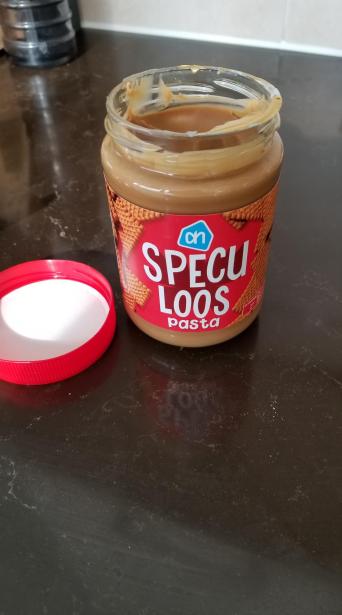
They also have a product here (the consistency of creamy peanut butter) called Speculoos.  Now, I don’t know how they eat it-maybe as a breakfast spread, maybe as a dessert.  I eat it as dessert right off the spoon!  It is essentially a cookie butter made from speculoos biscuits which are a spiced shortcrust type of cookie.

20190402_103955

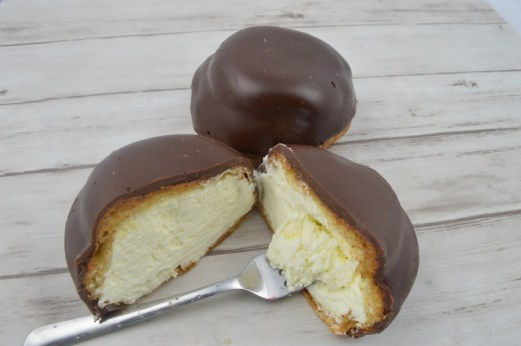
While the Dutch are huge fans of apple pie (and it truly is different than American apple pie), one of my favorite things to get from the bakery is Bossche Bollen.  It is reminiscent of a cream puff as it is a hollow dough filled with a whipped cream mixture and covered in a chocolate fondant but this pastry was actually created in a town in The Netherlands.

big_bossche bol 1 (Medium)


Now you might think dessert on these next two but these are actually breakfast items.


On the left, you have what may look like chocolate sprinkles to you (and essentially they are) but here this is called hagelslag and you eat it on bread for breakfast (the final product also being called hagelslag).  You first butter your bread and then pour on a ton of the sprinkles.  You can also use peanut butter instead of butter.  The sprinkles come in both pure and milk chocolate as well as white and you can find different colors-pink and blue for births are very popular.

On the right, you have what looks like a slice of cheese but is actually a slice of coconut for your bread.  It must be made by mixing coconut, sugar and some type of gelatin together to form this slightly gummy coconut slice.  It is quite good.

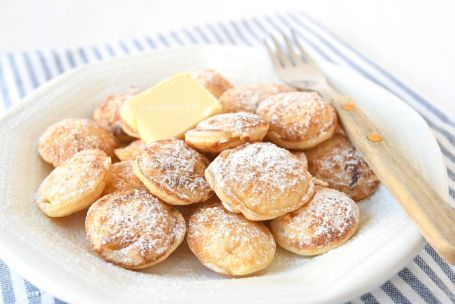
Next is a food that is both a sweet treat (generally how the Dutch eat them) and a breakfast item (often how we eat them).  They are called poffertjes.  They are a fluffy tiny pancake that is a little spongy.  I buy them packaged at the store and warm them up for breakfast (for that we eat them plain), but we have had them as a treat with butter and powdered sugar or with caramel or chocolate sauce.  I recently bought the special skillet that you use to make them, so I’m hoping to make some from scratch soon.

poffertjes-2a

One other treat that the Dutch might eat as a pastry treat and we often eat at breakfast is amandelstaaf.  This is a flaky pastry with a sugary almond paste filling.  These are typical at Christmas time and they are really delicious.

almond staaf


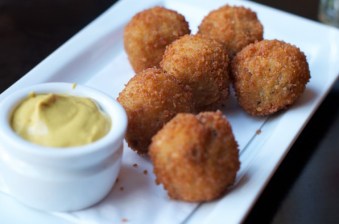
In terms of snacks that aren’t sweet, the Dutch, of course, do like raw or pickled herring.  We are not fans of raw fish as a snack, but there are two snacks that we like that are very similar to each other-kroketten and bitterballen.  Both consist mainly of a creamy roux type filling which often contains chopped or minced beef (although it can contain other things such as cheese or potato).  This is then rolled in breadcrumbs and fried.  They are usually served with mustard or a mustard mayonnaise combination sauce.  The most noticeable difference between the two is probably their shape with bitterballen being round and krokets/croquettes being oblong shaped and larger.  Krokets/Croquettes are often also found on lunch menus as a main dish.

5857202557_36599203a4_b-e1423836634491

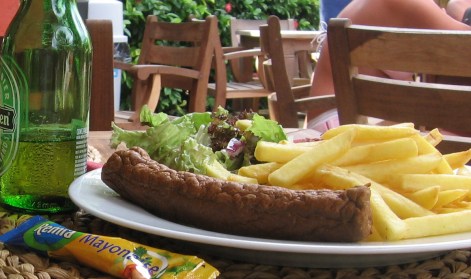
Another snack is frikandel which is a firm, skinless meat sausage or minced meat hot dog that is deep fried.  It is often eaten as a snack, but you find it on the children’s menu at restaurants quite often as well.

Frikandel.jpg

The other beloved snack in The Netherlands are frites (better known as fries).  The main difference between fries in The Netherlands from those in the US is in how they are eaten.  The Dutch love to eat them with mayo (and tons of it).  They can often be purchased from snack stands in a paper cone with layers of fries and mayonnaise (referred to as frites sauce) or other sauces and toppings and are eaten with a little fork.  This is called a zak patat.  Don’t knock it until you’ve tried it; it’s pretty awesome!

9601f2bc48f56f1f2df40a7f7740fa96 (1).jpg

Now, how about some healthy items.

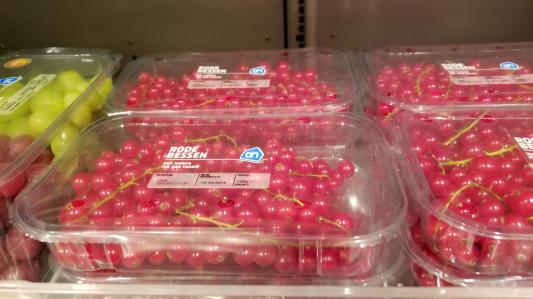
One thing that you can find in many places across Europe, but that I have not seen in the US (at least not where we are from) is red currant berries.

20190329_082143

Another item that is a specialty of the south of The Netherlands is white asparagus.  I haven’t tried this yet, but am hoping to soon as I just saw them at the market.  I have read that it is white because it is grown underground and never has light to produce chlorophyll which makes asparagus green.  White asparagus are supposed to be slightly sweeter and more delicate in taste; I will have to let you know.

5513169fb64d4.image

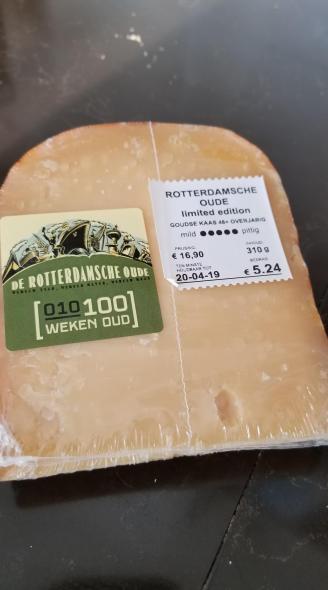
Of course, The Netherlands is known for its love of Gouda (pronounced “How da” here).  And while we do eat that, I really love Old Rotterdam cheese.  It’s an “old” cheese meaning it has a stronger flavor, but it’s really good.  It is also a harder cheese.  If you ever have the opportunity to try some, I highly recommend it.

20190402_104157

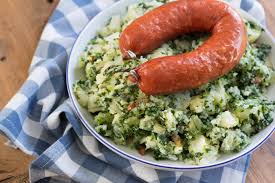
As far as the main dish, the Dutch like stamppot.  This is potato mashed with some other vegetable (typical choices would be spinach, kale, carrot, onion) and served with smoked sausage on top or sliced to the side.  There are many variations and different seasonings that you can do to this dish.  It’s pretty tasty and definitely hardy.

stamppot

Pannenkoeken is another favorite meal.  There are both savory and sweet versions of this type of crepe and many fillings to choose from but typical fillings are cheese or bacon/ham or both.  Common sweet fillings would be sugar and whipped cream. These are generally very large (like they cover the whole plate) and they are slightly thicker than a crepe.

rogge-pannenkoeken-spek-kaas-04


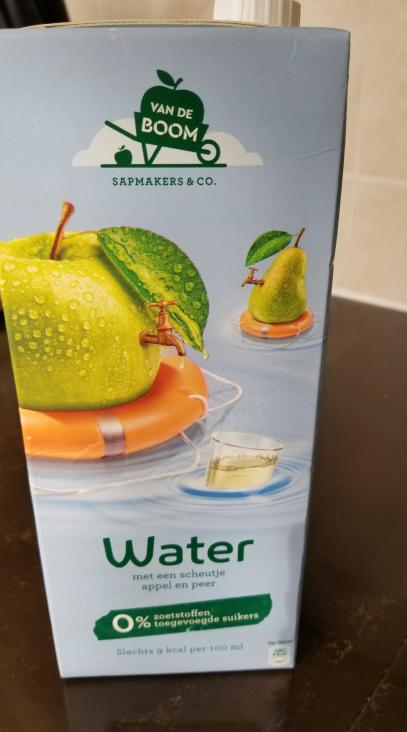
Finally, we have drinks.  I’m not sure if this is in the US or not, but here they have fruit water.  I know many people drink fruit-infused sparkling water, but that’s not what this is.  It’s still water and it tastes like drinking plain water with juice mixed in.  It comes in many different flavors like apple and berry and it’s a nice alternative for kids who want a sweet or special drink since it is made with only the natural sugars from the juice and the amount is cut down by the water.

20190402_104230

Of course, there are all kinds of “adult beverages” here.  Gin is a specialty of The Netherlands and there is a plethora of beer as well.  But one thing that is a wholly Dutch drink is called Advocaat.  It is made from eggs, sugar and brandy forming a rich and creamy drink with a smooth, custard-like consistency.  The typical alcohol content is generally somewhere between 14% and 20%.  I have not had an occasion to try this yet, but look forward to giving it a go at some point.

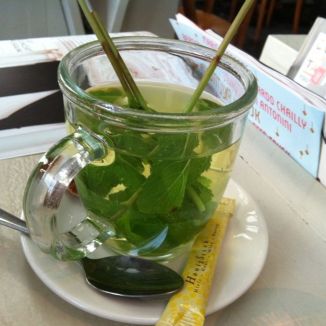
Finally, in addition to coffee, the Dutch do enjoy their fresh mint or ginger teas.  Of course, you can get these teas in the US too, but they aren’t presented in quite the same way.  At a restaurant or cafe here, they will bring you a glass stuffed with mint leaves and a pot of hot water.  Pour the water in and wait and you have your tea.  The ginger tea often comes as hot water with a skewer of ginger chunks and lemon slices.  Just let your skewer soak and then drink your tea.

dutch tea.jpg


Now, I don’t know about you, but all this food has made me hungry.  Good thing I live in The Netherlands and can bike it all off!!

Bon Appetit or as the Dutch would say Eet Smakelijk!


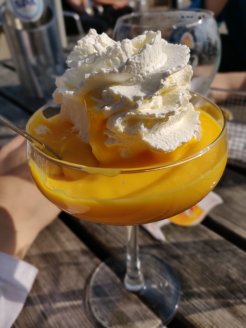
***Update to the post-I have now tried both the white asparagus and advocaat. The asparagus was fine. It definitely was a different taste and texture than green asparagus. Advocaat was interesting. It was the consistency of a thick custard-we ate it with a spoon even though it is considered a drink. It was good and definitely strong. It would be interesting to try one of the cocktails made with it.

advocaat.jpg

Day at the Keukenhof

This past weekend we visited the famous Keukenhof Gardens which is situated among the flower fields of South Holland and is the largest flower garden in the world.  The gardens are only open from mid-March to mid-May (the exact openings dates vary from year to year depending on bloom times).  Our visit was a little early in the season meaning many of the tulips haven’t bloomed yet, but the hyacinth and daffodils were amazing (and the smell of the hyacinths was incredible) as were the flowering trees and even some final crocus.

The park is immense in its outdoor gardens and walking paths but it also has several indoor pavilions featuring orchids, tulips, calla lilies, amaryllis and more.  And, it is situated right next to the flower fields and has several vantage points for viewing them (not to mention the views you get on the drive to the gardens).

And now, I’ll let the flowers speak for themselves!


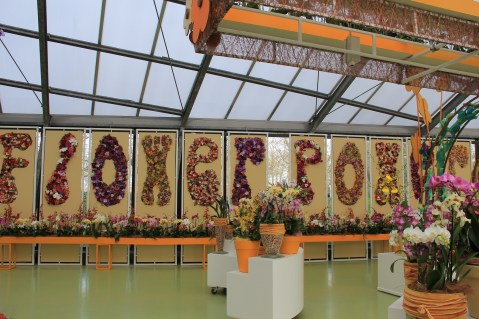
These are a few of the orchids from the orchid pavilion.  The Flower Power sign is made of orchids.  Also, notice the pattern on the spadix of the calla lily-it reminded us of how amazing and beautiful nature can be even in the tiny details.

IMG_1363

IMG_1366

Even a bit of whimsy could be found in the gardens.

We also enjoyed the “stepping stone” platforms they had in the pond which allowed us to stand in the middle and take some fun pictures of the trees and clouds reflected in the water.

IMG_1415

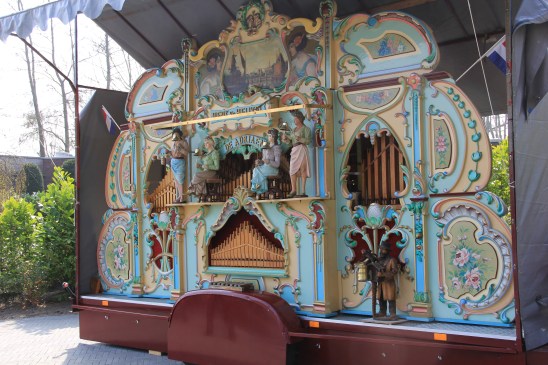
The gardens also featured a hedge maze, a playground, a petting zoo and a children’s zipline.  In addition, they had this calliope providing some fun 80’s and 90’s music.

IMG_1499

And finally, there were the flower fields surrounding the garden. While they were not at their peak with tulips, they were impressive none the less.

Our trip to Keukenhof was definitely a great day with beautiful weather and we look forward to going again in future years!

Spring in The Netherlands

Spring appears to be here in The Netherlands.  While it’s taken a little while to convince the sun to come out and stay, it seems like we may finally be on the right track.  Unlike where we are from in the States, the grasses have stayed green here all winter, but now it’s time for the flowers to bloom and the trees and shrubs to bud out.

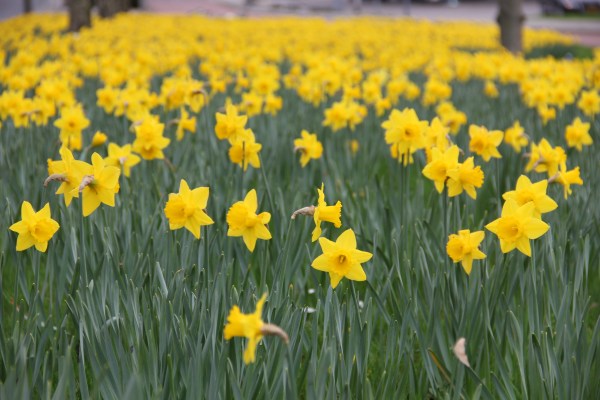
The flowers are blooming, not just in people’s gardens, but in parks and along roadways.  Many medians have an impressive plethora of daffodil plantings which have been brightening our days even with cloudy skies.

The trees have also been quite beautiful with their pink and white blossoms.

On a recent sunny day, we took a bike ride and came upon many signs of spring blossoming (and one giant sheep!).

Finally, the gardens are starting to come to life as well.

All of these signs of life are a welcome sight here and we can’t wait to see what the coming weeks will bring, but for now, the sun is shining and there are pretty flowers in my yard, so I’m off to enjoy it!

Fun in the Sun in Portugal

Our past week was spent in sunny Portugal and while it was not a place I had ever thought of visiting when living in the US, we really enjoyed it (not to mention the food and wine) and we actually learned some new things!

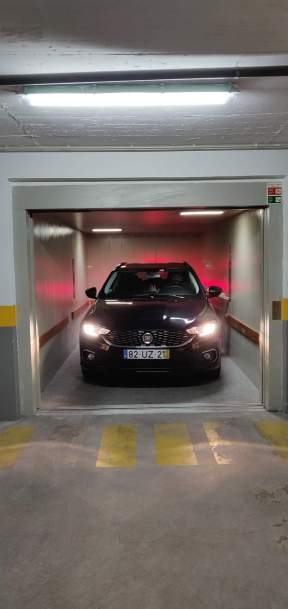
Day 1:  We arrived in Lisbon and headed to our apartment for the week where we got to drive our car into an elevator to park it on a lower level-interesting!
facebook_1551718407261

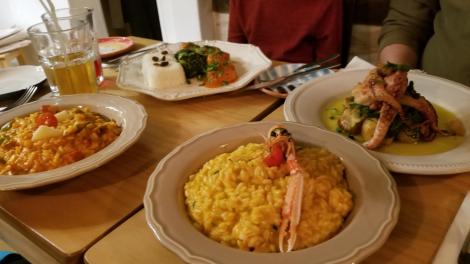
Then we ventured out to get dinner at a restaurant serving traditional dishes.  We started the dinner with a Portuguese cheese board including sheep cheese which has a fairly strong taste.  For the meal, we tried octopus (very good), duck risotto and fish and shrimp risotto along with some local beer, wine and port.  For dessert, we tried a rice pudding and an egg yolk pudding cooked with bacon (sorry, we ate it before we thought about taking a picture) which was very good.
20190223_210549

After dinner, we decided to walk around a bit and we learned the first lesson about Lisbon-what goes down must also come back up!
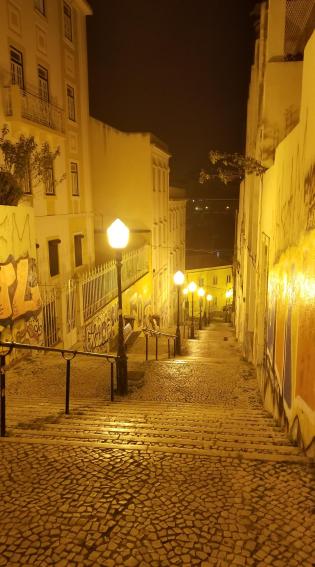
20190223_201136

Day 2:  On our second day, we headed out of Lisbon to Evora, about 1.5 hours east.  As we were driving, we saw tons of storks nesting in the utility towers.
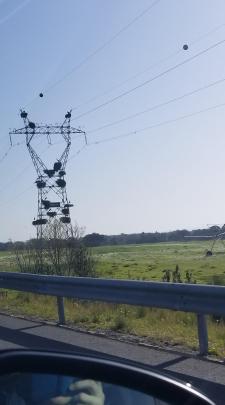
20190224_105654

Once in Evora, we walked around the Praca Giraldo (open square with shops and restaurants as well as a church) and went into the church (note the wood and stone floor-different than many European churches that we have seen).
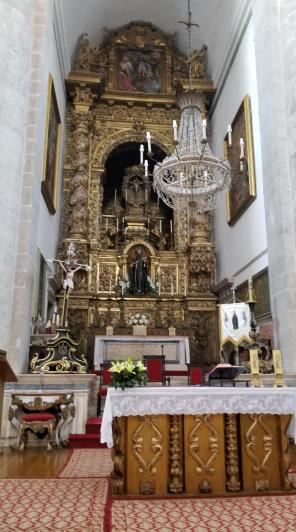
 

20190224_114945

Next, we toured the Church of Sao Francisco, which had a lot of Portuguese tilework, statues and dolls.  The walls were also rainbow in some places due to the stained glass.
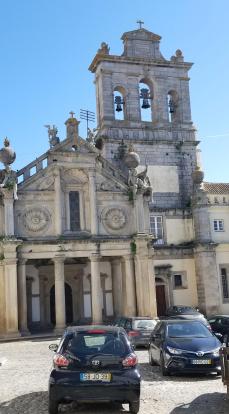
20190224_130020


Next to the church was the Capela Ossuary (the bone chapel) and a small museum featuring a special exhibit of nativities from around the world.


Finally, it was time for lunch and we decided to go all out with dishes traditional to this region of the country.  We shared Seafood Migas and Black Pork Migas (migas basically referring to a type of stuffing dish and black pork being thin pieces of grilled pork), Sopa de Cacao (shark fish soup) and Acordas (cilantro seasoned soup eaten with bacalhau-dried, salted cod and egg).  For both soups, there was regional bread and we couldn’t pass up some regional red wine as well.  We finished it all off with Toucinho de Ceu for dessert (an almond pie that uses pork lard in its preparation).


After lunch, we walked to the Evora Cathedral and the town’s Roman ruins.  We took a walk through the old town streets to the Aquaduct and then headed back to Praca Giraldo where we decided that all that walking entitled us to stop in a bakery and try a selection of pastries from the region including Queijada Evora, Queijada de Ceu, Pastel de Nata (egg custard pastry), Queijada de Coco (coconut pastry) and Pao de Rala.


On the way back from Evora, we stopped at Almendes which is a Neolithic stone site.  The stones date from 4,000-6,000 B.C.   There were also a lot of cork trees growing in this area- cork products are everywhere here.


Once back in Lisbon, we had another traditional Lisbon dish for dinner-Piri Piri chicken.  It is essentially a roasted chicken that you eat with an oil sauce that is very spicy.

Day 3: On our third day, we went to Sintra which is just less than an hour west of Lisbon.  We began at the westernmost point in Europe, Cabo Roca.  It was very quiet and we had some beautiful views of the water and the rocky beach.


The rest of the day was spent walking nearly 29,000 steps (most of which were uphill!) as we visited the castles and palaces of Sintra.  We began at Quinta Regalaria which had beautiful carved wood ceilings.   The real gem of the palace area though was the gardens.  They were immense and contained all sorts of grottos, caves and ornamental decorations and structures.


Next, we visited Monserrate.  We walked through pretty tropical gardens on the way to this Asian/Indian style mansion which contained some elaborate stonework.


Next up was the Moorish Castle (Portugal has a long history with the Moors).  There were a lot of stairs at this one, but we walked around the remains of the area which essentially added up to a wall with towers and saw a few archeological sites.


Last up was Pena Palace-another uphill battle getting there, but it was a very interesting style of building.  It seemed to have some elements of Asian influence but was also somewhat European.  It was home to the royal family but the rooms inside were very small with low ceilings, unlike other European castles.


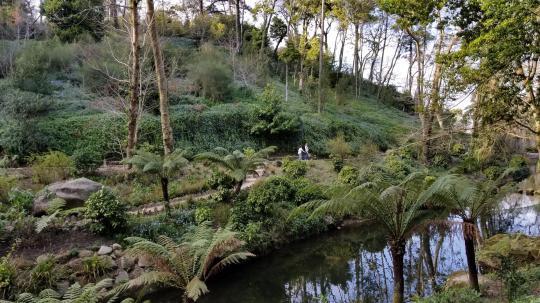
On our way out of the palace park, we walked through an area called the Valley of Lakes.
20190225_162041.jpg

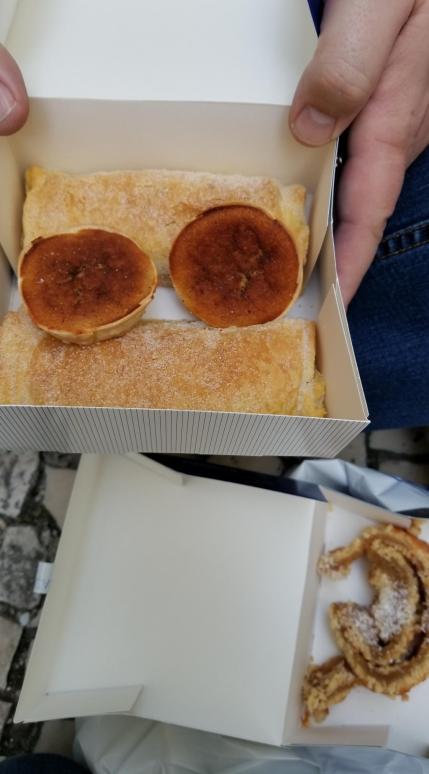
If you have learned anything about us and our travels by now, you have probably guessed that by this point we were ready to try some local treats.  So, we headed to old town Sintra which was mostly tourist shops but also contains Casa Puriquita-a little bakery known for its Queijada da Sintra and Travesseiro (which means pillow).  If you recall, we also had Queijada in Evora but these were denser and more cinnamon flavored.  The Travesseiro was a very light pastry with an almond paste type of filling.
20190225_165350

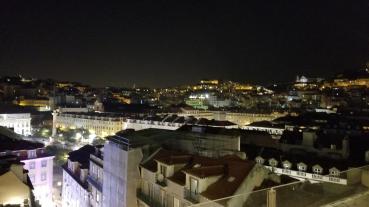
And if you thought we were done eating, you are crazy!  We headed back to Lisbon for dinner at a restaurant with lovely views of the city.
20190225_201740

Here we had bacalhau a bras-dried, salted cod mixed with onion strings and shoestring potatoes-really delicious.  We also tried a port tonic (made with white port) and a tawny port.  If you have never had a port, I highly recommend it!

Day 4:  Today we spent the first part of the day in Sesimbra (about an hour south of Lisbon).  We began the day at Cabo Espichel, a lighthouse on the coastline.  Next, we took a very windy walk through the coastal area to a dinosaur track site (if you see the large indentations in the rock to the bottom middle of the bottom picture- that’s them!).


Next, we headed to the Castelo Sesimbra- the remains of a fortress wall and a small church with lots of blue tilework and a graveyard.

After the castle area, we went to Urso and California Beaches and stopped for some Bifana for lunch (a very small sandwich with a very thin piece of pork-don’t worry, we made up for it later!).

After leaving the beach, we drove back to Lisbon to go to Torre de Belem (a tower which was often the last thing that explorers like da Gama would see when leaving Portugal) and the Padro dos Descobimentos (a massive sculpture celebrating the age of discovery in Portugal).  And yes, if you think that bridge looks familiar, it was designed by the same people that designed the Golden Gate Bridge.

Across from these landmarks, is the Monastery of Jeronimo that boasts a sanctuary with ornate stonework, more of the statues and dolls found in the Portuguese churches and the tomb of Vasco da Gama (the famous Portuguese explorer).

And then, as I told you, we made up for our small lunch by eating a ton of Pastel de Nata (the egg custard pastry) from the famous (and the only ones with the original recipe) Pastel de Belem.  You eat these little pastries with powdered sugar and cinnamon sprinkled on top.  They are very good and a little addictive.  While these were our only ones from Pastel de Belem, we may have found another place in Lisbon that was our supplier several additional times!!  But at Pastel de Belem, we also had a few pastel de carne, and for my Brazilian friends and family, it was very different from the ones featuring carne moida.  It was more like shredded beef.

20190226_154523

After our snack, we stopped by the Basilica da Estrela which had very pretty stonework and some very large statues near the ceiling.

On our way to dinner, we stopped at A Ginjinha which is a famous distributor of the popular Lisbon drink, ginjinha, which is made with sour cherries infused in liquor.  The stand itself is just that.  You walk up to a small open doorway with a counter (and the stickiest floor I have ever encountered), order your drink and then stand off to the side in the square to drink.

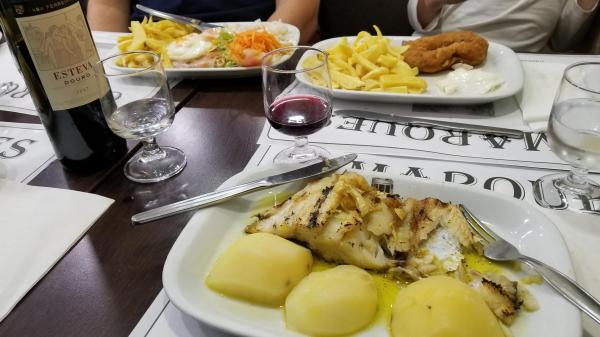
At dinner, we tried some grilled cod and Portuguese meat while the kids ate an Alheira sausage.  The sausage is made of bread like stuffing and various meats, most of which are not pork.  This particular version was fried on the outside, but we also tried one a few days later that was not.  It was quite different and very soft, but it had really good flavor.
20190226_192405

Day 5: Finally, we stayed in Lisbon on our fifth day.  We started the day with a walk down from our apartment to a lower square where we stopped into the Sao Domingo church which had very pretty rose-colored ceilings and very dilapidated, worn walls.

20190227_093119

Next, we took the famous Tram 28 to the St. George Castle area.

20190227_103608

In this area, we stopped in the Cathedral of Lisbon (note the interesting door frames that you have to step through).  Inside the Cathedral, they had a small dressing room displaying the vestiges of the priests and bishops.

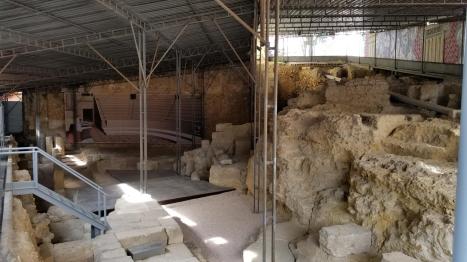
After leaving the Cathedral, we stumbled upon the ruins of a Roman theater on our way up (yes, uphill) to the castle.
20190227_115443

At the castle, we saw the gardens (with tons of peacocks in the trees-we even saw one flying), an artifact collection, archeological ruins and the remains of the castle itself (again mostly just walls and towers).  They also had a periscope camera by which they give you an aerial tour of Lisbon.

20190226_173745

In the afternoon, we walked around the Praca do Comercio and the Rossio district and then rode the tram around more areas of the city.

20190227_153516

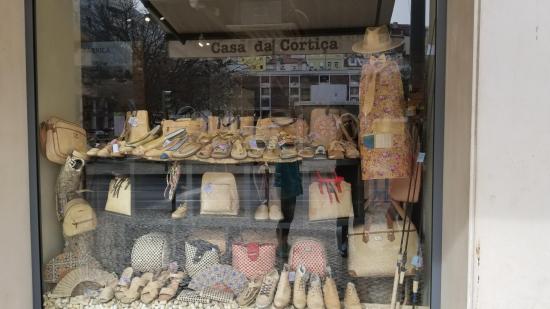
Here are a few of the sites from around the city including a store featuring all of the cork products you can purchase, the Christ statue overlooking the city, a massive elevator in one of the city districts and some of the many buildings with the tiled walls for decorative purposes.
20190227_102804

I also really love this street that was right by our apartment with all the laundry.  One day we got stuck behind this “trash truck”-guess it’s the only truck that can pick up trash that is small enough to fit the street.


And finally, who can resist this really cool store featuring cans of sardines.  There were tons of fancy sardine stores like this around the city.  The displays-cool, the product-not so much!


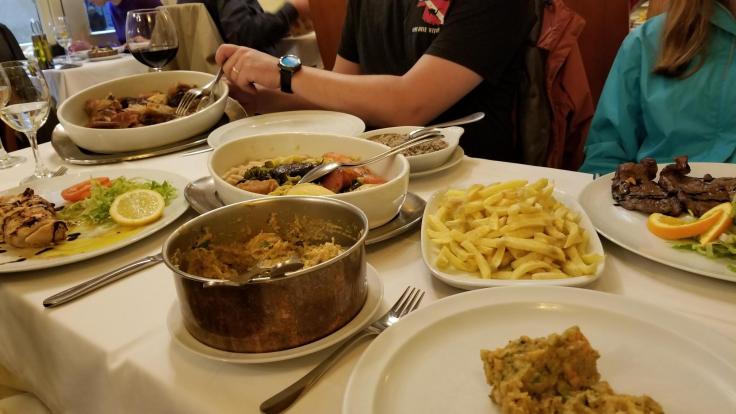
For dinner, we ventured to the Bairro Alto district and tried a selection of Portuguese meats and Acorda de Gamba (shrimp in stuffing dish-very good).
20190227_191749

Day 6: On the sixth day, we again headed out of Lisbon to the north.  First, we stopped in Fatima to see the church there that was built after three children saw a vision of the Virgin Mary.  It is a massive compound featuring several sanctuaries and praying areas.

Next, we drove to Porto which is 3 hours to the north of Lisbon.  Our first stop was lunch at Cafe Santiago where we had the famous Francesinha sandwich featuring sausage, steak and ham in a sandwich topped with a fried egg, cheese and a special gravy and surrounded by french fries.  We also tried Portuguese beer, a green wine and some port.  And we once again ordered Toucinha de Ceu for dessert (the almond pie cooked with bacon lard).

After lunch, we wandered the city seeing many churches including Santo Ildefonso, Santa Clara, the Cathedral of Porto, Sao Francisco, Clerigos Church and Igreja do Carmo.  Our favorite was probably Santa Clara because we got a private tour.  The church features lots of wood covered with gold leaf (sadly you could not take pictures).

We also walked down the narrow old streets to the Cais Ribeiro area near the water where you can get a good look at the Dom Luis I bridge (built by a student of Eiffel).

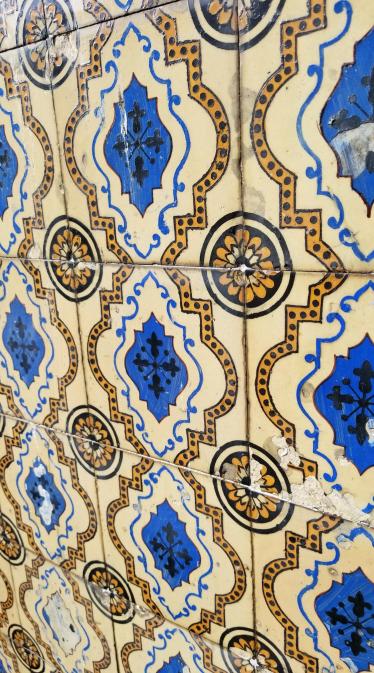
On our walk, we were able to get an up-close look at some of the tiles that you can find on so many of the building facades in Portugal.
20190228_150927

We also stopped by many historic buildings including the municipal building, the stock exchange building and the Estacao Sao Bento (train station) which was very beautiful with all of its tilework.
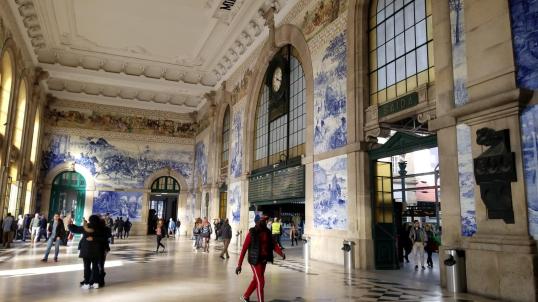
20190228_160342

And of course, no trip would be complete without stopping for some local foods like this massive bread (this was just one-quarter of the whole piece) called Broa de Avintes and a few pastries like this almond pastry and Jesuitas (puff pastry with a meringue top).

On our way back to Lisbon, we stopped in Coimbra for dinner at a restaurant located outside of a famous monument.

Day 7:  On our final day, we spent the morning on the balcony of our apartment enjoying the sun and the view before wandering around a park area near the apartment which featured a statue for a famous doctor and hundreds of little stones carved with thanks to this doctor for watching over or healing loved ones (the doctor died in the 1800’s but apparently people still ask his spirit for protection of the sick).

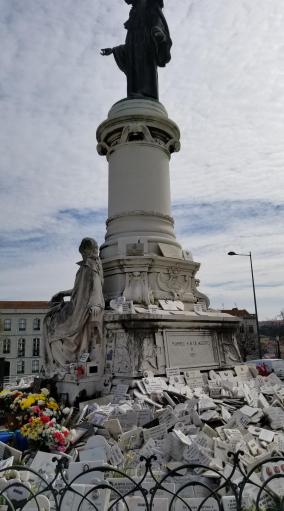
20190224_084037

20190301_111722

After lunch at the restaurant with the nice views, we decided to hit up our Pastel de Nata supplier one last time for a few of the treats before leaving the city!

20190301_132529

Portugal was a lot of fun, the food was great and we saw many beautiful places and buildings.  We are definitely glad we visited and hope you enjoyed coming along for the ride.  And if you are tired after reading this post, get ready because we have another travel adventure coming up in just a few short weeks.  Until next time!

Website Powered by WordPress.com.

Up ↑